Ramon Estrada
Fictional. Generated by AI — not a real person, and no likeness of one is intended.
62, accountant in Dallas · rolled by @colby.marsh · card — no film
History
who has worn him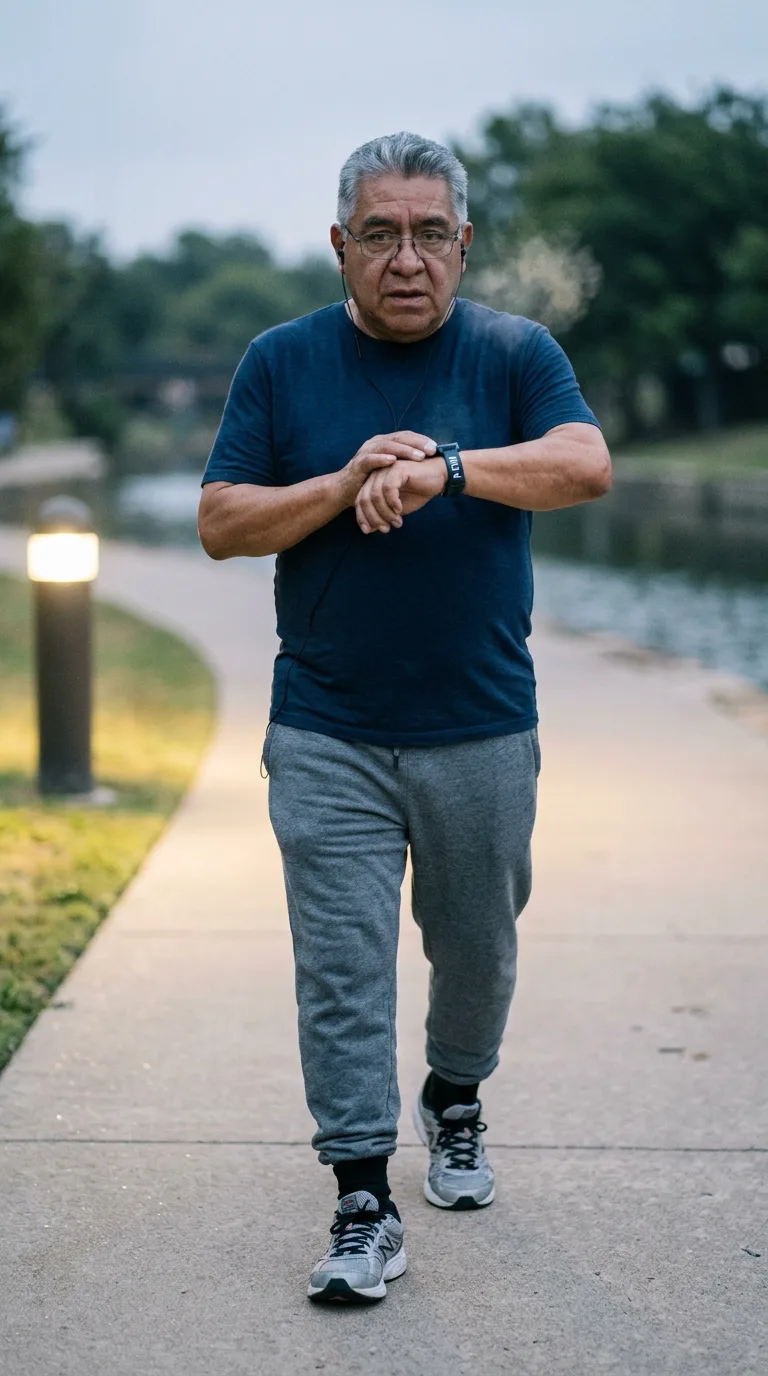
Rarest thing about him: A missing front tooth — epic, 1 in 124
Season 0seed 110914099 · engine v10
Character card
lineage PYNCV3
His body-swap story
@colby.marsh (admin), wearing Gordon Bledsoe, rolled the wheel on and woke up as Ramon Estrada, spent 19 minutes in him, then spun the wheel and woke up as Danny Escarra
Three minutes in Gordon Bledsoe and already the itch is back.
You're standing at his bathroom mirror in the gray Pittsburgh dark, and his face is looking back at you like it's asking a question you don't have an answer for — the scar through the eyebrow, the jaw that isn't yours and never will be, sixty pounds you didn't earn sitting comfortable around his middle. He's fine. He's a nice enough house to be in. Sales rep, decent commission, a coffee maker that does the thing with the timer. None of that is the problem. The problem is that three minutes ago you were somebody else entirely, and three minutes before that somebody else, and the wanting doesn't care how good the last one was — it only cares that there's a page open on his laptop with a wheel on it, still logged in, still warm from the last spin. You tell yourself this is the last one for a while. You have told yourself that in fourteen other mouths. His phone is charging on the sink. You don't even glance at it. You just want the wheel to turn and you want to not be looking at this eyebrow scar anymore, and that is the whole of the reason, and it is enough.
You spin. Gordon's hand is the one that clicks the mouse. Gordon's kitchen is the last thing that body ever sees.
—
The path breaks under you. Not a fall — a stutter, two steps of a stumble that never finishes landing, and then you're running again, except the legs are shorter now and the knees complain in a way Gordon's never did, a deep worn ache down in the joints like a hinge that's been oiled too many times to fix. Earbuds feeding you a podcast voice mid-sentence about mortgage rates. A watch buzzing against a wrist that isn't the wrist it knows, flashing a split time for a mile this man never ran. Breath coming out in a small white flag in front of a face you can't see yet. Canal water on the left, still and flat, catching the very first gray of a Dallas dawn. The air smells like cut grass and somebody's sprinkler running too long into the street.
You are 5'4" now, and the ground feels closer than you've had it in fourteen bodies. Dad bod, snug in a navy T-shirt gone dark at the sternum with sweat. Gray-silver hair stuck to a forehead. And under the tongue, where a front tooth should be, there's just a gap the air moves through wrong, a shape you'll notice with every breath for the rest of however long this lasts.
—
The shoes are the first thing that talk to you — New Balance, broken in on the outside edge, and the second your weight rolls onto that edge you get a flash of a shoe store on Northwest Highway, a bored kid clerk, the specific relief of a shoe that finally didn't fight the bad hip. Ramon Estrada. The name arrives with the tongue finding the tooth-gap, the way it always does first thing every morning before he remembers to stop checking. He lost it at nine years old, a curb, a bicycle, his mother furious more at the dentist bill than at him. Sixty-two years he has been running his tongue over that gap like worrying a rosary bead, and it comes to you now instead, an old groove worn so deep it isn't even a habit anymore, just weather.
The sweatpants — gray, the elastic gone soft at the waist — bring back nothing dramatic, just a hundred mornings folded into one: an alarm at 5:10, the particular cold of a tile floor in a new-build house that still smells faintly of drywall dust even three years in, a body swinging its legs out of bed with a groan that has become its own kind of greeting to the day. The watch on the wrist — cheap, a gift from a niece two Christmases back — remembers being strapped on in the dark, the small vain pleasure of a number ticking down on a screen, the promise made every day and mostly kept: four miles, out and back, before the office opens its doors and its coldness on him.
The shirt he'll put on later — the checked one, the cardigan, hanging on a chair back home — isn't touching him now, but the earbuds are, and they give you the desk instead: two monitors under buzzing fluorescent light, a headset for the calls he doesn't like taking, a coffee mug with a chipped rim that says nothing, spreadsheets that have swallowed thirty years of him. Estrada & Coultas, LLC. Not partner. Never made partner, and there was a year — forty-four, forty-five — when that ate at him nights, when he'd lie awake doing math on other men's careers instead of sleeping. He let it go somewhere in his fifties. Not peace exactly. More like a back that finally stopped bothering to argue with the couch.
There was a marriage. Seventeen years, ending amicable enough that they still send each other birthday texts, no kids, no fight over the house because there wasn't one yet, just two people who ran out of reasons to keep choosing each other and admitted it out loud instead of letting it rot. He does not think of her often. When he does it isn't sharp. He built the new-build house alone, on purpose, chose the cardigan-colored walls himself, likes that the driveway is only ever crowded with his own truck.
The joints keep talking under all of it — the left knee, the lower back, that dull tax on every stride that thirty years of a desk chair and forty years of gravity have billed him for. It isn't pain exactly this early, just a message the body sends every morning before the endorphins show up to argue with it: this is what sixty-two feels like, moving. He runs anyway. He has run through worse. There is something in him — spiritual, he'd say, if you pushed him, not religious, just a sense that the canal and the birds starting up in the trees and his own tired breathing are all doing something together that matters — that needs this half hour before the fluorescent lights get their hands on him.
The tongue finds the gap again. Habit within a habit. Somewhere in there is the whole shape of a solitary, comfortable, unremarkable life — no wife left to wake, no children's noise down the hall, a body that carries its aches without complaint because there's no one left to complain to, and has made something almost like peace with that.
—
Your stride breaks its rhythm on purpose this time, feet stopping dead on the path, and you lift both hands up in front of a face that has gray dawn light sliding along its stubble. You turn them over — Ramon's hands, thick-fingered, a little swollen at the knuckles, a callus worn smooth on the right middle finger from thirty years of pens and keyboards. Not Gordon's hands. Not the fourteen sets before that. You flex them once like you're checking they're real, and behind your teeth you feel the gap where a tooth should be and don't say anything about it, because that part isn't yours to be surprised by anymore — you already were, for exactly as long as that took.
"Okay," you say, out loud, to no one, watching your breath go up gray into the last of the dark. "Okay, Ramon."
The watch on your wrist buzzes again, patient, waiting on a number that was never his. You don't look down at it. You look up the path instead, toward wherever it bends out of sight, already wondering — not deciding, just wondering, the way you always do about four minutes in — how far this one's got left to run before the wheel wants you again.