Peter Osgood
Fictional. Generated by AI — not a real person, and no likeness of one is intended.
48, baker in Pittsburgh · rolled by @colby.marsh · card — no film
History
who has worn him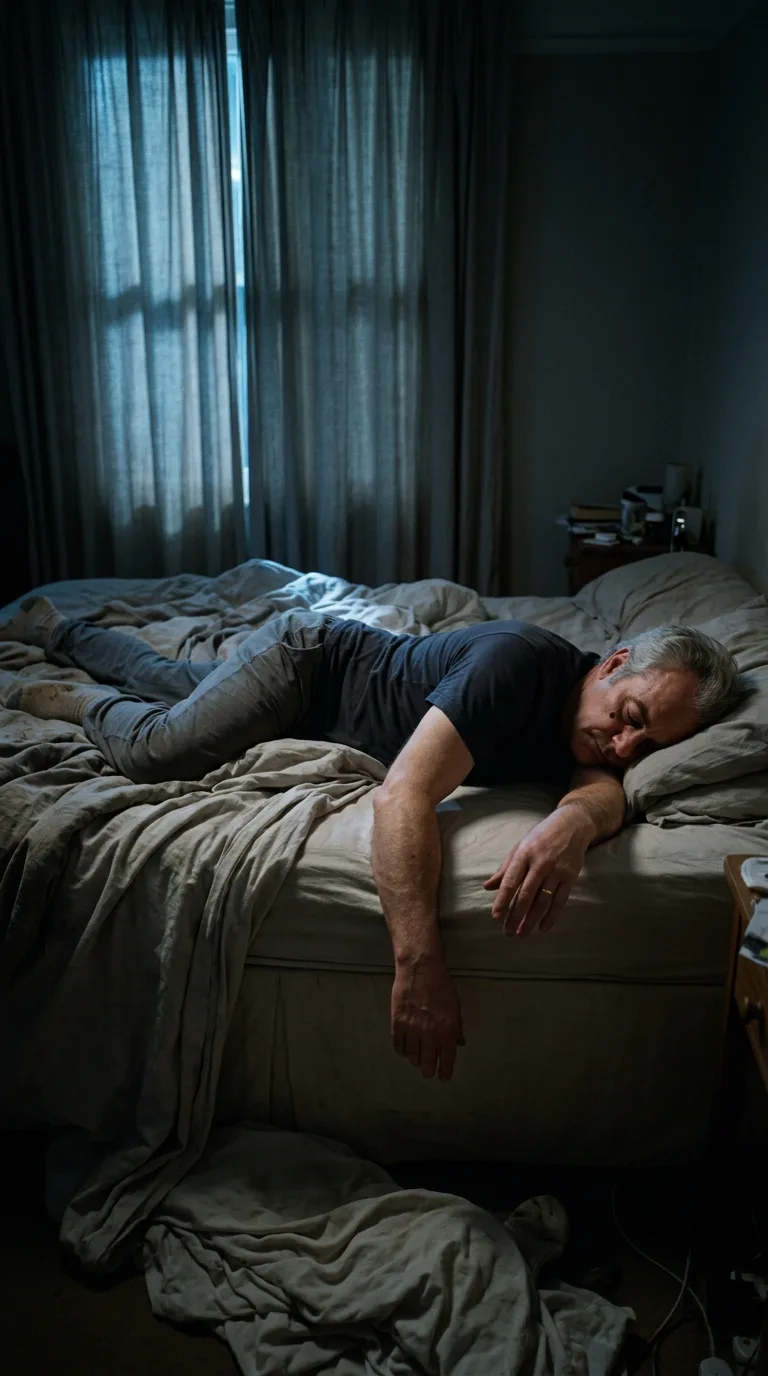
Rarest thing about him: Bisexual — epic, 1 in 67
Season 0seed 725933357 · engine v10
Character card
lineage PYNCV3
His body-swap story
@colby.marsh (admin), wearing Colby Marsh, rolled the wheel on and woke up as Peter Osgood, spent 10 minutes in him, then spun the wheel and woke up as Daniel Otsuka
The apartment in Anchorage is dark the way it always is at this hour, curtains cheap enough that streetlight bleeds through them anyway, and you are standing at the kitchen counter in Colby Marsh's body being twenty-two years old at somebody again, which was supposed to be the point. Fourteen hours and thirty minutes of it. The dimples in the mirror this morning had already started to look like something worn by someone else, a mask you'd borrowed and were expected to give a speech in. You have opened the fridge four times. There is nothing in it you want, because wanting isn't really located in a fridge, it's located somewhere behind the sternum that this particular chest doesn't seem built to hold. Boredom, if you're honest, though you would not use the word out loud. Colby has a shoot at nine. Colby's agent has already texted twice. You do not care about either of those things, and caring about things was never the arrangement — the arrangement was novelty, and the novelty of being wanted for a face is thinner than it looks from outside it. You open the laptop instead. The site loads the way it always loads, patient, undramatic, a wheel on a plain page like something you'd find at a county fair if county fairs dealt in men instead of stuffed bears. You spin before the coffee's even done thinking about being coffee.
The kitchen is gone. There is flour under your fingernails that were not your fingernails four seconds ago, and the ceiling is wrong — lower, water-stained in one corner — and your knees announce themselves first, a stiffness Colby's knees never had, then your lower back, then the specific and total absence of your own face, replaced by weight in the cheeks and a looseness at the jaw that isn't yours either, not anymore, because there isn't a yours to compare it to. You are standing. You are holding a wooden bench scraper in a hand with a mole-flecked forearm and a wedding band, mid-motion, dough half turned on a floured table, and Pittsburgh comes in through the windows sideways — late-morning light, wrong for a bakery, and that wrongness is the first true thing you feel: this man should have been done hours ago, should be asleep, should be face-down in sheets with an arm hanging off the mattress the way the wheel's little postcard-of-a-moment showed him. Instead he's upright, at a counter, mid-shift, because his shift runs backward against the sun the way yours in Anchorage does, two men keeping different hours in different dark.
The scraper is the first key. It turns in your grip and something old and worn opens behind your eyes: Peter Osgood, forty-eight, at this same bench eleven years running, the particular give of the wood handle where his palm has smoothed it, the small satisfaction — animal, uncomplicated — of a scored loaf blooming right in the oven's heat. He loves this. Not the money, there's never been much beyond what's put away quietly, a cushion nobody talks about, but the work itself, four in the morning and the kitchen empty and the radio low and nothing asked of him except to be exact. His shoulders know this counter's height without him deciding anything.
The apron next — you feel its strap dig at the back of your neck and the memory comes bigger, a whole morning: shrugging it on over the blue check shirt three, four hours ago now inside this stretched shift, sleeves rolled to the forearm because he always rolls them, has rolled them since he was twenty-six and burned the hair off one wrist and swore he'd remember, and he did. The shirt gives you the rest of getting dressed, backward: pulling it from the hook by the door in a kitchen that isn't this one, a kitchen with a coffee maker gurgling and a second toothbrush in the cup and his wife's voice from the other room, not unhappy, just there, asking if he took his lunch. He did. He always does. Ten years married and it still surprises him a little, some mornings, the ordinariness of being loved this steadily, when for a long stretch in his thirties he did not think he'd get steady at all — there was a man before her, briefly, and men before that too, further back, nothing anyone in this kitchen needs to know about, not shame exactly, just a door he doesn't open, and his jaw does the thing it does, clenches, releases, when he thinks near that door without opening it.
The boots on your feet remember standing twelve-hour shifts. The mole on your cheek — you can't touch it, but you feel where it sits, high, the way his wife touches it sometimes without seeming to notice she's doing it. Two kids, both older now, one who calls more than the other, a normal unevenness. He quit drinking somewhere in there, not for a dramatic reason, just drifted off it the way you drift off a person you don't miss enough to chase; he'll still take a cigarette if there's a beer in someone else's hand at a wedding, some old reflex, smoke curling while he watches everyone else's kids run around a reception hall. None of that is happening now. What's happening now is flour and the specific stiffness of a lower back that has bent over proofing tables for twenty years, and it does not hurt exactly, it just reports.
You set the scraper down. You look at your hands — his hands, and they are the same thing now, floured, ringed, a small burn scar pale on one knuckle that the shirt-memory already explained — and you turn them over slowly under the fluorescent light like you're checking they're real, which is, in a sense, exactly what you're doing.
"Okay," you say, out loud, to the empty kitchen, to no one, in a voice that isn't Colby's and isn't quite yours either. "Okay."
You don't know if you'll spin again tonight, or next year, or never. Peter doesn't know he's already gone. The trays keep cooling on the rack behind you, patient, indifferent, the way trays are.