Daniel Otsuka
Fictional. Generated by AI — not a real person, and no likeness of one is intended.
46, museum conservator in New Orleans · rolled by @colby.marsh · card — no film
History
who has worn him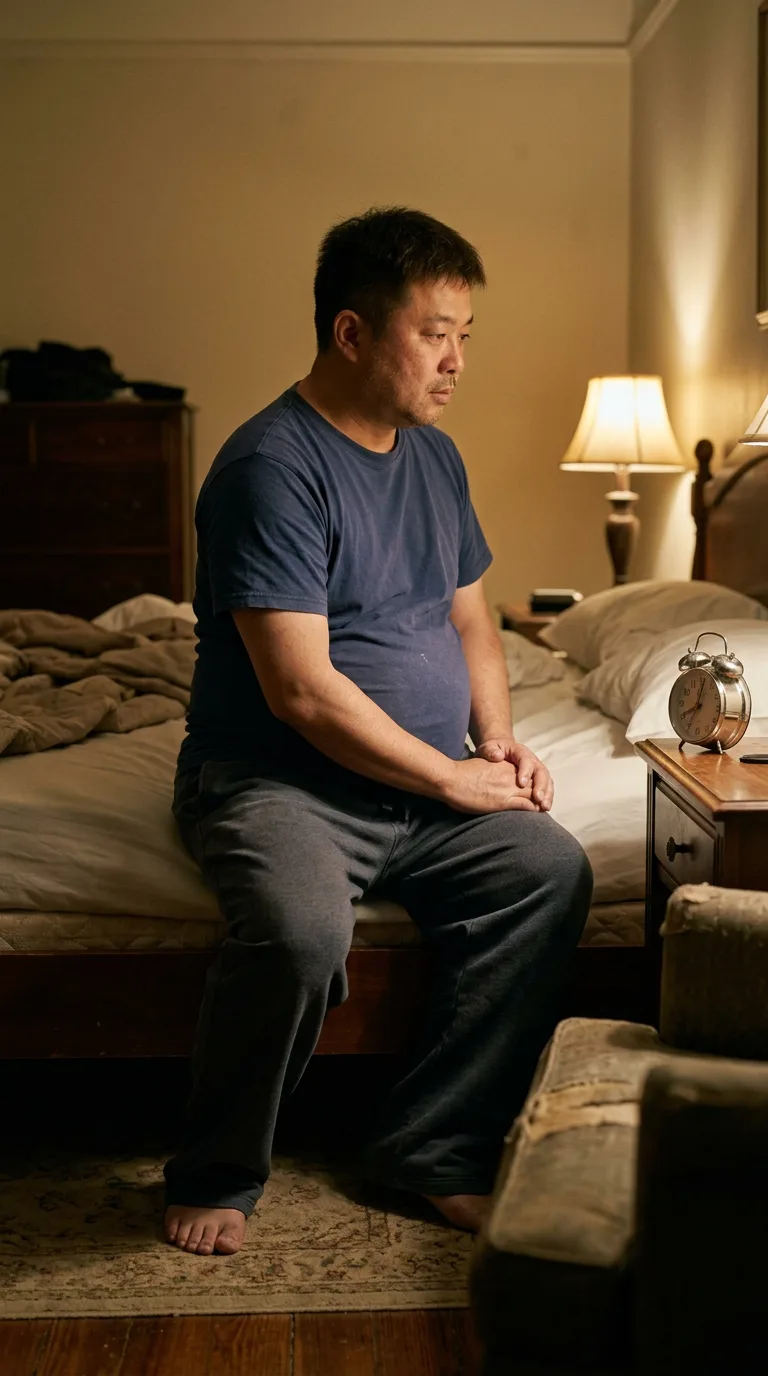
Rarest thing about him: Dark brown — rare, 1 in 17
Season 0seed 584865090 · engine v10
Character card
lineage PYNCV3
His body-swap story
@colby.marsh (admin), wearing Peter Osgood, rolled the wheel on and woke up as Daniel Otsuka, spent 2 minutes in him, then spun the wheel and woke up as David Prusinski
The bakery smells like scorched sugar and it is not even eleven yet, and your hands — Peter Osgood's hands, soft at the knuckle, a beauty mark riding the back of the left one — are dusted white to the wrist. Ten minutes in this one. Ten minutes of the ovens ticking and a delivery kid asking where to put the flour and somewhere behind your ribs a low flat hum that has nothing to do with Peter Osgood's blood sugar or his bad hip. You know the hum. It is not boredom exactly — Peter is fine, Peter is gray-haired and easy in his own kitchen, competent in a way you almost respected for a whole ten minutes — it is that you already know the whole shape of him, the same way you knew Kaleka and Restrepo and the rest, ten minutes in each and the rest was just living somebody's schedule. You wipe your hands on the apron he's wearing and you go to the office in back where nobody will see a baker standing very still with his eyes closed, and you take out the phone, and the wheel is already loaded, already spinning before you've decided anything, which is its own kind of answer.
It lands on a museum conservator, mid-forties, New Orleans. You feel the pull like a stair taken too fast in the dark.
He is on his knees at the edge of an unmade bed, and it is your knees now, his weight rocking forward onto the heels of his hands as he starts to rise — got to the amen too early, was already half up, already almost smiling at himself for even trying tonight — and then he stops. Halfway up. Down again onto both knees, weight punching into a mattress that gives under you with a familiar creak, forehead dropping into the bedspread, breath going out through the nose in one long push. The room is dim gold, a lamp with a fringed shade, an alarm clock with a hammer bell throwing a stripe of chrome light across the nightstand. It is the middle of the night here — you can feel it in the stillness under the floorboards, in the AC cycling somewhere, in the particular hush of a house on a street that has gone all the way quiet. A man does not kneel at his bed to pray at 2 a.m. unless something in him needed doing before sleep would take.
The t-shirt is what opens first — worn thin at the collar, and through it comes a Tuesday from some other week, him pulling it over his head one-handed in a bathroom with bad light while an exhibition catalog lay open on the counter, steam still hanging off the shower glass, and the thought running under all of it, plain as weather: I should call Mireille back. Not urgent. Not un-urgent either.
The bedspread under your forehead is chenille, ridged, and it drags a whole house up out of nothing — the shotgun house one room wide, the way sound travels front door to back like the place has no secrets from itself, sun coming in low and orange through a window with old ripple glass, the wet street outside steaming after a rain that fell three hours before you woke up in it. Daniel Otsuka's house. Daniel Otsuka's smell in the sheets, cedar and clean cotton and, underneath, the ghost of solvent that never quite leaves a conservator's skin no matter how many showers.
His hands are open in front of you on the bedspread, and they know things your hands never learned in ten minutes anywhere — the particular slow patience of laying a scalpel flat against a paint loss, the give of a swab soaked just enough and not too much, forty-six years of small close attentive motions. Dad-bod softness at the belly, but the forearms are wiry, competent, calloused faint along the first fingers from years of holding brushes at the exact same angle. Cuticles picked ragged on both thumbs — his hands go there without him, always have, in meetings, in church, in the two seconds before sleep. His knees ache faintly on the hardwood, a little more each winter, and there is a small persistent hollowness under the sternum that isn't hunger, that you understand within a breath is the shape a marriage leaves when it ends on decent terms and you still eat dinner alone four nights a week.
There was a wife — Renata, French Quarter accent worn smooth by twenty years of it, a fight about nothing that turned out to be about everything, and a daughter, eleven, who has his exact flat black eyebrows and who he picked up from dance on Thursday and who told him, apropos of nothing, in the car, that she loved him, and he had to look hard at the windshield for a second before answering. There's a girlfriend now, newer, funnier than Renata ever let herself be, a woman who leaves her reading glasses at his place on purpose so she'll have to come back. There's a canvas on the bench under the north windows at the museum, a nineteenth-century thing with a tear along the tacking margin that he has been inpainting for six days with a brush so fine it barely counts as one, losing himself in it the way some men lose themselves in liquor. There is more money than he ever expected from a life spent leaning over other people's ruined pictures — a grandfather's real estate, mostly, sitting untouched and slightly embarrassing in accounts he doesn't check. And there was, ten seconds ago in his own time, a prayer he wasn't taking seriously, said out of habit more than belief, cut off early by his own half-laugh at himself for bothering — and then, underneath the laugh, the honest small thing he'd actually meant to ask for, which was only ever: let tomorrow be a normal one.
You lift your forehead off the bedspread. The room swims gold and quiet around you. You bring both hands up in front of your face — the picked cuticles, the pale ghost-callus along the index fingers, a stranger's hands doing exactly what stranger's hands do, which is nothing you told them to.
"There you are," you say, to no one in the room, and you almost laugh the way he almost laughed a second ago, before any of this.