David Prusinski
Fictional. Generated by AI — not a real person, and no likeness of one is intended.
33, mechanic in Philadelphia · rolled by @colby.marsh · card — no film
History
who has worn him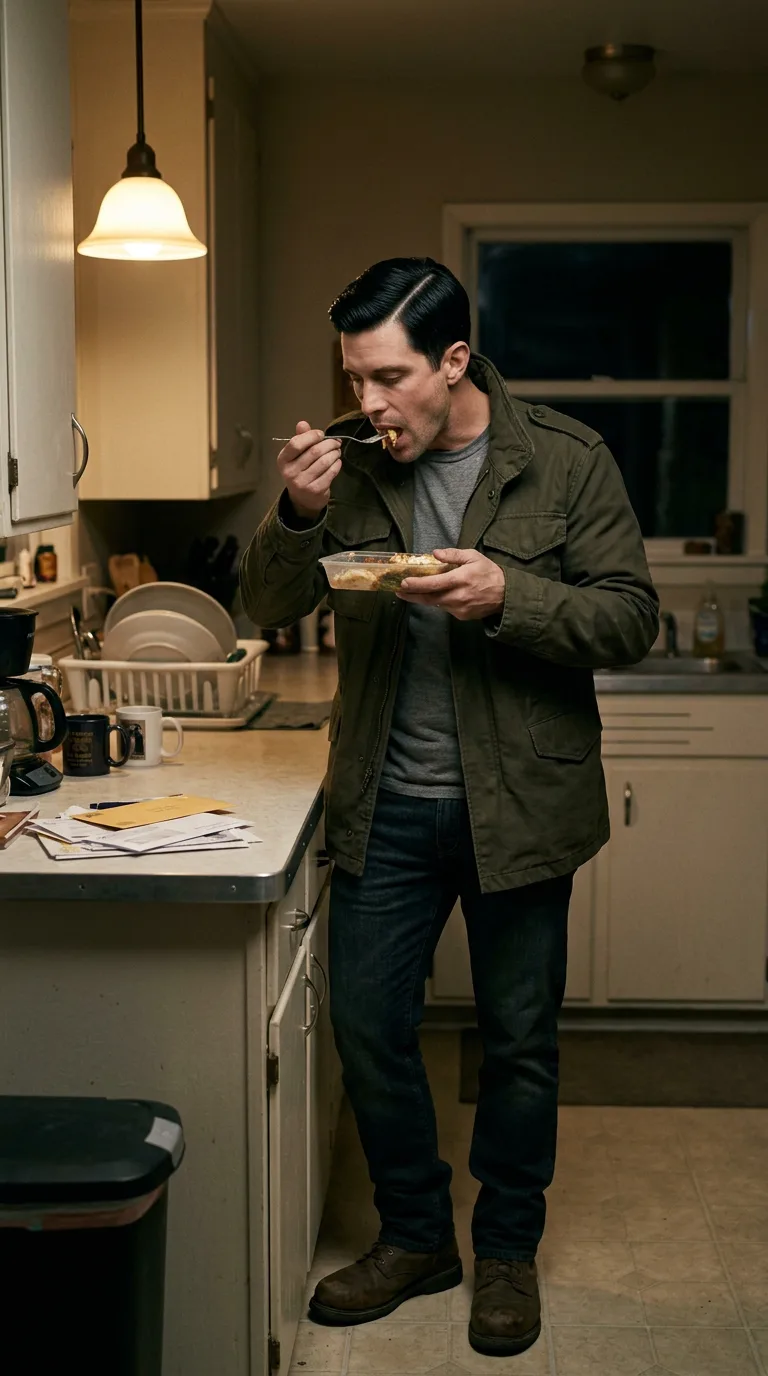
Rarest thing about him: A tic — a hard blink, a throat clear — epic, 1 in 145
Season 0seed 1369672540 · engine v10
Character card
lineage PYNCV3
His body-swap story
@colby.marsh (admin), wearing Daniel Otsuka, rolled the wheel on and woke up as David Prusinski, spent 19 hours in him, then spun the wheel and woke up as Walter Sechler
The gallery air conditioner hums somewhere above you, and Daniel Otsuka's soft hands are folded on the desk in front of you, and you hate them. One minute in this body and already you know its whole complaint: the ache low in the back from bending over vitrines, the reading glasses pushed up into thinning hair, the smell of the solvent still on the cuticles no matter how many times he scrubs. He is careful. He is precise. He has spent forty-six years becoming a man who repairs varnish on other people's masterpieces and never once put his name on anything. You sat there for sixty seconds being him, deciding, and the deciding took less time than the sitting. You open the laptop. The wheel is already loaded from last night, the page still warm in the cache like it knew. You do not examine why twelve wasn't enough. You have never examined why any of them wasn't enough. You spin.
The fork is a foot from your mouth and then it isn't — it comes down to the counter on its own, decisive, not yours, and you are standing in a kitchen with yellow light and a coat still heavy on your shoulders. Your shoulders. Wider than a moment ago. There's a weight in your left hand — a plastic container, some kind of noodle thing gone lukewarm — and a mouthful you didn't chew that you swallow anyway, and it goes down easy, because this throat knows how to do that without being told.
The coat comes off. You didn't decide that either, not exactly — the body did it, a shrug that's older than any thought, muscle finishing a sentence memory started. It drops over the back of a kitchen chair and the smell of it reaches you on the way down: motor oil and something floral underneath, fabric softener fighting a losing war. That smell hits like a door opening. A garage, fluorescent-lit, a Buick up on the lift and you — him — underneath it with a rag going black in your back pocket, some radio playing a Sixers game nobody's listening to, Marek the owner yelling something about the Chen job needing to be done by four. You've done ten thousand hours under cars like that one. Your hands know a torque wrench the way a rosary knows a thumb.
You sit. The chair takes your weight differently than Daniel's did — less give, more spring, thirty-three years old and every joint still cheap and quiet. The container's cold plastic edge against your palm gives you another flash: buying it, this exact meal, from the corner place on Ninth, the guy behind the counter calling you "chief" because he's called you that for six years and never learned your name. You eat in even mouthfuls now, methodical, the way you eat everything, because somewhere a doctor once told your father portion control and it stuck to the son like paint.
The shirt against your back — dark twill, DAVID stitched crooked over the pocket — gives you the morning. Not this morning, some morning, all of them really, folded into one: waking at five without an alarm because the body decided a long time ago that oversleeping was for other people, the shirt off its hanger, the smell of it already faintly of yesterday's work no matter how many times it's washed, the little tug at the collar because it's always a size tight in the shoulders and you have never once bought bigger. Buttoning it one-handed, standing, half-thinking about the Chen job. Your right forearm catches light from the pendant lamp and there they are — the faces, black and gray, worked into skin over eleven hours across two sessions in a shop on Passyunk, a decision made at twenty-six for reasons that felt enormous then and now just feel like Tuesday. Nobody in this kitchen asks you about them anymore. Nobody's here to ask.
There's a church memory too, thin and half-embarrassed — a mother's hand on your shoulder in a pew, a version of you that still goes some Sundays out of something that isn't quite belief and isn't quite habit either, sits in the back, leaves before the coffee hour starts talking. And under that, further down, an ex-girlfriend's name that doesn't come with a face anymore, just a flat feeling like a door closed gently and not slammed, nothing that costs you to touch.
Your jaw does something without asking — a hard blink, then a throat clear, the two things this body does instead of thinking when it doesn't want to think. It's doing it now, at the dark window, at its own faint reflection with the mole on the cheek like a period at the end of a sentence.
The fork's empty. The container's empty. You set it down and look at your hand — broad, a little scarred at two knuckles, black under one nail that no amount of Philadelphia's finest soap gets out anymore — and you turn it over slow, like it might not hold together if you don't watch it.
Then you lift your eyes to the black glass of the window like it's the only mirror in the room, and you say, quiet, mostly to yourself:
"There you are."