Walter Sechler
Fictional. Generated by AI — not a real person, and no likeness of one is intended.
62, baker in Miami · rolled by @colby.marsh · card — no film
History
who has worn him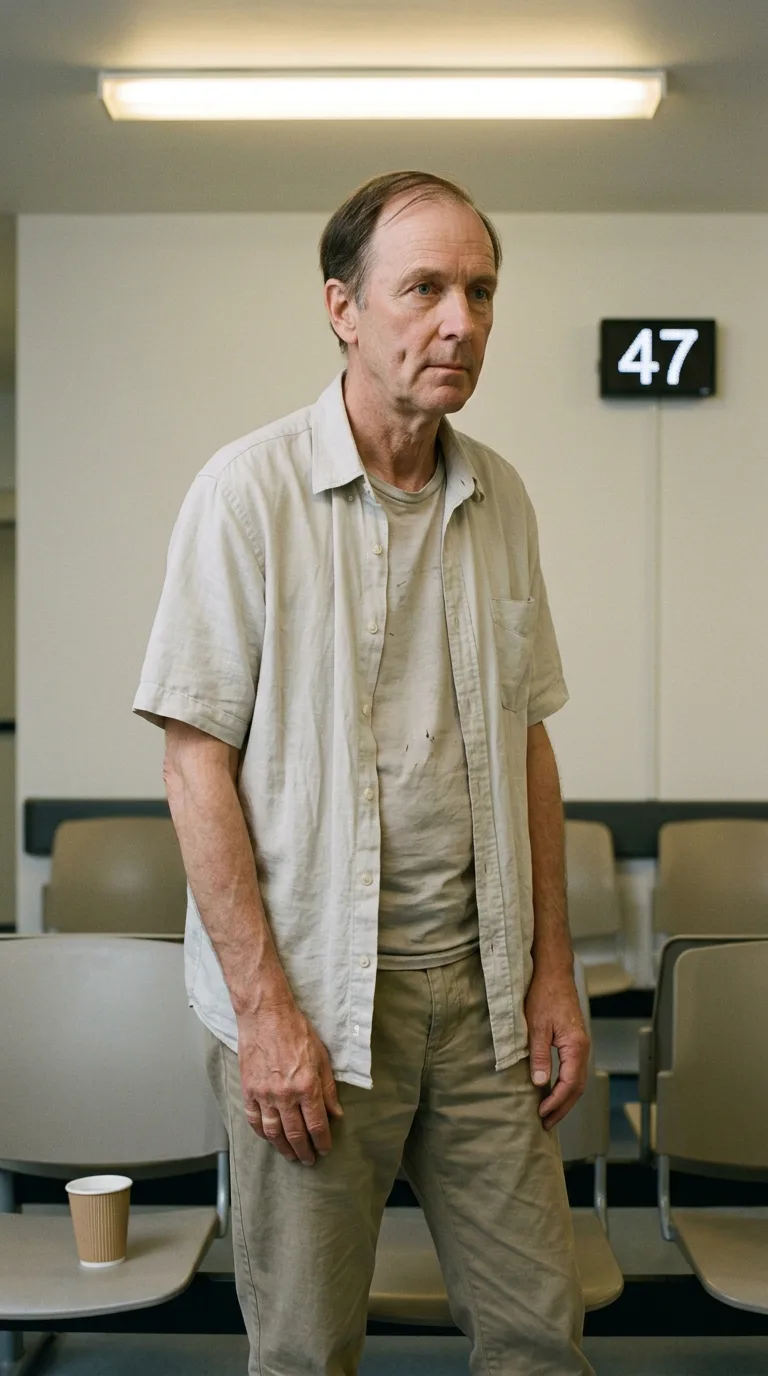
Rarest thing about him: Nicotine pouches — epic, 1 in 119
Season 0seed 2066674995 · engine v10
Character card
lineage PYNCV3
His body-swap story
@colby.marsh (admin), wearing David Prusinski, rolled the wheel on and woke up as Walter Sechler, spent 3 minutes in him, then spun the wheel and woke up as Gordon Bledsoe
You are standing in David Prusinski's kitchen at the hour before his alarm, and the coffee maker hasn't even started gurgling yet, and already you know you're not staying. Nineteen hours and fourteen minutes. Long enough to know his knuckles, the scar on his thumb from a serpentine belt, the ex-girlfriend's number he still hasn't deleted. Long enough to be bored of him. David is thirty-three and puts his whole back into everything, and there's a kind of dumb, easy strength in that body you thought you'd enjoy longer than you did. But he smells like the shop no matter how long he showers, and his knees are good, and his life is small in a way that has nothing left in it to discover. You stand at his counter in his socked feet, phone in his hand, already loading the page with the wheel on it, and you don't examine the wanting too closely. It is simply there again, the way it always comes back — not boredom exactly, something more like hunger arriving on schedule. You spin.
Your knee is bouncing. That's the first thing — not a decision, just a fact happening to a leg that was already going before you arrived in it, mid-bounce, mid-morning, under a strip light that hums at a frequency that feels like it's inside your teeth. A paper cup sweats on the seat beside you, water gone warm and skinned over. The board on the wall reads 47, and even as you register it, it clicks to 48, and the leg stops. Just stops, like it was never yours to begin with, which it wasn't, ten seconds ago it wasn't. You set the cup down. You fold your hands. A voice somewhere calls a name that is apparently his, and you do not look up, and something in the not-looking-up feels less like choice and more like inheritance.
The shirt is what opens first — short sleeve, cotton going soft with age, and touching your own forearm through it brings back a bathroom mirror, fluorescent and small, a man patting this same collar flat with both hands at five forty this morning, dimples showing in the mirror even though he isn't smiling, they never leave, they've been there since he was nine years old and the dentist called them a "nice feature" and his mother repeated that for thirty years. Walter Sechler. The name arrives with the shirt's second sleeve, folded once at the cuff by his own hands, unhurried, a man who has ironed nothing in a decade and doesn't need to. Under the shirt: a T-shirt gone thin at the collar, tags cut out because they itch, because his skin does that now, flares along the seams some weeks for no reason a rheumatologist has ever fully explained to him — the autoimmune thing, unnamed here but felt, an ache sitting low in both wrists that he has stopped mentioning to anyone because there is no one left to mention it to.
The chair under you is county-issue plastic, and the cold of it against the back of his thighs brings the waiting room itself into focus — he is here for the wrist, or the joints, or the follow-up blood work, some Wednesday errand of maintenance that he has learned to schedule around the ovens, because the bakery doesn't wait and neither does the body. His hands, folded now in his lap, know a whole different language than this stillness — they know the tackiness of dough at four different hydrations by feel alone, they know how far you can push a baguette score before the blade drags instead of cuts, they know the particular controlled violence of folding butter into laminated dough without warming it, forty years of four a.m.s written into the tendons. Skinny fat, soft through the middle, strong through the forearms in that specific baker way nobody notices until they shake his hand and feel it.
The tan line on his ring finger comes up when his thumb finds it, an old unconscious habit, worrying a groove that isn't there anymore except that it always is. Denise. Thirty-one years, most of them fine, the last four not, and the divorce wasn't cruel so much as tired, both of them just done pretending the silence at dinner was companionable instead of finished. Two kids grown and scattered, a daughter in Tampa who calls on Sundays, a son who doesn't, much. He built a life around getting up before everyone else and going to bed before the ten o'clock news, and there is a specific loneliness to that which he has made peace with the way you make peace with a knee that aches on the stairs — not happily, just permanently.
He goes to church on Sundays, sits near the back, sings without much voice, believes it plainly and without performance the way people do who were raised in it and never had a reason to leave it behind. He hasn't had a drink since 1989. He uses the pouches now instead of the cigarettes he quit when his daughter was born, tucks one under his lip most mornings out of habit rather than craving. The waiting room chair is hard and his lower back knows it, and somewhere behind the folded hands is a small, ordinary dread of what number 48 might mean today, blood work, a doctor's face, another Wednesday spent finding out what his own immune system has decided to do to him this season.
You look at your hands. They are not your hands — spotted faintly at the knuckle, the ring-groove pale and permanent, the nails a little ridged the way nails get at sixty-two. You turn them over once, like checking they're real, and somewhere behind them is the memory-ghost of proofing baskets and bench flour and a wedding band that hasn't been there in six years. You lift your eyes off them, into whatever is in front of you — the strip light, the number board, the empty chairs — and your mouth opens on his voice, low, a little rough from disuse this early.
"Guess I'm up," you say, to no one, and you do not stand yet.