Gary Steckler
Fictional. Generated by AI — not a real person, and no likeness of one is intended.
58, court reporter in Anchorage · rolled by @colin.hasbrook · card — no film
History
who has worn him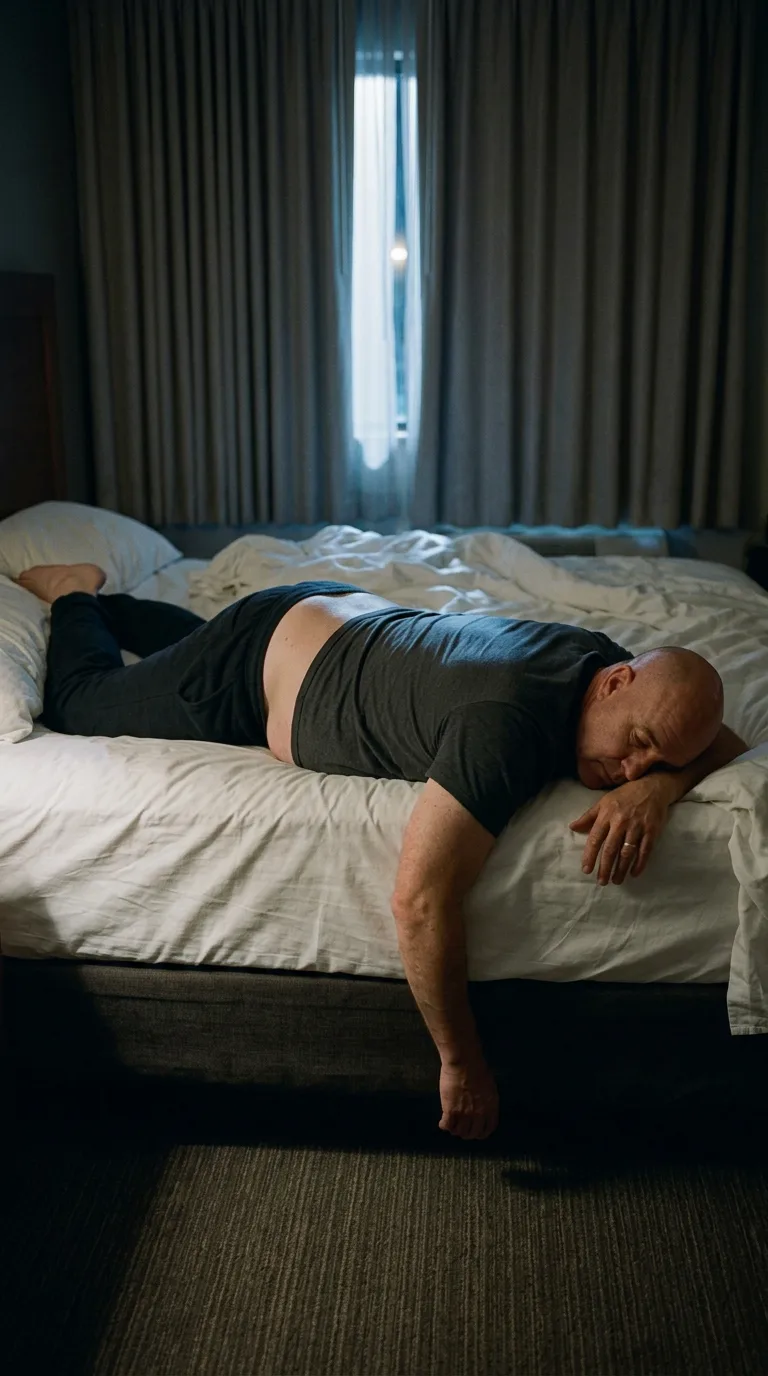
Rarest thing about him: Court reporter — uncommon, 1 in 131
Season 0seed 1826190631 · engine v10
Character card
lineage 2NZHHJ
His body-swap story
@colin.hasbrook, wearing Prakash Devineni, rolled the wheel on and woke up as Gary Steckler, spent under a minute in him, then spun the wheel and woke up as Kenji Ohashi
---
You are still Prakash Devineni when the wanting starts, and it starts small, the way it always does: a restlessness under the sternum, the sense that a body you already paid for is somehow not the one you want to be standing in. It is the middle of the day. You are on a break in a supply closet that smells of latex and hand sanitizer, Prakash's soft belly pressing the waistband of his scrubs, his knees aching in that particular fifty-three-year-old way, and none of it is unpleasant, exactly. It's only that eight spins ago you were somebody else — a vet in Kentucky, gray-haired, gentle-handed, kind to animals in a way that surprised you — and for less than a minute you knew things about a courtroom stenographer in Anchorage that the vet knew and you never asked to know. A name mentioned over coffee. A face at a deposition. The vet's private, uncharitable little store of feeling about the man — envy, maybe, or something closer to grief for a friendship that had gone thin — sitting there in you like a coin in a pocket you forgot you were wearing. You spent eight minutes as him and none of it was enough to spend it on.
That's the itch. Not boredom with Prakash. Curiosity about the other man, seen once from the inside of someone who knew him and didn't especially want to know him anymore. You open the site on your phone with Prakash's soft thumb. You spin.
—
The breathing changes first: ragged, then even, one breath dividing his life into before and after. The arm that had been hanging off the mattress lifts itself, deliberate as a tide, and folds with its twin over the chest, a posture this body has never once made on its own in fifty-eight years of sleeping. You are on your back in a made bed that isn't made, in a room with a strip of streetlight coming through a gap in heavy curtains, and you are enormous compared to Prakash — you feel it immediately, the sheer length of the legs, the way the mattress doesn't end where you expect it to. Bald head cool against the pillow. A softness at the stomach that isn't unfamiliar, exactly, just differently distributed. Eleven in the morning here, you'll learn later, though right now there is no clock, only dark curtains lying about the hour.
—
The T-shirt is the first thing that speaks. Cotton, worn thin at the collar, and through it comes a flash of a laundromat at two in the morning, quarters lined up on top of the machine, the hum of a dryer and nobody else in the building — night shift, always night shift, twenty-some years of being the man who writes down what the courtroom says while everyone else in the city sleeps or works days. Odd hours build odd loyalties. You get the sense, secondhand and warm, of a job he loves in the specific way people love jobs that ask something exact of them: the little chorded keyboard between his knees, the stenotype clacking almost silently under the bench while lawyers shout themselves purple six feet above him, daylight coming green-gold through tall windows onto oak that's been varnished since before he was born. His hands know the keys the way a pianist's hands know a scale — steno strokes, not letters, whole syllables collapsing under two fingers at once. Thirty years of it. The hands ache at night sometimes, an old tendon complaint, and there's a memory riding under the T-shirt's touch of icing them in a break room, alone, nobody to hand him the bag of frozen peas.
The sheets carry more, because sheets remember what a mattress does. A woman's shape used to be on the other side of this bed. Denise. Twenty-two years of marriage, most of them fine, some of them very good, one long stretch of them ruined by chemo and the particular kind of fear that doesn't leave a marriage even after the scan comes back clean — it leaves something else instead, a low hum of exhaustion neither of them could name, and eventually she left before the hum did. Amicable enough. A daughter, grown, in Seattle, who calls on Sundays and sometimes forgets. The tan line on his ring finger comes up under your own touch as you lie there — pale groove, no ring in it — and there's no single memory attached, just an ongoing small absence, the kind you stop noticing except when you notice it.
The snowmobile under the blue tarp behind the plywood siding gives you nothing yet, because you aren't touching it, but the smell of the room does: cold vinyl, an electric heater somewhere clicking, a bedroom in a house built for winter, long amber light that will come sideways through those gaps come afternoon, if this were afternoon. He bought the place after the divorce. Modest. His to keep clean or not clean as he pleased, and mostly he keeps it plain, half-furnished, a bachelor's economy of feeling — not sad, just unfinished, the way a life can be unfinished at fifty-eight without being tragic about it.
And under all of it, plainest of all: his body, this exact one, six-one and heavy through the middle in the way that comes from sitting below a bench for eight-hour stretches, from a metabolism that slowed down without asking permission, bald head that gave up its hair sometime in his forties and that he shaved the rest of the way rather than watch it go patchy. Brown eyes that have read ten thousand pages of testimony back to weeping people, bored people, people about to go to prison. The cancer sits in him as a fact rather than a feeling right now — something in a marrow that behaved once and then, blessedly, stopped — remission's particular quiet, a held breath that's been held five years and counting. He goes to Mass sometimes, not every week, mostly out of a habit older than his marriage. He hasn't had a drink in over a decade; it stopped agreeing with him around the same time chemo did, and he never missed it enough to start again. There is a coworker in his memory too, faint under everything else, someone he half-thinks of as a friend and half-thinks he's drifted from without meaning to — a vet, somewhere south, from a case years back, a deposition, a kindness exchanged and never followed up on. You recognize the shape of that memory from the other side. You were the one who let it drift.
—
You lift your — his — hands off his chest and hold them above your face in the striped dark, turning them like you've never seen hands do that particular thing before, the loose slack shake of the wrists, the pale band of skin where the ring isn't. Somewhere outside this room a real winter morning is going on without him, without you, and neither of you will be the one to open those curtains.
"There you are," you say, to the ceiling, to nobody, in a voice you haven't used yet and already know the register of — used to reading numbers into silence, unhurried, a little rough with disuse.
You don't get up. Not yet. You just lie there being Gary, wondering, the way you always wonder for the first few minutes, how long you'll want to stay.