Kenji Ohashi
Fictional. Generated by AI — not a real person, and no likeness of one is intended.
30, mechanic in Small-town Ohio · rolled by @colin.hasbrook · card — no film
History
who has worn him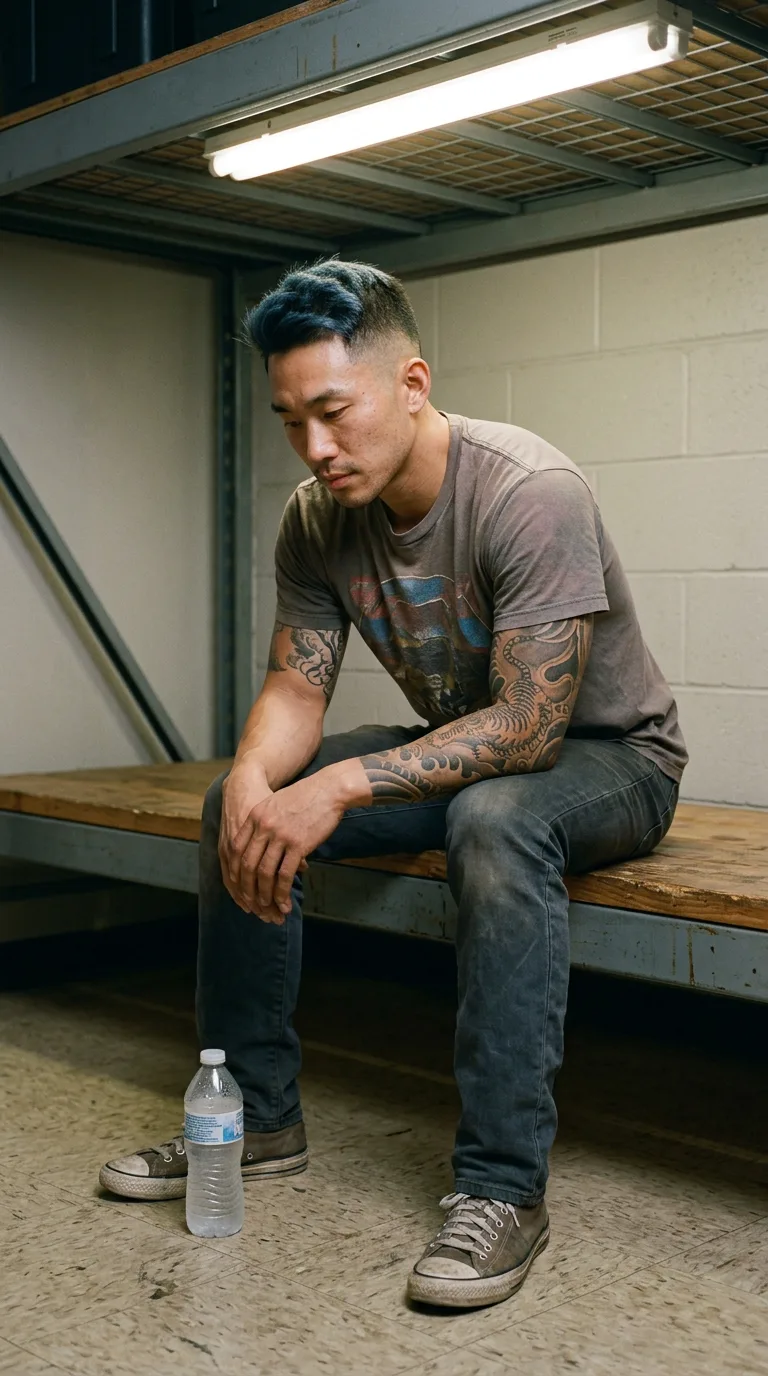
Rarest thing about him: Fashion color — epic, 1 in 56
Season 0seed 930065808 · engine v10
Character card
lineage 2NZHHJ
His body-swap story
@colin.hasbrook, wearing Gary Steckler, rolled the wheel on and woke up as Kenji Ohashi, spent 1 minute in him, then spun the wheel and woke up as Ethan Kowalczyk
The court reporter's fingers ache before he even starts typing — that's the first thing you notice, sitting in Gary Steckler's chair in the gray Anchorage light, a legal pad full of somebody else's testimony untouched beside the keyboard. You gave him fifty-eight years of bad knees and a stomach that complains about coffee now, and for the length of one deposition you actually tried liking it, the shorthand of it, the small clean competence of being good at something quiet. It lasted about as long as the transcript. Gary's ex-wife called last night — you felt it happen in his chest, that particular deflation — and something in you decided, the way it always decides, that thirty was closer to right than fifty-eight, that a man who lifts things is better than a man who writes down what other men said under oath. You didn't argue with yourself. You never really do. You opened the site on your break, the wheel already spinning in your head before your thumb touched it.
The bar is cold against your palms and then it isn't yours, it's his — two inches wider than his grip has been all year, and you feel the wrongness of that width before you feel anything else, a stranger's hands closing where they don't belong. The rack creaks. Somewhere under the noise of blood in your ears a fluorescent tube buzzes, gym-quiet, a Monday afternoon hush of clanking plates two rows over. Air comes into lungs that are younger than any you've had in months, and it comes in through teeth that were blowing out a rhythm a second ago and now just breathe.
The bar's knurling bites into calluses that didn't come from paperwork — these came from bolts stripped a thousand times, from the particular grip of a torque wrench seated right. That's the first thing that comes through, before any memory has a shape: the hands already know their own strength here, already know how far is too far. Then the shirt against your back — he's not wearing it now, it's hanging on a hook two hundred yards from this bench in a locker room that smells like bleach and rubber mats, but somehow the ghost of it arrives anyway, navy twill gone soft at the elbows, KEN stitched crooked over the pocket because the embroiderer at the shop got the thread tension wrong and nobody ever fixed it. Kenny, some of the old guys call him, though he goes by Ken to customers and Kenji only on forms. You feel him wince, mildly, at both.
The memories come in gusts, not sentences. A garage with two bays and a stoplight visible through the open door, the diner across the street dark for going on two years now, CLOSED taped inside the glass since before he worked there. The smell of brake cleaner. A woman — not the one waiting for him tonight, another one, years back, who left for Columbus and a job that mattered to her more than staying did, and he still thinks of her sometimes with the specific ache of a door he closed himself and still checks. The one who's his now: she laughed at something last week that wasn't funny and he loved her a little more for laughing anyway. None of this is dramatic. It just sits in him, ordinary as oil under his nails.
The morning came back too, unbidden, sleeve by sleeve — not this morning, but the hundred mornings that taught his hands to dress without his eyes: the shirt off the hook, buttons done by feel, boots already broken in exactly to the shape of his feet, laces tied in the same double-loop knot since high school shop class. He dyes the blue back in every six weeks in his own bathroom sink, leans over careless, doesn't much mind the stain it leaves on the grout. His shoulders are wide from ten years of leaning under hoods. His lower back complains on Sundays. None of it is a complaint he'd make out loud.
The last rep grinds up slow, no sound behind his teeth, his face doing none of what a last rep does — because you are the one moving it now, and you don't know yet what a last rep is supposed to look like on this face.
The bar racks with a clatter that isn't yours to have caused and isn't his either anymore. Your hands — his hands — come down into your lap, and you turn them over, palm up, like you're checking them for something that isn't there. Calluses. A half-healed nick on one knuckle he doesn't remember getting. You lift your eyes off them into the gym mirror across the room, into your own reflection, and you say, quiet, mostly to see if the voice still works right:
"Okay. Okay, that's — okay."
Water sweats on the floor by your foot. You don't know how long you're staying. You never do.