Gary Okafor
Fictional. Generated by AI — not a real person, and no likeness of one is intended.
55, accountant in Las Vegas · rolled by @colin.tarwater · card — no film
History
who has worn him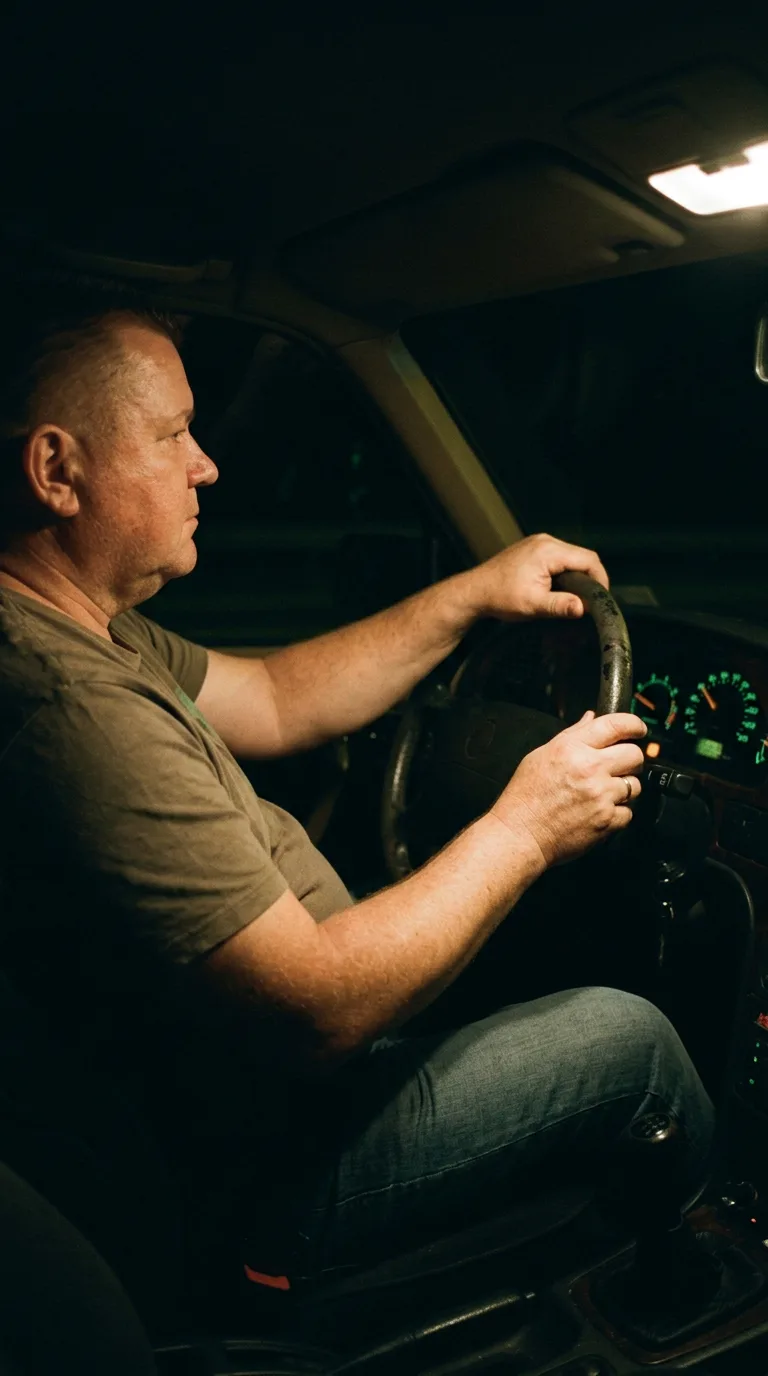
Rarest thing about him: Buddhist — rare, 1 in 55
Season 0seed 1753137633 · engine v10
Character card
lineage COEU7T
His body-swap story
@colin.tarwater, wearing Douglas Emura, rolled the wheel on and woke up as Gary Okafor, spent 9 hours in him, then spun the wheel and woke up as Ernesto Salas
HIS LAST NAME IS Okafor. He is Dennis Okafor's brother, and they share it. HOOK: You left one brother four minutes ago. Now you're inside the other.
---
Douglas Emura's kitchen smells like the soup Douglas Emura's downstairs neighbor keeps leaving on the porch, and you stand in it wearing his short skinny-fat body, his cardigan still buttoned wrong from where you dressed in a hurry an hour ago, and you cannot stop thinking about the groundskeeper.
Four minutes. That's all you gave him. You spun into a wide, muscular, gray-haired man in Atlanta with a scar through his eyebrow and a rake in his hands and the smell of cut grass everywhere, and you had just enough time to feel how good his shoulders were, how the sun sat on them, before something in you — boredom, or hunger, the thing you don't say out loud — made you reach for the site again on the phone in his own back pocket. You didn't even let him finish the row he was on.
Now Douglas Emura's laptop is open on the counter, the wheel still spinning lazy circles of names and cities on the screen, and some tired civic decency in Douglas's own leftover conscience says *that man deserved more than four minutes,* and you tell it to be quiet, and you pay again, and you spin.
The wheel gives you a Tuesday going out in Nevada while your Ohio one is going down, and it gives you a car.
—
The wheel comes off the dash light and lands in your hands already turning. You're gripping a steering wheel that's warm from a palm that isn't yours anymore, thumbs at ten and two out of pure animal habit before you even know you have thumbs. The car drifts a foot, corrects itself in one smooth pull like the road's been driven ten thousand times, and your hands — his hands, heavy-knuckled, a wedding band catching the dash glow — come off the wheel and resettle lower and wider, easier, like a man leaning back in a chair he owns. Your thumb finds the turn signal and clicks it up for an exit that isn't his.
Weight settles into you all at once: heavy through the gut, wide through the shoulders, a low ache behind the eyes that will turn out to be blood pressure and thirty years of fluorescent light. Cardigan gone. In its place, a t-shirt sticking a little to a broad back, jeans worn soft at the knee, brown shoes worked in.
He doesn't feel the exit change. He doesn't feel anything. There's no him left in here to feel it.
—
The wheel under your palms gives it first — decades of it, before it gives you anything else. Two monitors, blue-white, a keyboard worn shiny in the middle three keys. Not this car's wheel, his desk, his life: Gary Okafor, fifty-five, an accountant's chair with the good lumbar support he bought himself for his birthday because nobody else was going to. Numbers reconciling at 4:58 on a Friday, the particular relief of a spreadsheet balancing to the penny, a relief nobody who doesn't do the job would understand and he stopped trying to explain twenty years ago.
The wedding band is next, and it comes in heavier than the desk. Linda. Eleven years married, four since the cancer took her, and the ring never came off because taking it off felt like a second funeral he wasn't ready to schedule. There's a version of him that still turns to her side of the bed to say something and catches himself halfway through the sentence. There's an old girlfriend too, before Linda, who calls sometimes still, careful and fond, and neither of them has ever said out loud what that call is for.
Two kids, grown, scattered, good about calling on Sundays. A brother in Atlanta who cuts grass for a living and has more money in the bank than either of them talks about, because their father left them both comfortable and Dennis never needed to prove it and Gary never stopped needing to. You know that house. You were just standing in it, in Dennis's own body, four minutes and a lifetime ago — his kitchen, his rake, the particular quiet of a man who chose simple on purpose. Gary chose numbers instead, and a desk, and Las Vegas, and somewhere in the middle of that he decided being the accountant brother instead of the groundskeeper brother meant something, and it's a small ugly comfortable thought and it comes through clean because it's his and he never said it to anyone alive.
The steering wheel gives you the drive itself: this stretch of highway at the end of a long shift, casino fluorescents traded for real dark, three miles from a house that's too quiet since Linda, dash lights green on his knuckles, a body that carries high blood pressure like a low hum under everything and doesn't complain about it because complaining isn't really his register.
Your hand finds the shirt pocket without you asking it to and there's a lighter in it — not for show, for the habit under the habit, a pack a day for thirty years, and his fingers already know the flick-and-catch of it, thumb rolling the wheel before he's even decided to think about smoking. It happens when he's not thinking. It's happening now.
The shirt against your back gives you this morning: pulling it over his head in a bathroom with the fan going, the mirror fogged at the edges, checking his own gut in it with the specific tired patience of a man who stopped being surprised by his own body years ago. Belt on the third notch loose from where it used to sit. Shoes that took two years to break in right and he's not buying new ones now just because they're starting to look tired.
Under it all: heavy through the chest and gut, strong through the forearms from nothing in particular, hands that know a keyboard and a lighter and the particular grip of this exact wheel and nothing else demanding of them. Fifty-five and heavier for it and not unhappy, exactly. Just going home to a quiet house at the end of a long day, in a body that has done this ten thousand times and was about to do it again.
—
The car is stopped now, some shoulder or driveway the wheel doesn't explain, engine still running, his hand still low on the wheel and yours now.
You lift it off. Turn it over in the dash light like it belongs to somebody you're meeting for the first time, which it does.
"Okay," you say, out loud, to no one, in his low tired voice, and you're already wondering how long you'll let this one run before you go looking for the wheel again.