Douglas Emura
Fictional. Generated by AI — not a real person, and no likeness of one is intended.
57, social worker in Small-town Ohio · rolled by @colin.tarwater · card — no film
History
who has worn him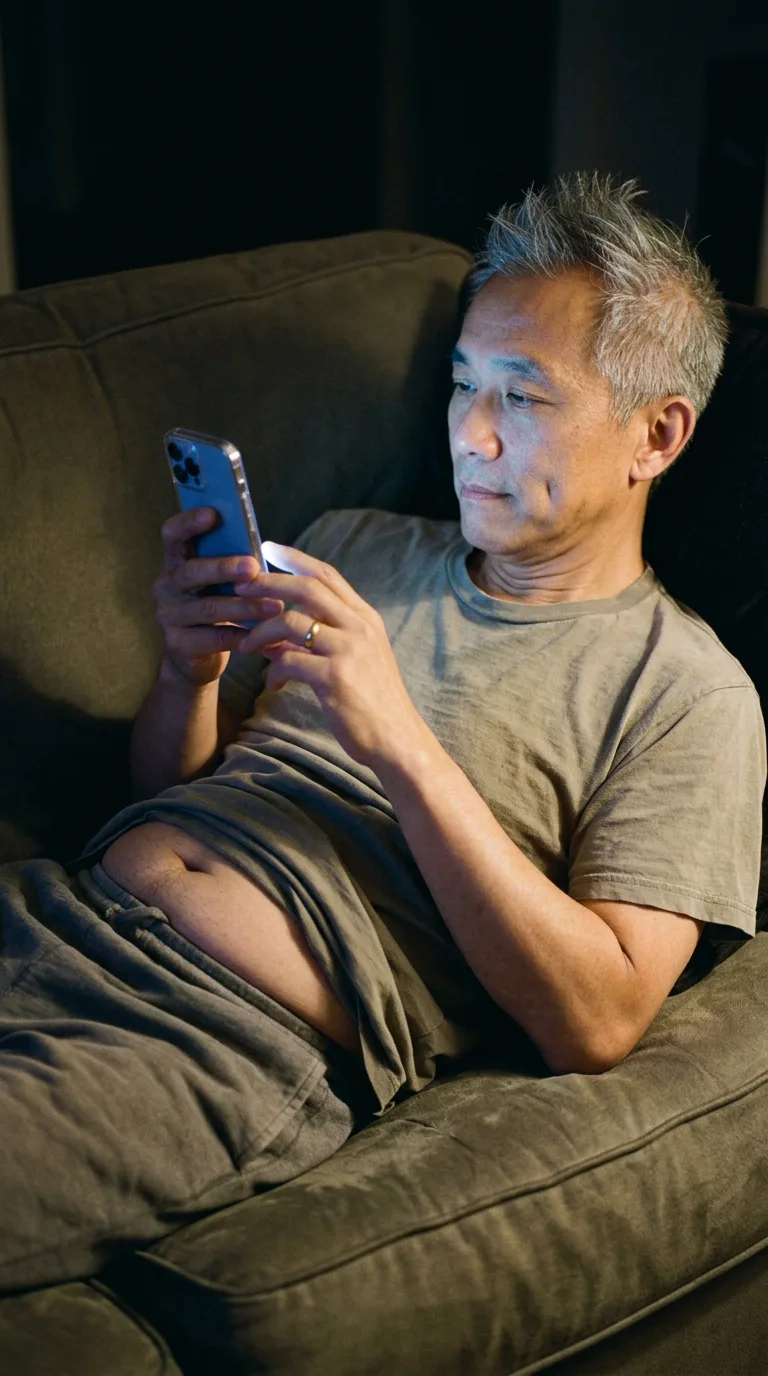
Rarest thing about him: Widowed — rare, 1 in 25
Season 0seed 438437366 · engine v10
Character card
lineage COEU7T
His body-swap story
@colin.tarwater, wearing Osvaldo Reyna, rolled the wheel on and woke up as Douglas Emura, spent 1 minute in him, then spun the wheel and woke up as Gary Okafor
You are Osvaldo, and it is not even noon. The furniture warehouse smells like sawdust and the cheap coffee somebody left burning on the hot plate in the break room. Your — his — knees ache the way they always ache, the left worse than the right, and there is a couch half-wrapped in plastic sitting on the dolly in front of you like it's your whole life's assignment. You have had this body less than a minute and you already know you don't want it. It's not the knees. It's not even the couch. It's the specific, total ordinariness of standing here, of knowing exactly how the next eight hours go, of feeling how little curiosity is left in a pair of hands that have moved ten thousand couches. Sixty-two years old and gray at the temples and nothing left to discover in it. You've barely said hello to him and you're already reaching for your phone to open the site again, thumb moving before you've decided anything, the way it always does now. That's the tell. Fifteen men in and the wanting doesn't wait for you to agree to it anymore.
The wheel spins. Somewhere it lands.
And you are lying on your side in the dark, and the light of a phone is doing something warm and blue to a cheek that isn't Osvaldo's, and a gut is resting soft against a waistband, and a thumb — his thumb, now yours, now both — stops mid-scroll for exactly the length of the changeover and then keeps going, faster, steadier, flicking past a photo of a granddaughter's birthday cake, past a headline about a school levy, like none of it matters, because for one second nobody is reading it at all.
The mattress holds you the way mattresses hold heavier men, a little groove already worn into it on this side. The room smells like fabric softener and the particular staleness of a bedroom nobody airs out anymore. A ceiling fan ticks somewhere above you, off-balance, has ticked like that for years. Your — his — left hand is bent at an angle to hold the phone up, and there's a ring on it, warm from his skin, plain gold, worn thin on the underside the way rings get when a man never takes them off to wash dishes. That ring is the first door. It opens on a church basement with folding chairs and paper cups of red punch, a woman named Carol in a dress the color of wheat, and the particular terror of being twenty-six and sure. Then it opens on a hospital room eleven years ago, her hand gone thin and cool in his, machines making their patient sounds, and the sentence he never got to finish saying to her because she went first. He kept the ring on afterward. Nobody asked him to. Nobody had to.
The t-shirt against your back is soft in the specific way of a shirt washed four hundred times, and it gives you the morning he put it on — not this morning, some other one, a Saturday, the smell of his own coffee, his phone buzzing with a text from his daughter Mei about grandkids and a dentist appointment, his second son Peter calling to talk about nothing much, his youngest, Junior, not calling, the ache of that a small familiar stone he carries and doesn't examine anymore. Three kids raised in this house on a caseworker's salary, on overtime and Sunday shifts and skipped vacations, and it was worth it, every stretched dollar of it, though God he's tired now in a way that isn't only about sleep.
The waistband is snug against a belly that's gone soft in the way of a body that sits in cars outside apartment buildings more than it moves, and the tiredness in the muscle there tells you about the diabetes without needing words for it — the finger pricks he does at the kitchen counter without looking, the granola bar in the glove compartment for when his hands start to shake on a walkway waiting for someone to buzz him in. Fifty-seven and his knees complain going up stairs and his eyes have started needing the phone held closer than they used to, six inches, the exact distance it's at right now.
His face does what it always does, dimples cut into cheeks that haven't smiled in the last ten minutes, dimples that show anyway, the way old grooves show in wood whether you're using the table or not. Somebody at the office called it his resting kindness once. He carries it into rooms with locked doors and frightened kids and it has never once been a lie.
The pad of his thumb still knows the layout of this phone by feel, the case with the worn corner, and it keeps moving in your hand now, scrolling nothing, because there is nobody left underneath to want it to stop.
You bring the hand down out of the light and turn it over in front of your face, this stranger's hand, the ring catching what's left of the phone's glow, and dimples set into cheeks you didn't earn pull themselves into something almost like a smile before you've told them to.
"Okay," you say, to the dark, to no one, to whatever's next. "Let's see how long you last."