Osvaldo Reyna
Fictional. Generated by AI — not a real person, and no likeness of one is intended.
62, furniture mover in Seoul · rolled by @colin.tarwater · card — no film
History
who has worn him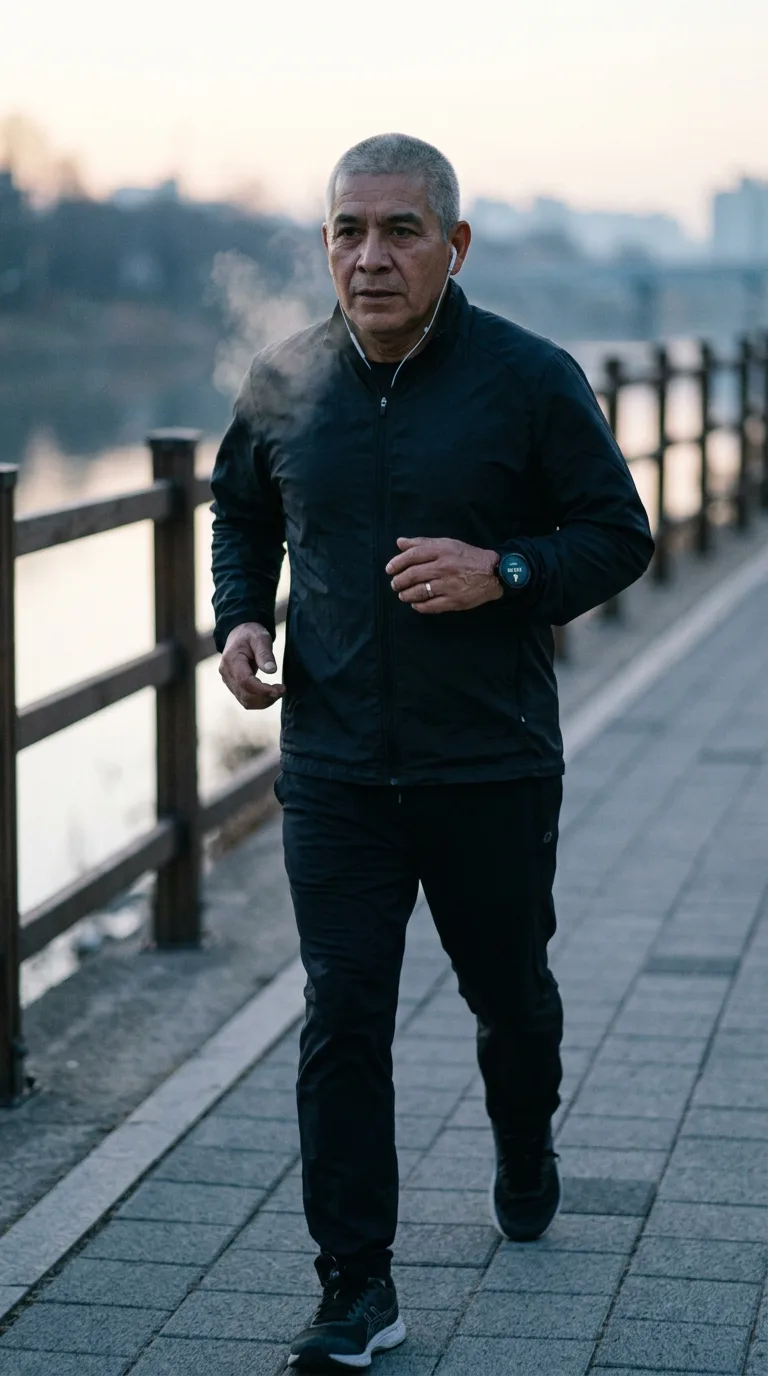
Rarest thing about him: Seoul — epic, 1 in 1,108
Season 0seed 1797113580 · engine v10
Character card
lineage COEU7T
His body-swap story
@colin.tarwater, wearing Reginald Boatwright, rolled the wheel on and woke up as Osvaldo Reyna, spent under a minute in him, then spun the wheel and woke up as Douglas Emura
---
Reginald Boatwright's hand aches where the scar splits his eyebrow, an old habit of rubbing it when he's thinking too hard about something he shouldn't. He's standing in his own kitchen, in his own dad-bod body, sixty seconds into being Reginald again after fifteen different men, and the apartment is too quiet the way it always gets on a Tuesday once the grading is done and the whiskey's half gone. He taught fractions today. He will teach fractions tomorrow. Somewhere in that thought is the whole reason his thumb finds the laptop trackpad instead of the remote. It isn't boredom, exactly. It's that Reginald's life keeps not being interesting in the specific way Reginald wants it to be, and the wheel is sitting right there, patient, glowing, asking nothing of him but money he already has too much of. He doesn't decide so much as notice his hand has already clicked spin.
The page loads white. A wheel of names blurs into a single frozen face — a small gray-haired man mid-run — and the world snaps sideways without asking permission.
You are moving. That's the first thing — not thought, just motion, legs already committed to a stride that isn't yours, cold air scraping a throat that isn't yours, and for one broken beat your foot doesn't know where the ground is. You stumble on it. It doesn't land. The other foot finds the path and the run just — continues, arms a little lower now, breath shorter, a watch on your wrist buzzing a pace it has no memory of you ever running.
Gray light over a canal. Steam coming up off dark water. Somewhere behind you, or maybe just around you, a wall of shop signs still lit from the night before, red and blue characters bleeding into the coming morning. Your knees know this pavement. Your knees are sixty-two years old and they know it.
The jacket is what opens first — nylon, zipped to the throat, damp at the collar with your own breath — and it comes with a flash of a closet door, a wife's voice saying *you'll freeze*, not unkindly, the same thing she's said maybe four thousand mornings running. Her name arrives a half-second behind the voice: Yun-hee. Not the wife you'd have guessed. Twenty-six years married, and this morning — this exact morning, hours before, in the dark of the bedroom — you'd sat on the edge of the bed pulling these same running pants on one leg at a time, slow, because your lower back has opinions now that it didn't used to have, and she'd rolled over and said something about the electric bill and you'd said something back that wasn't really about the electric bill, the two of you fluent in a language made entirely of small complaints that mean *I am still here, are you still here.*
The earbuds are next — tinny mid-song, some ballad you've had on repeat since your daughter put it on a playlist for you three years ago — and her whole face comes with it, grown now, moved out, calling on Sundays. Ji-eun. A single kid, fiercely loved, gone the way kids go, and you miss her on a schedule you've never told anyone, Wednesdays mostly, no reason.
The watch on your wrist is heavier with memory than it has any right to be — mile splits going back years, a doctor's flat voice saying *your pressure's up again, Osvaldo*, the little orange pills in the cabinet you take without telling your wife how often you forget them. Under the jacket your chest does something it shouldn't at this pace, a flutter you've learned to run through rather than around.
And then the couch — not here, not now, but the memory arrives sideways off the strap-callus still living in your shoulder even mid-stride, the exact weight of a leather sectional going up three flights in Itaewon, the curb, the truck, twenty-six years of doing this with your body instead of your head, the particular ache that lives in your lower back permanently now, paid for and irreversible. A ring, plain gold, turning against your finger without your telling it to — an old habit, this hand doing it on its own whenever your mind wanders, which is often, which is now. It has turned like this through funerals and paydays and one long-ago woman named Grace who still shows up sometimes in the gap between songs, unbidden, no malice in her, just a life that happened before this one did.
The cold in your lungs is real and specific — sixty-two years of lungs, an ex-smoker's lungs, quit eleven years ago on a bet with Yun-hee you still bring up when you want to feel proud of something. The heavy drinker in you already wants tonight's first one, quietly, the way it always does by mid-morning, a low hum under everything else.
None of it is yours. All of it is now.
You look down at the hand mid-swing — brown, weathered, a plain wedding band catching the gray morning light — and you stop turning the ring only because you've noticed you're doing it. You lift your eyes to the water, to the steam, to a city that was asleep an hour ago from where you're standing and is just now deciding to wake up.
"Not bad," you say, out loud, to no one, in a voice with a Seoul-worn Spanish under it that isn't Reginald's at all anymore.
Somewhere back in Chicago, a body sits alone at a kitchen table, empty in a way no one will ever be able to prove.