Reginald Boatwright
Fictional. Generated by AI — not a real person, and no likeness of one is intended.
51, teacher in Chicago · rolled by @colin.tarwater · card — no film
History
who has worn him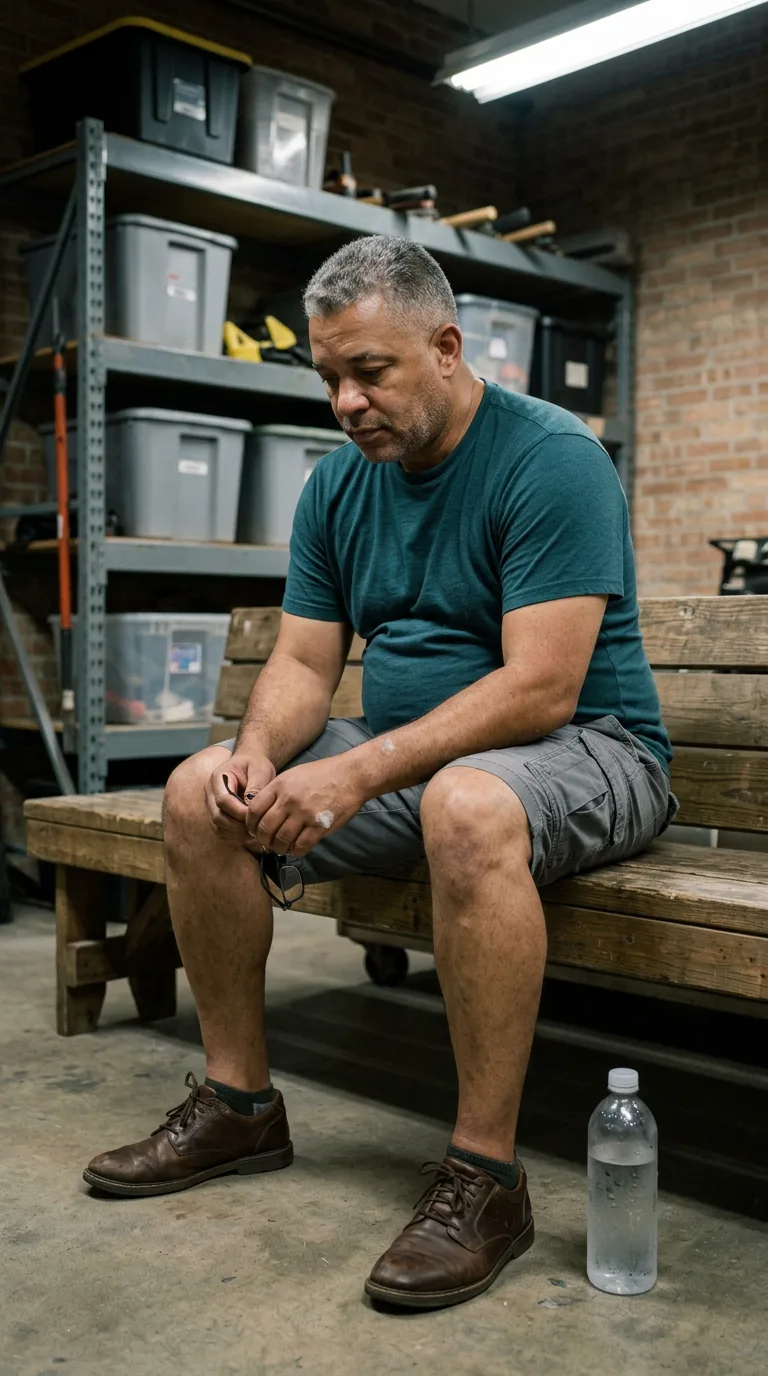
Rarest thing about him: Underwater — up to $25k — rare, 1 in 49
Season 0seed 800889316 · engine v10
Character card
lineage COEU7T
His body-swap story
@colin.tarwater, wearing Donald Petrik, rolled the wheel on and woke up as Reginald Boatwright, spent under a minute in him, then spun the wheel and woke up as Osvaldo Reyna
The bouncer's knuckles are bad tonight, both hands, the left worse where it got stepped on three years back and never set right, and the door hasn't even opened yet. Early evening, the light going that flat desert orange over the parking lot, and you are standing behind the rope stand thinking about how the cold is going to get into that hand around midnight the way it always does, and how you are sixty-one years old holding a clipboard for people half your age. You did this thirteen times already for reasons that felt urgent at the time. There's no urgency now. Just the specific tiredness of a body that works but has stopped surprising you, every ache accounted for, every night the same shape. That's reason enough. You go into the back office on your break, pull up the site on your phone with the bad hand, and spin.
The gym doesn't announce itself. It arrives as weight — a body heavier through the middle than the one you left, gripping a barbell that is two inches wider on the rack than it should be, and you don't decide that, the hands already know it, already committed. Under the bar, breath held wrong, the last minute of blowing through the teeth cut off early because you're not the one who was counting. You finish the rep. Slow, controlled, none of the strain that should be on this face on a last set. Racking it. Sitting back. A water bottle sweating on the concrete by your foot.
The T-shirt is dark teal, worn thin at the collar, and it comes with the memory of pulling it over your head this evening in an apartment under the tracks, the whole building shuddering faintly every eleven minutes when a train went over, a sound so constant you'd stopped hearing it around 2004. Reginald bought this shirt at a school fun run, kept it because it fit loose in the gut. The shorts are older than that — cargo, a paint stain on the thigh from a mural project with his sixth period four years ago, kids doing the Bulls logo badly and him laughing so hard he had to sit down. That's this hand's first real memory, coming up off the fabric like heat off asphalt: laughing kids, bad art, chalk dust.
The bench under you is wood, cold through the shorts, and it gives you the gym itself — Tuesday and Thursday evenings, same rack, same corner near the brick wall and the shelf of plastic totes nobody's touched since somebody's move-out. Reginald started coming here two years ago on his doctor's word, the blood pressure numbers scaring him more than he let on to anyone, because there was no one to let on to. Divorced eleven years, no kids, a apartment that echoes a particular way in September when the new semester starts and he lies awake running seating charts in his head instead of sleeping.
The scar comes through last, when your fingers — his fingers — brush the eyebrow to wipe the sweat, an old habit, and it opens onto a Sunday afternoon, nine years old, a cousin's bike, a curb. His mother pressing a dish towel to it in a kitchen that smelled like Pine-Sol and had gone quiet with fright. He has told the story to twenty-eight years of students, always as a joke about listening to your elders, and every single time some kid in the front row goes soft-eyed and quiet like they know the story isn't really about a bike.
There's a lanyard memory too, though it's hanging in a locker across the room and not on him now — the blue cord, the laminated photo ID, Malcolm X Academy stamped along the bottom, and the particular ache of standing at the front of an empty classroom after the last bell, chairs pushed in crooked, the smell of dry-erase marker, wondering some Tuesdays why he kept doing this and knowing by Wednesday morning exactly why.
The body itself tells you plainly what it is: fifty-one, dad-bod thick through the waist, shoulders that still have real strength banked in them from twenty years of hauling boxes of textbooks and moving furniture for other people's classrooms. High blood pressure sits in him like weather, a pressure behind the eyes some evenings. The knees complain going down, not coming up. Grip still strong — stronger, if you're honest, than the man you just left.
You set the bar back on the rack. You look down at your hands — his hands, unmarked, broad, a callus at the base of each palm from bar work, no ring, no scar you didn't already know about — and you turn them over once like you're checking they're real.
"Okay," you say, out loud, to no one, to the empty corner of the gym. "Okay. Let's see."