Dennis Okafor
Fictional. Generated by AI — not a real person, and no likeness of one is intended.
46, groundskeeper in Atlanta · rolled by @colin.tarwater · card — no film
History
who has worn him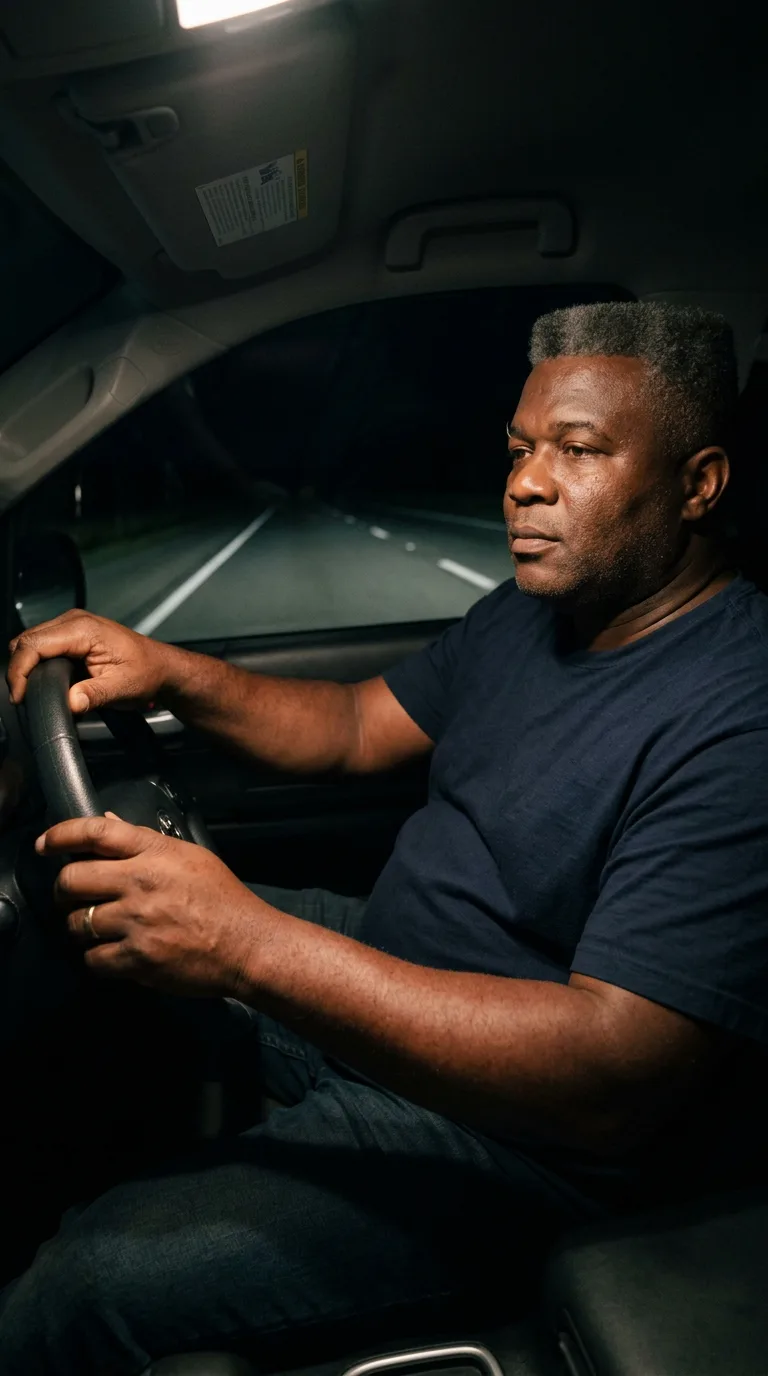
Rarest thing about him: A pack a day — rare, 1 in 17
Season 0seed 593596816 · engine v10
Character card
lineage COEU7T
His body-swap story
@colin.tarwater, wearing Craig Hollenbeck, rolled the wheel on and woke up as Dennis Okafor, spent 2 minutes in him, then spun the wheel and woke up as Bryan Kaminski
You are standing in Craig Hollenbeck's kitchen, and it has been less than a minute, and already you hate the smallness of it. The fluorescent light over the sink hums the way it always hums. There is a bill on the counter with Craig's name on it, and a photo on the fridge of a woman you have never met and never will, and the whole house smells like carpet cleaner. You did not come back here to redecorate a man's regrets. You came back because Craig's hands, when you flexed them a minute ago, felt exactly the same as they did the first day you had them — soft in the knuckle, a manager's hands, hands that sign off on other people's overtime and never lift anything heavier than a stapler. Ten spins and this is what you're wearing: a man built for a cubicle. You want, tonight, something with weight in it. You want to stand somewhere and feel like the ground noticed you arrive. So you go to the site with the wheel on it, the way you always do, telling yourself this is the last one for a while, the way you always do, and you spin.
The road comes up under you before you know it's a road. Both hands are on the wheel at ten and two, and the dash light is green on knuckles too big to be your last ones, and there's a smell of cut grass baked into upholstery that will not wash out. You are already turning the wheel — no. He is. The hands move on their own for one more half-second, drifting the car a foot toward the centerline, and then they are yours, and you correct it in the same motion he would have, smooth, unhurried, because muscle does not know yet that the mind behind it changed owners. Both hands come off the wheel and resettle, lower, wider, spread the way a bigger man spreads them. The turn signal clicks on, green arrow pulsing against the dark glass, blinking for an exit that means nothing to you and everything to a wife three miles up the road with the porch light already on.
The wheel is rubber-wrapped and worn smooth in two half-moons where his palms have lived for years, and the second your palms — his palms — settle back onto those worn places, something comes up through them like heat off asphalt. Sweat. Chalk lines. A hundred afternoons of pushing a striping machine behind home plate, watching the white go down straight because his eye has never once needed a string line. He is proud of that, absurdly proud, the way a man is proud of the one thing that is entirely his own and costs nothing to keep. The mower's vibration lives permanently in these forearms, a low buzz under the bone even at rest. Type 2 sugar, the doctor's phrase, sits in him too — a tiredness behind the eyes some afternoons, a discipline about what's in the cooler in the truck bed, a testing kit in the glovebox six inches from your knee right now.
The shirt is dark cotton, soft from washing, and it gives you the morning it went on: standing in a bedroom with the blinds already hot at the edges, his wife's voice from the bathroom asking did you take your pills, and him saying yeah baby already did, which was true, and the two kids' voices somewhere below, one of them fighting with a backpack zipper. He'd looked at himself a second in the mirror, thumbed the scar through his eyebrow — an old thing, high school, a pop fly and a fence and a story he still tells wrong on purpose because the true version's boring — and gone downstairs into his day. Coffee. The field. Mower stripes laid down so clean the groundscrew boss just nodded once, which from that man is a standing ovation. Then the drive home, same drive, three miles of it, radio low, and under it, quieter, a woman from a long time ago he still thinks of on nights exactly like this one, not with guilt exactly, just weather that passes through. His wife is real and chosen and here. The other one is a window he doesn't open, just knows is there.
The wedding band is on the hand nearest you on the wheel, plain gold, warm already from his skin, and it brings the wedding itself, hot church, his mother crying happy, his own hand shaking signing the certificate after — twenty-some years gone into that shake now, into two kids, into a house three miles ahead with a light on. His fingers, resting on the wheel, want to drum — they always want to drum, on tables, on dashboards, a rhythm with no name he's had since he was a boy — and you feel the want arrive in the tendons before you decide anything about it.
The pack of cigarettes is in the door pocket, half gone, and just brushing it with two fingers gives you the taste of the last one, out behind the equipment shed, the field empty and green and enormous and entirely his to keep beautiful.
You bring the hands up off the wheel — carefully, the car still rolling, foot easing to the brake on its own good sense — and you look at them in the dash light. Big. Scarred faintly across two knuckles from something you haven't been shown yet. A stranger's hands wearing a stranger's ring, and under the skin, all that grass and all that marriage and all that ordinary decent life, none of it yours, all of it now the only life you've got.
"Okay," you say, out loud, to the empty car, to no one. "Okay, big man. Let's see how you drive."