Bryan Kaminski
Fictional. Generated by AI — not a real person, and no likeness of one is intended.
38, social worker in Houston · rolled by @colin.tarwater · card — no film
History
who has worn him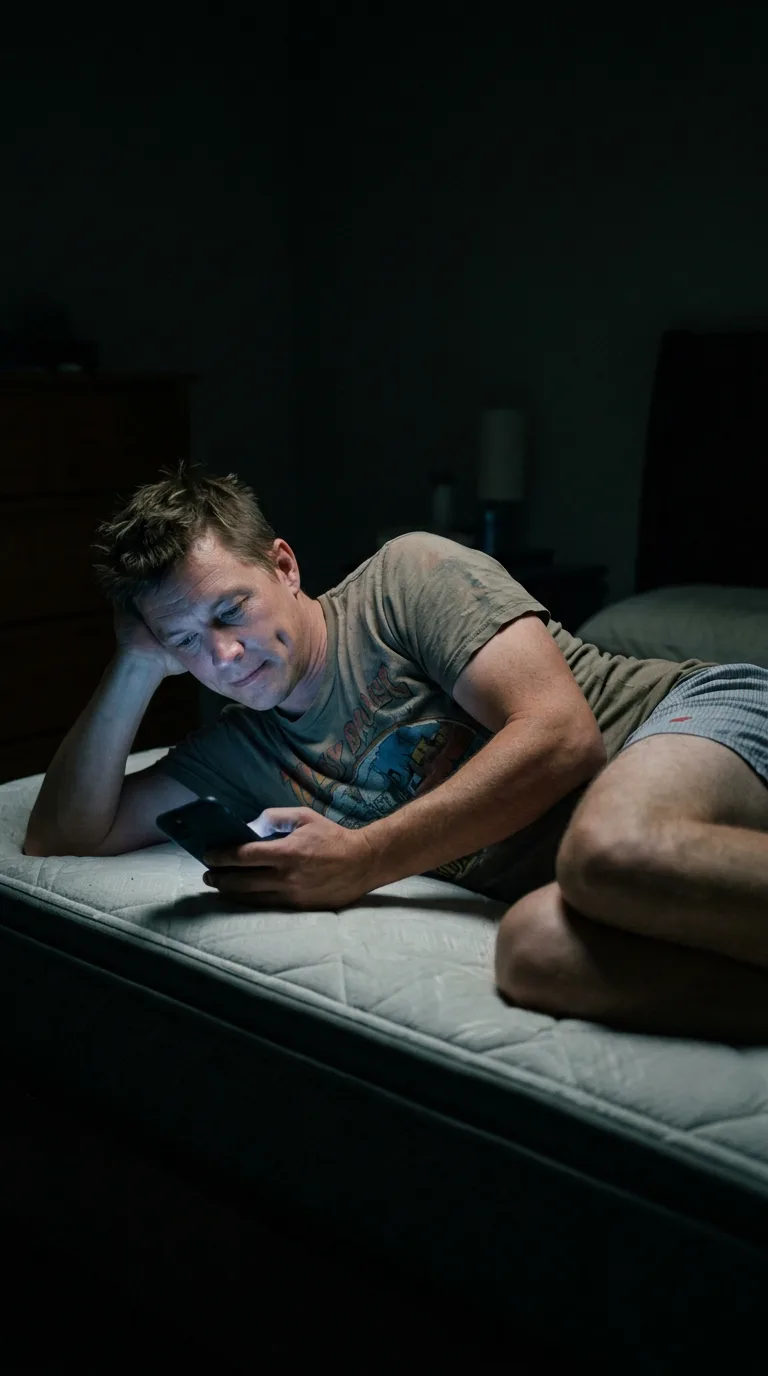
Rarest thing about him: Cancer, in remission — epic, 1 in 110
Season 0seed 347786355 · engine v10
Character card
lineage COEU7T
His body-swap story
@colin.tarwater, wearing Dennis Okafor, rolled the wheel on and woke up as Bryan Kaminski, spent 1 minute in him, then spun the wheel and woke up as Donald Petrik
You are sitting on the edge of Dennis Okafor's bed, and his knees ache in a way that isn't yours and never will be.
Two minutes ago you spun and landed here — big shoulders, gray hair gone silver at the temples, a scar through the eyebrow that his fingers keep drifting up to touch like they're checking it's still there. His. Not yours. You've had the memory of thirty years of grounds crew work flood in through his boots, still on, laced the way he laces them, and it was fine, it was good even, the smell of cut grass and diesel a settled kind of good you don't often get. But two minutes is long enough to feel a man's lower back complain about a chair he hasn't sat in yet, long enough to feel the phantom itch of a knee replacement he's due for and dreading, long enough to realize this body is a rental with a maintenance schedule. You didn't spin for tired. You spun, the eleventh time, for something with room left in it. So you get up off Dennis Okafor's bed, walk him to the little table with the laptop already open to the site because some habits you keep no matter whose hands they're in, and you pay again.
The wheel spins.
You are on your side in the dark, and the light is blue and close and it is not your face it's lighting, it is his, though for one full second you don't know that, you only know the mattress under a hip that aches faintly, chronically, in a way that feels old and unafraid — a body that has already been through the worst thing a body goes through and come out the other side of it. The thumb in your hand — his hand, six inches from a face that is now, apparently, yours — keeps moving over the screen. Faster than he had it going. Steadier. You feel the weight settle into you all at once: six feet, a gut that isn't there, shoulders under a shirt gone soft with washing. No ache in the knees. Ache somewhere deeper and quieter that you can't place yet, right in the marrow, if marrow can be quiet.
Then the shirt talks first, because the shirt is what's touching you most.
Faded gray, a concert tour graphic gone soft and cracked across the chest, and it comes back in pieces — a show in Austin nine years ago, a girl he was seeing then, gone now, gone the way most of them have gone, name faded like the shirt's print. This morning — no, yesterday morning, whatever morning last had him upright — he pulled it over his head one-armed, favoring the left shoulder out of habit rather than need anymore, because for eight months two years ago that shoulder had a port taped under it and you learn to protect a thing long after it's stopped needing protecting. The memory of the infusion chair arrives cold and specific: the vinyl squeak, the taste that came up the back of his throat that had nothing to do with his mouth, a nurse named Priya who called him "Mr. Kaminski" with the emphasis wrong in a way he liked. He is in remission. The word arrives with relief so large it's almost its own weather system, and under it, always, a smaller word he never says to anyone: *for now*.
The mattress under you is a leg's-width away from a nightstand and you feel — before you see, before any image comes — that his knee has already started, the bounce, small and constant, an idle engine that runs whether he's anxious or fine, has run since he was nine years old in a pew between his mother and his sister at Queen of Peace, his mother's hand landing flat on his thigh to still it, not unkindly. It's going now, this exact second, against the bed frame, the vibration coming up through the mattress into whatever the wheel decided your hip would feel like.
His phone is warm from his palm and it opens a wider door: the folder icon on the home screen that isn't a folder, it's a habit, thumb finding it before thought, an ex's name still starred in his contacts though he swore to a friend six weeks ago he'd deleted the thread. He didn't. It's two rows down from where his thumb is. He was not, a minute ago, going to open it. He was scrolling past it on purpose, which is its own kind of ritual.
Under the sheet, the walkway from three days ago comes up sideways, unbidden, smelling like this bedroom doesn't at all — hot tar roofing and somebody's fried food through a screen door, the manila folder gone soft-cornered in his arm, waiting outside apartment 214 for a woman named Renata to let him in for the third scheduled visit that month, his dimples showing without him meaning them to when her kid, four years old, opened the door instead and announced with enormous seriousness that the toilet was broken. He remembers liking that job on the good days with a fullness that has nothing to do with the salary, which he doesn't need the way people assume, given the house, given his mother's people and their money quietly behind him his whole life — he does the work anyway, has for eleven years, because the four-year-old and the broken toilet were the whole reason and reason enough.
His body, weighed from the inside: thirty-eight and unhurt today, average through the middle, dimples set into a face that apparently does this at rest, no effort, no performance — you feel the muscles of it doing nothing and the face doing it anyway. No tattoo, no ring, no chain at the throat. Just weather in the skin, sun through a truck windshield for a decade of afternoons, and under all of it that quiet marrow-memory of chemo, folded away and functioning, a debt paid that could still come due.
The thumb stops.
You look down and it's his hand on the phone, blunt fingers, a callus at the base of the first knuckle from a pen he holds too hard writing case notes, and you turn it over slowly the way you always do, checking it's really the swap and not just a dream of one — knee still bouncing on its own, nobody driving that part, some things a body keeps doing whether you're new to it or not.
You lift your eyes to where the phone's camera would be if you cared to make it one, and you say, to the dark, to no one who's listening yet, "Okay — not what I meant to grab, but okay."