Everett Sandoval
Fictional. Generated by AI — not a real person, and no likeness of one is intended.
57, bartender in Seattle · rolled by @colin.hasbrook · card — no film
History
who has worn him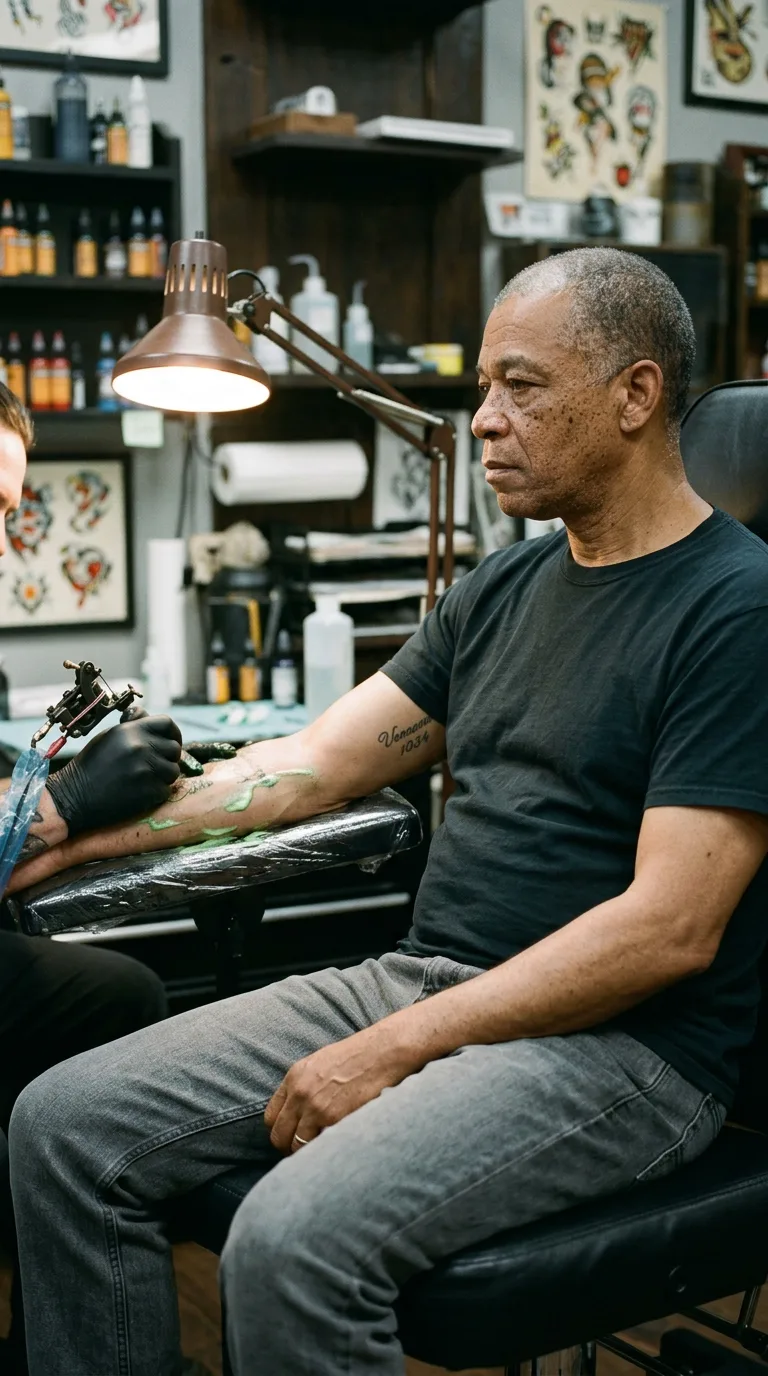
Rarest thing about him: One, upper arm — rare, 1 in 13
Season 0seed 1280968762 · engine v10
Character card
lineage 2NZHHJ
His body-swap story
@colin.hasbrook, wearing Daniel Nishikawa, rolled the wheel on and woke up as Everett Sandoval, spent under a minute in him, then spun the wheel and woke up as Patrick Huelsman
You are sitting in Marcus Delray's kitchen with a beer you don't want, in a body that isn't sore anywhere, and that is the problem. Marcus is 35, has a nurse's forearms and a bad marriage he complains about too much, and an hour and twenty-four minutes ago you wore him for less time than it takes to boil water — long enough to feel his knees don't hurt, his back doesn't hurt, nothing in him has been used the way a body is supposed to be used. It was restful. It was also nothing. You gave him back to himself and climbed into the man who lives one house down instead, because Houston is muscle and youth and none of it means anything after five hundred and twenty spins — Daniel Nishikawa's shoulders are wide and his job is a schedule you could set a clock by, and tonight, alone with the wheel glowing on your phone, that is exactly the trouble: too easy, too new, too much like a rental car. You want something that has miles on it. You open vessel.cards the way you'd open a fridge at midnight, not hungry, just restless, and you spin.
The lamp overhead gutters — a brownout, half a second, nothing anyone in the shop will remember by tomorrow — and when the light steadies your arm has stopped flinching under the needle.
You are sitting. You are heavier through the middle than Daniel, lighter through the shoulders, and something low in your back is already complaining about the chair before you've even settled into owning it. The green soap is cold and slick where it's pooled in the crook of your arm. The machine buzzes on, patient, not knowing anything has changed, and you watch the needle go into your own skin like it belongs to the guy next to you. Your jaw, which a second ago was clenched hard enough to ache, has just let go.
The tattoo artist doesn't look up. "You good?"
Your mouth answers before you've decided anything — "Yeah, keep going" — in a voice low and a little gravelled, a Seattle rasp, not yours, not yet familiar, already yours.
And then the shirt gives it to you first, because the sleeve is rolled and pressed against your forearm hair, and it comes in like a smell before it's a memory: this morning, standing in front of the closet, choosing the black button-down over the flannel because flannel snags on the plastic wrap they tape over fresh ink, and Denise saying from the bathroom, don't you dare come home smelling like antiseptic and expect me to feel sorry for you, and you laughing because thirty-one years married and she still pretends she isn't the one who booked the appointment for your birthday. Everett Sandoval. The name arrives attached to the shirt collar, the way a name arrives when someone's said it to you ten thousand times.
The chair takes the next one — vinyl, cool, cracked at the seam under your right thigh — and it's not this shop, it's the one behind the bar, eleven years of standing on a mat that never quite cushions enough, and your lower back flares in recognition, a dull constant ember that has nothing to do with tonight and everything to do with every night, decades of reaching for the well bottles, of leaning over ice bins, of a spine that clocked in for its first shift back when you still had all your hair. Your knees know the floor mat. Your feet know which shoes to wear so the arch doesn't scream by close.
The green soap under your arm gives you the design going on above it before it's even fully there — a name, Clementine, and a date, 1954, his mother's, dead eleven years now, and you feel the specific ache of choosing this instead of flowers, a permanent kind of visiting, and underneath that the ordinary Friday-evening tiredness of a man who closed a slow lunch shift, texted his wife I'll be a little late, and drove himself here instead of home because some griefs need an appointment.
The wedding band on your left hand is warm from your own skin, and it opens on Denise — not the wedding, further back, a woman before her, Roberta, who left for Portland twenty-nine years ago over a fight about nothing that was actually about everything, and who still surfaces sometimes at 2 a.m. behind the bar when a certain song plays and a customer laughs a certain way. You loved her first and worse. You love Denise longer and better. Both of those are just true, sitting side by side, no argument between them.
And your children come in loose, unattached to any object, just there the way children are always there in a father's body — three of them, grown enough now that the calls are shorter, and you feel the specific soft exhaustion of having raised people, done, mostly, though never all the way done.
Your hands are resting on your own thighs, and you notice them the way a passenger notices a dashboard — freckled across the backs, knuckles a little swollen, a fresh burn scar starting to form where the machine has been working near your wrist all this time without you.
You turn them over. You look up, past the lamp, into whatever is holding the frame.
"Almost done," you say, to no one, or to everyone, and you don't know if you mean the tattoo.