Marcus Delray
Fictional. Generated by AI — not a real person, and no likeness of one is intended.
35, nurse in Chicago · rolled by @colin.hasbrook · card — no film
History
who has worn him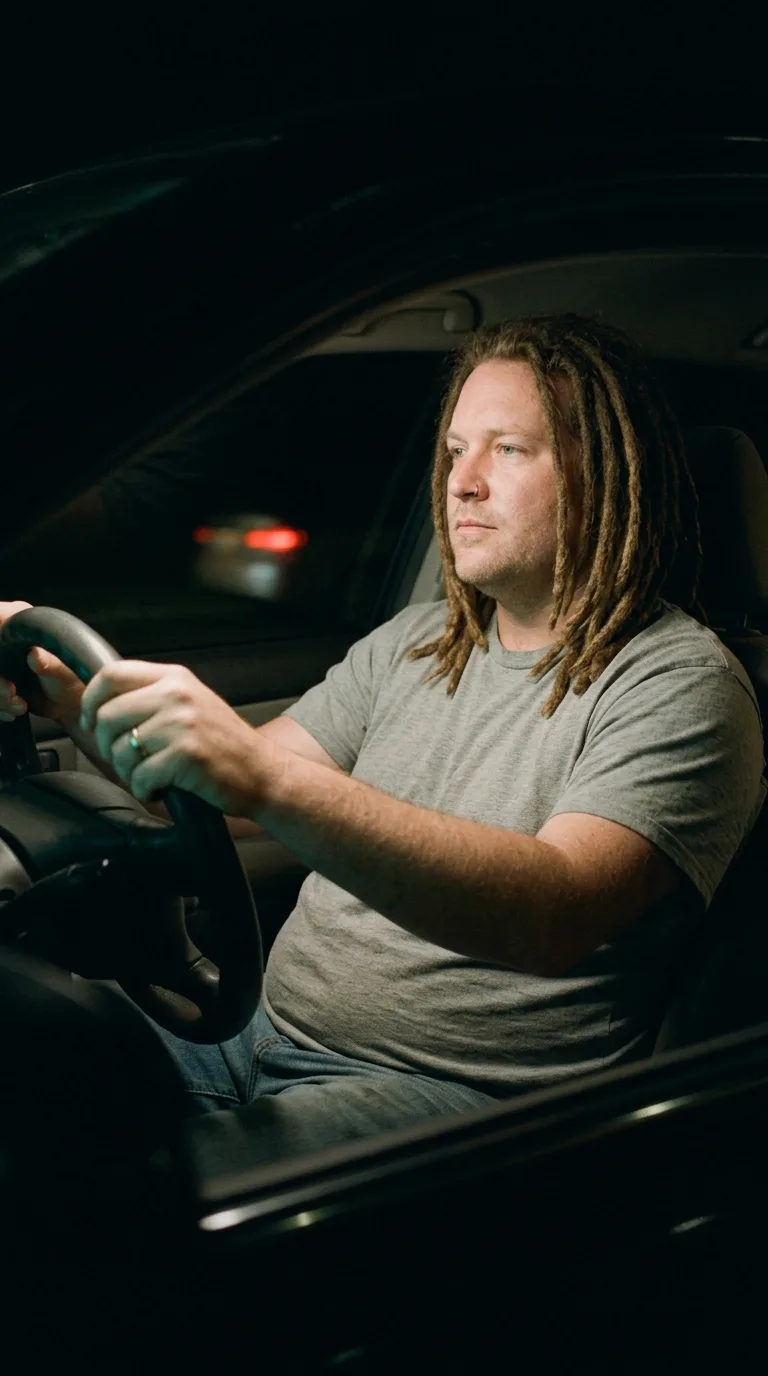
Rarest thing about him: Locs — epic, 1 in 387
Season 0seed 315872938 · engine v10
Character card
lineage 2NZHHJ
His body-swap story
@colin.hasbrook, wearing Wesley Combs, rolled the wheel on and woke up as Marcus Delray, spent under a minute in him, then spun the wheel and woke up as Terrence Odell Baptiste
You are Wesley Combs for less than a minute, and already the stone in his side has stopped being interesting.
That's the trouble with him, this whole line of him — a body handed to you an hour ago by the wheel, big and bald and aching, standing in the doorway of a break room in Eastern Kentucky, waiting on a call back from a doctor about a kidney stone he already knows the shape of because you've had this exact ache before, in other men, from the wheel's own habit of repeating itself. He was good enough for the minute you needed him. He is not good enough for a second one. There's a particular flatness to a pain you already know the ending of, and you feel that flatness now more than you feel the pain — and underneath it, plain and unglamorous, the real reason: you are bored. Five hundred and eleven men and you have started to recognize the furniture. You want new hands. You go back to the site out of something closer to hunger than curiosity, and the site is patient with hunger. You pay. You spin. The wheel does not care that Wesley Combs had been alive in you for fifty-something seconds. It never has.
The road comes up out of the dark like it was always going to.
You are behind a different wheel now, both hands at ten and two, dash light lying gold along knuckles that are not the ones you had a second ago — thicker through the palm, a plain band on the left one — and the car is already drifting, a foot toward the centerline, and you feel it correct itself before you have decided anything, hands sliding off and back on lower, wider, easier, like they know this particular wheel the way old hands know old wood. A turn signal ticks on for an exit that means nothing to you yet. Behind you, Chicago goes by in banks of sodium light and skeletal steel, the L unseen but felt, a rhythm in the bones of the road. It is evening here too, but a different evening — an hour that doesn't match the one you left, and you don't ask why, because bodies keep their own clocks and you have learned not to expect them to agree.
The shirt is what opens him first — not this shirt, an old shirt, a gray one gone soft at the collar, and under the collar an afternoon: him in the front seat outside a daycare with the AC dying, a car seat empty in the back because he'd come early, his phone buzzing with his wife's name and a message about pull-ups and a woman he used to love thanking him, years late, for something he'd forgotten saying. Then the wheel under his palms gives you ten years of night highway, gives you the specific tired of a man coming off a double, the fluorescent taste of a nurses' station at two in the morning, vitals and a med cart and his own handwriting getting worse by the hour. You feel, arriving with it, a body that carries weight like an apology — thirty-five and soft through the middle, a low ache low in the back that isn't the stones, just chairs, just years of chairs — and a leg that starts bouncing against the floor mat the second you notice it's there, like it was waiting for you to look away.
The locs against the back of the seat bring the morning he grew them out, a barber in Bronzeville laughing at how long it would take, five years gone since. The nose ring is a dare from someone he doesn't call anymore, kept long after the dare stopped mattering. The wedding band is heavier than it looks — a whole marriage in it, small kitchen, one kid's laugh through a monitor, a woman who waits up on nights he's late and doesn't say anything about it, just puts a plate under foil. He quit drinking sometime after that kid was born, quit smoking before, and both quittings sit in him now like held breath, like something he's proud of and never mentions. He does not go to church often but the church is in him anyway, in the shape of certain words, in how his mother's voice comes back to him at red lights. None of it is dramatic. It is just a whole man, ordinary, tired, three miles from his own driveway, who put these scrubs on that morning without once imagining he wouldn't be the one to take them off.
The signal keeps ticking for the wrong exit. You let your hand — his hand — find the wheel again, both of you in it now, and you look down at the ring catching dash light.
You say, out loud, to no one, "Whose house am I going to."