Wesley Combs
Fictional. Generated by AI — not a real person, and no likeness of one is intended.
46, nurse in Eastern Kentucky · rolled by @colin.hasbrook · card — no film
History
who has worn him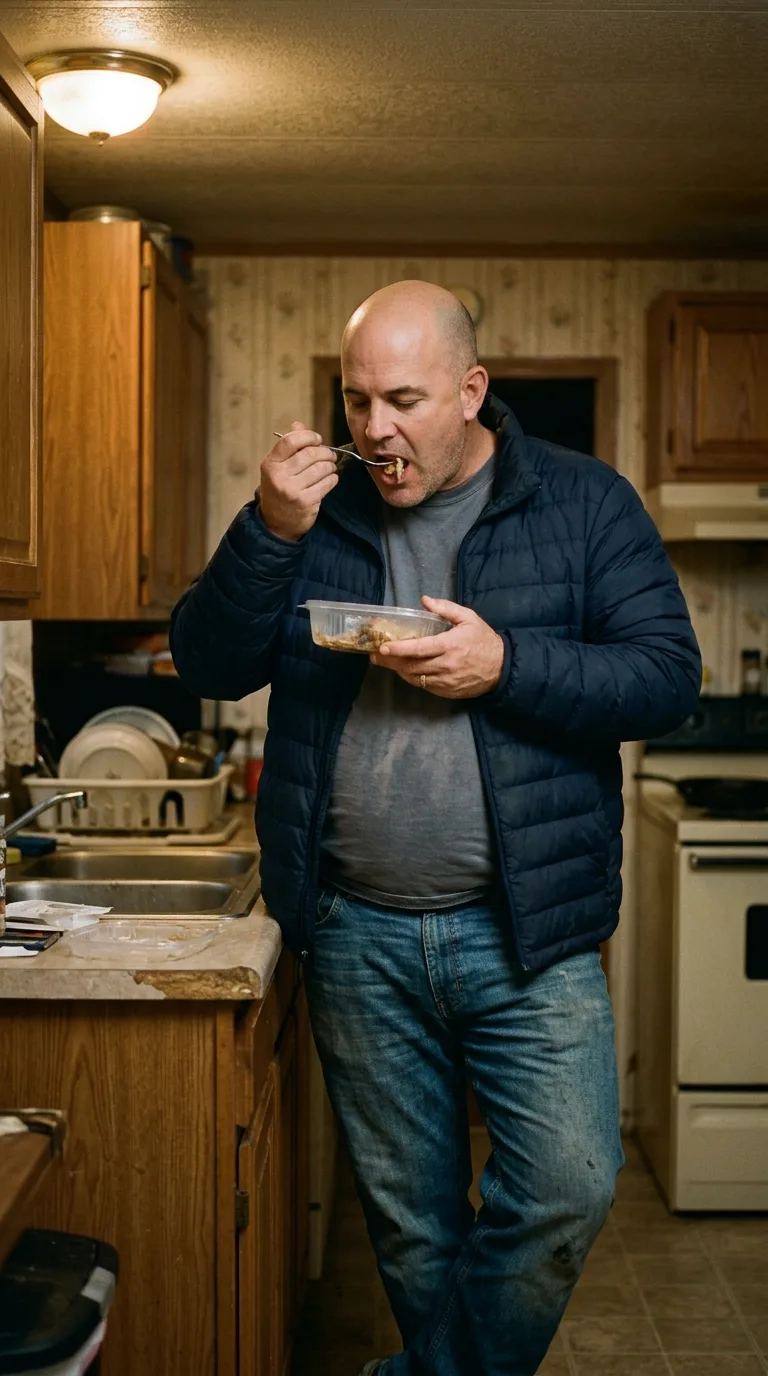
Rarest thing about him: Deep in the hole — $25k to $100k under — rare, 1 in 33
Season 0seed 103762704 · engine v10
Character card
lineage 2NZHHJ
His body-swap story
@colin.hasbrook, wearing Gary Muncaster, rolled the wheel on and woke up as Wesley Combs, spent under a minute in him, then spun the wheel and woke up as Marcus Delray
---
The pharmacy closed forty minutes ago and Gary Muncaster is still behind the counter, alone with the popcorn ceiling and the smell of hand sanitizer, and he is not thinking about the register or the cash drop, he is thinking about how his knees hurt standing on this mat for nine hours and how his ex-wife texted about the alimony again and how none of it — not one hour of it — feels like enough anymore. Five hundred and ten men now. Gary was supposed to be a rest stop, a body to sit in for a night while deciding who's next, and instead a week went by wearing him like a coat that doesn't fit, and the itch under the itch has come back, the one that isn't boredom exactly, more like hunger that food doesn't answer. He locks the register. He doesn't lock up the store — that isn't his job anymore, in his head, though his hands still know how. He gets the laptop out from under the counter, opens the tab already sitting there from last night, the wheel rendered in flat gold on a gray field, and he spins it without ceremony, the way a man refreshes a page he already knows will disappoint him, except this time it doesn't.
—
The fork is halfway to your mouth and then it isn't yours anymore, it's his, and it comes back down onto the lip of the plastic container with a small sound you didn't make on purpose. Weight arrives all at once — more of it, spread differently, a gut you didn't have a second ago pressing against a coat you're still wearing, feet planted wider than Gary's ever stood. The kitchen light is a bare bulb doing its best. Outside the window over the sink there's nothing but black and the shape of trees, no city glow at all, and that absence is the first thing that tells you where you are before anything else does. You shrug the coat off one shoulder, then the other, an old motion, not yours, already halfway finished before you knew you'd started it.
You sit. You don't decide to sit, the body does it, dropping into the kitchen chair the way a man sits down at the end of something rather than the start. The fork keeps going — the container, some kind of stew going cold, chewed and swallowed in even patient mouthfuls while you look at the dark glass of the window and it looks back at you, a bald head, small eyes, nothing about the face that anyone would stop to describe twice.
The shirt is the first door. It's not a shirt yet, it's a scrub top, soft cotton gone thin at the seams, and touching the hem of it as you sit brings the morning back whole: him standing in front of a dresser that isn't fancy, pulling navy cotton over his head, the little plastic badge reel clicking against the buttons, his wife's voice from the hallway asking has he seen the good scissors, and him saying no, not looking, not really listening, both of them half a routine married into muscle memory. Fourteen years of that particular kind of morning. Two kids somewhere in the house getting themselves ready badly. He remembers — you remember, wearing him — the specific ache of getting the second sock on over an ankle that's been swelling more lately than it used to, high blood pressure making itself known in small ways he doesn't mention to anyone, doesn't even mention to himself most days.
The ring is the second door, and it opens easiest, because his fingers are already finding it without him — twisting the band around and around on the fourth finger of the left hand, an unconscious tell his wife used to tease him about before she stopped noticing it, before noticing much of anything got harder for both of them. A first wife somewhere behind that, a different kitchen, a different fight about money that never really ended, just changed which house it happened in. He is deep in a hole nobody talks about at work, a hole made of two households and two sets of kids and a job that pays fine but not for this, and some nights — and this is one of the true nights, he'd say it if asked — he eats standing at the counter because sitting down at the table feels like admitting the day is officially over, and he isn't ready to let it be.
The counter under your — his — free hand is the third door: laminate gone soft and pale at the edge from twenty years of dishwater, and under it, faint, the whole shape of the house comes up — the cable footbridge out past the treeline that he crosses on the walk from the truck, planks that give a little underfoot, green shade in daylight and nothing but sound at night, water running low and brown beneath it. A hospital forty minutes off the mountain. A shift that started this morning and is still not, technically, finished in his head, because nurses don't clock all the way out, some of it rides home with you and refuses to get out of the truck. He is bone tired in the exact way of a body that stood for twelve hours on a floor that doesn't forgive knees anymore, dad-bod tired, blood-pressure-medication tired, the specific tiredness of a big man whose hands are nonetheless careful, gentle with lines and tubing and old skin all day, because that carefulness is the one thing in him nobody had to teach.
You finish the container in his same even rhythm, not rushing it, and somewhere in the last few bites it stops being borrowed motion and starts, faintly, uncomfortably, being your own hunger too.
—
You look down at your hand around the plastic fork, and then you turn it over, palm up, and there's the ring catching the bare bulb's light, and the hand is broader than any hand you've worn in months, knuckles a little swollen, a life's worth of small competent work sitting in it like sediment. You lift your eyes off it, up to the black window, to the reflection that isn't quite a mirror.
"Long day," you say, out loud, to the empty kitchen, in his voice, and you don't yet know if you mean the one just finished or the one you're about to start.