Gary Muncaster
Fictional. Generated by AI — not a real person, and no likeness of one is intended.
51, pharmacist in Nashville · rolled by @colin.hasbrook · card — no film
History
who has worn him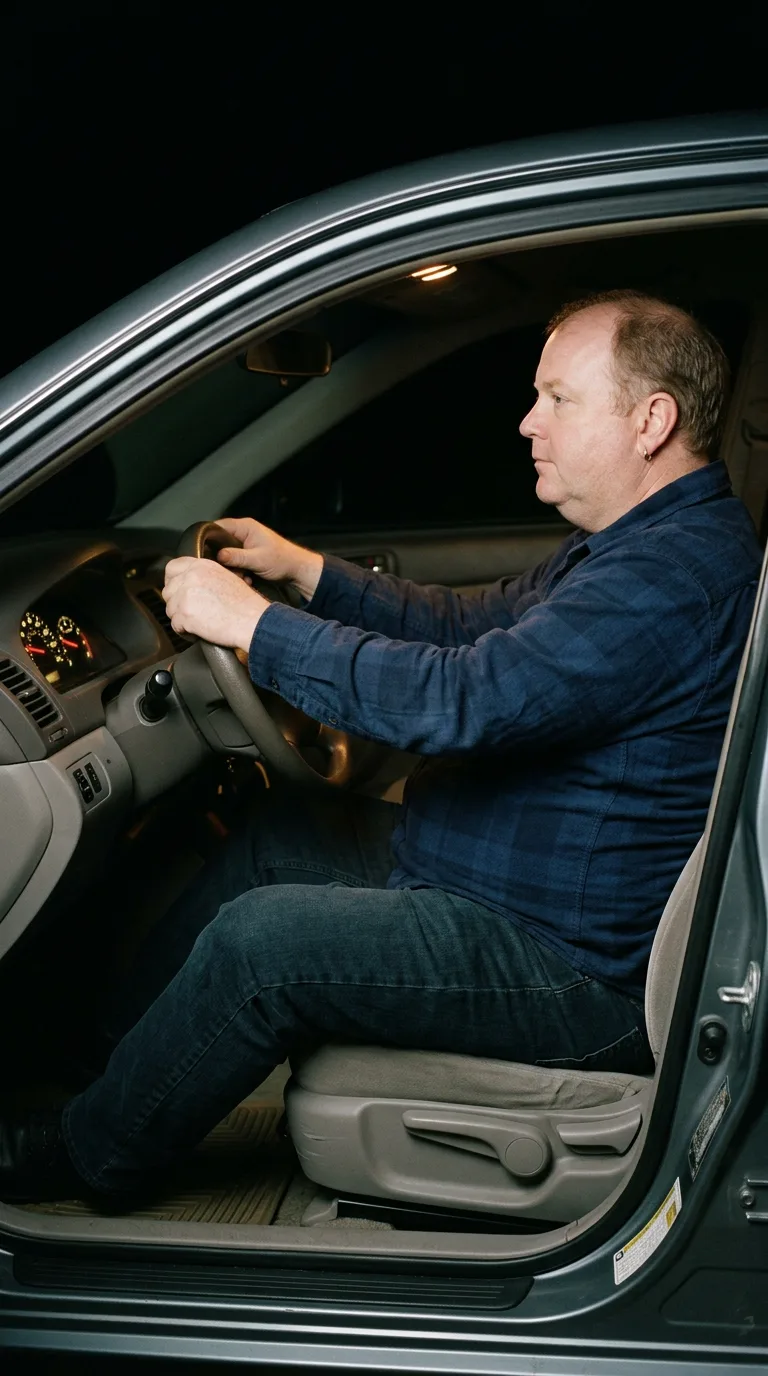
Rarest thing about him: Type 1 diabetes — epic, 1 in 408
Season 0seed 1826514042 · engine v10
Character card
lineage 2NZHHJ
His body-swap story
@colin.hasbrook, wearing Cody Baranski, rolled the wheel on and woke up as Gary Muncaster, spent under a minute in him, then spun the wheel and woke up as Wesley Combs
You are twenty-six minutes into being watched by nobody, which is the whole problem. Cody Baranski's chat window sits dark on the monitor behind you, subs down since the burn scar came in with the last body and stayed, and you have spent nine minutes now realizing that being twenty-six and broke in a rented room above a vape shop in Ohio is not a personality, it is just this room, this scar tightening when you smile, this ring light with a crack across it you can't afford to replace. You did not spin for the drama. You spun because the rent is due and this body doesn't have anything in the bank to speak of, and because some nights the wanting is not complicated at all — it is just that somewhere out there, right now, somebody has more, and you don't. You open the laptop. The wheel is already loaded from last time, spinning-wheel graphic idling like it's glad to see you. You pay. You spin.
The wheel is still going somewhere in Ohio when your hands come off a steering wheel that was never yours to begin with and land lower, wider, softer, on a wheel that is. Dash light. A turn signal ticking for an exit you have never taken. The car is already drifting the last inch back into the lane like it knows something you don't yet.
The shirt gets you first — flannel, soft at the elbows from years, worn in a way that only happens to a piece of clothing that has been reached for on purpose, mornings, out of a closet where the good shirts live on the left. It comes with a wife who isn't there anymore, not this wife, an ex, and the particular quiet of putting on a shirt alone in an apartment that still has boxes from the move he told himself was temporary. Cinch of it across shoulders heavier than any shoulders you've wanted before — solid through the middle, a low ache low in the back that has been there since Tuesday and that he thinks about the way you think about weather. The little hoop in the ear is cold under two fingers for half a second and gives up a night nine years ago, a dare, a friend now barely spoken to, and the surprising fact that he liked it enough to keep it long after the friend stopped mattering.
The wheel under both palms gives you the plainest thing: thirty years of driving this stretch, half-asleep some nights coming off close, counting mile markers instead of sheep. It gives you the pharmacy too, unbidden, amber glass and the particular hush of a counter at four p.m., handing a bag across to somebody's mother and saying take this with food, and meaning it, and the small good feeling of being the last calm person a worried person talks to all day. It gives you a glucose meter in a coat pocket you are not wearing right now, and the flat, practiced patience of a body that has spent thirty years negotiating with itself, checking, correcting, going on.
It gives you her, last — the ex, recent enough that the shirt still remembers her hands undoing these same buttons some other morning, and under that a grief so ordinary it barely announces itself: not shattering, just a man alone on a Friday night with the radio low, driving the last three miles home to a house that is going to be exactly as quiet when he gets there as it is right now.
None of it is a face he'd stop you in the street for. Nothing to point to. Just a whole unremarkable good life, thick around the middle, a little thin on top, going eleven miles under the limit because he always does.
You look down at the hand on the lower curve of the wheel — thick fingers, a wedding ring that was never removed from a marriage that ended anyway, the silver hoop catching dash light when you turn your head to the mirror instead of the road for a second too long. You say, out loud, to no one, in a voice with more Tennessee in it than you've ever owned, "Whose exit is this."
The signal keeps ticking. You haven't decided anything yet — not tonight, not tomorrow, not when the wheel calls you back.