Patrick Huelsman
Fictional. Generated by AI — not a real person, and no likeness of one is intended.
40, teacher in New York · rolled by @colin.hasbrook · card — no film
History
who has worn him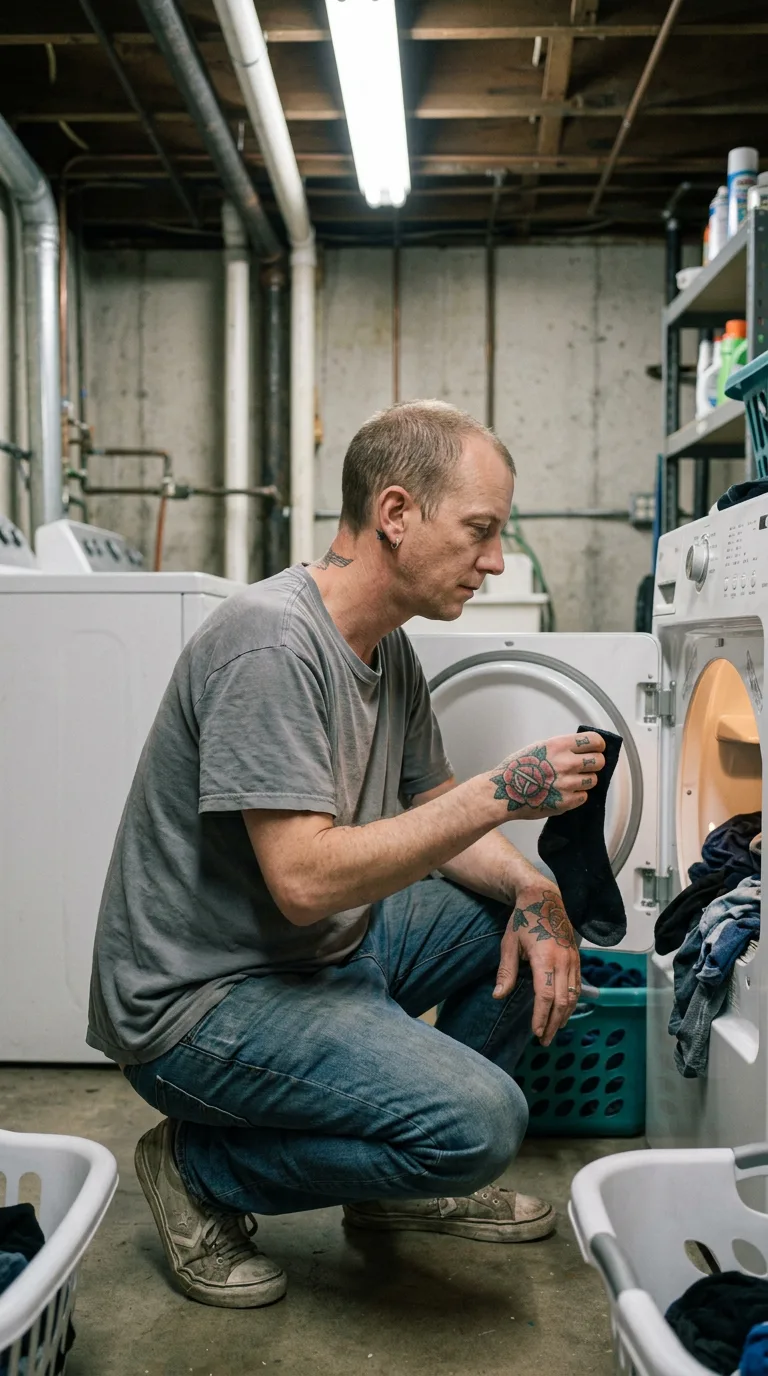
Rarest thing about him: Bisexual — epic, 1 in 29
Season 0seed 182444854 · engine v10
Character card
lineage 2NZHHJ
His body-swap story
@colin.hasbrook, wearing Everett Sandoval, rolled the wheel on and woke up as Patrick Huelsman, spent 2 hours in him, then spun the wheel and woke up as Warren Delacroix
The bar has been closed forty minutes and Everett Sandoval is still behind it, rag in one gray-freckled hand, not wiping anything. Friday, close of a shift that paid out fine, tips fine, regulars fine. That's the trouble with fine. You've had this man less than a minute of his own life and already the ceiling of him is visible — the good knees, the easy laugh lines, fifty-seven years arranged into something comfortable and complete, and comfortable is exactly the thing you cannot stand two nights running. You wipe the bar once more out of habit that isn't yours, then you take out the phone that isn't yours either and go to the page with the wheel on it.
You don't decide, exactly. Your thumb is already moving.
—
The dryer door is open and warm air is rolling off it into your face and there is a sock in your hand, black, still hot, and your knees are bent in a crouch that is not the crouch of a bartender's knees at all — smaller, tighter, a body assembled at a different scale. Fluorescent tube somewhere above you ticking with a hum you can feel more than hear. You drop the sock into the basket. You keep going. Whoever this is, his hands are already reaching for the next thing before you've caught up to owning them.
The shirt sleeve you're not wearing yet — it's balled in the basket, waiting — but the t-shirt on your back right now, thin gray cotton gone soft at the collar, gives you a Tuesday: him pulling it on in a bedroom with the blinds still down at seven-forty, a woman's voice from the bathroom saying something about the copier at her office, him answering without really listening, the shirt going over his head easy, no ceremony, a shirt worn so many times it doesn't have a first time anymore. That's Karen. Wife. Fourteen years married and the marriage sits in your chest now like a room you've lived in so long you don't see the walls — not unhappy, not the other thing either, just there, the way the dryer hum is there.
The tattoos on the back of your hand — rose, bold outline, color gone a little chalky — bring back a shop in Bushwick, twenty-six years old, a dare from a friend who is dead now of something stupid and unrelated, the buzz of the needle nothing compared to the buzz of being twenty-six and sure your life was going to be interesting. It was not, particularly. It became a classroom. Twenty-two ninth graders and a whiteboard and the specific tiredness of the last bell, the way the room empties out and you're left standing at the front of it doing nothing, saying nothing, just breathing in the quiet like it's owed to you.
The little hoop in your ear itches faintly — you didn't know an earring could itch, but it does, a phantom of every time she — not Karen, the other one, Danielle, the one who left in March and who you are, apparently, still not over — used to tug at it when she kissed your neck. That's a whole year arriving at once: her laugh, her apartment in Ridgewood, the ending of it that wasn't dramatic, just tired, like the marriage but faster, and worse for being newer. You feel it the way you'd feel a bruise pressed on without wanting to.
The wedding band is cold and then it's warm from your own hand and it doesn't say anything at all. Bands like that don't talk. They just sit there being true.
Your body is small — five-four, and you feel the floor closer than it has any right to be, feel the soft give at your middle that isn't fat exactly, just untrained, just forty years of desk-shaped days. Your knees complain a little from the crouch. Somewhere behind your sternum there's a pressure you recognize now as this man's blood pressure, a low hum of strain his body has stopped mentioning to him. Your fingers already know how to square a corner on a folded shirt without being told — an old rhythm, some year of doing this exact task in some other basement — and they do it now on their own, fast, precise, while the rest of him is still arriving.
Somewhere in the pocket of the jeans on the floor there's a soft pack, three left in it, and just touching the denim gives you the taste of the last one, out back of the school by the dumpsters, second period free, guilt and nicotine in equal parts.
You stand. The basket is heavier than the sock made it seem.
You look down at the hand holding a folded t-shirt — his hand, small-knuckled, ink faded to that chalky orange-red, ring catching the fluorescent light — and you turn it over once like you're checking it's real, which it is, which he was, twenty minutes ago in some New York evening that hasn't caught up to the one Seattle just handed you.
You lift your eyes off it, into the room, past the humming tube light, and you say, "Karen, I got it started," to nobody, to the empty basement, in a voice with a smoker's edge you didn't have an hour ago — and you don't know yet if you're saying it because he would have, or because for right now, you're the only one left to.