Declan Ferriter
Fictional. Generated by AI — not a real person, and no likeness of one is intended.
55, freight handler in Boston · rolled by @colin.hasbrook · card — no film
History
who has worn him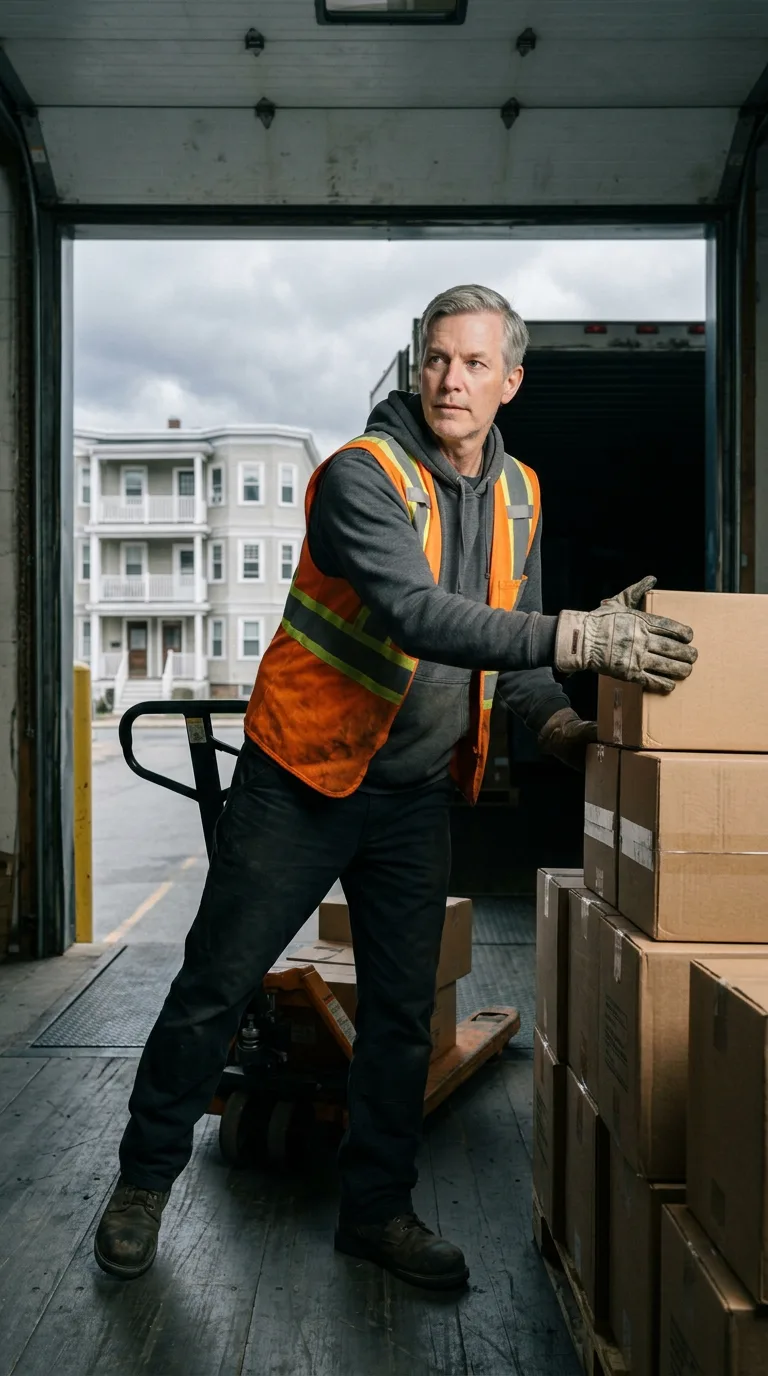
Rarest thing about him: Cracks his knuckles — common, 1 in 15
Season 1seed 2126313682 · engine v11
Character card
lineage 2NZHHJ
His body-swap story
@colin.hasbrook, wearing Farid Azadi, rolled the wheel on and woke up as Declan Ferriter, spent under a minute in him, then spun the wheel and woke up as Rafael Contreras
Farid Azadi's hands are good hands, steady even at rest, and that is the trouble with them this morning. You have been him less than an hour of clock time spread across three lives, and already you know the particular boredom of competence — a body that does exactly what you ask, every time, no static, no give. Somewhere behind you, four hours ago and three hundred spins deep in a stranger you can still feel in your wrists if you think about it, you were a redheaded tattoo artist in Philadelphia for less than a minute, and you left him mid-line, and you still remember the drag of the needle better than you remember most marriages you've had. That's the itch. Not boredom with Farid exactly — he is fine, he is lucrative, he is going to walk into an OR in ninety minutes and be brilliant — but the itch of knowing his brother exists, out there, sharing a name you already wore half of. You open the site on the hospital tablet in the surgeons' lounge, coffee going cold, and you tell yourself it's curiosity. It is not only curiosity. It is never only curiosity.
The wheel gives you Boston, an overcast Thursday, a loading door, a man's hand closing on a box.
The rhythm breaks. One motion goes wrong — the box tips a half-inch off true — and then you correct, slow, deliberate, the way a man double-checks something he hasn't had to check in years. Ten more boxes come off the pallet like that, watched, verified, each corner squared before it leaves your palms. The cold gets into you first: overcast light through the open trailer door, a smell of cardboard and diesel and wet street. You are shorter than you were an hour ago, thicker through the middle in that soft, unshowy way, and your knees already ache faintly, a low hum under everything.
The gloves are what open first — rough suede, sweat-stiffened at the knuckle, and through them comes a warehouse at five in the morning, the clang of the door going up, a supervisor named Deb who runs a tight floor and likes him for it. Then the vest, orange going rust-colored with wear, and under that the hoodie — gray, soft from a hundred washes — and you feel him pulling it on in a cold kitchen before dawn, one arm and then the other, the automatic tug at the hem, not thinking about it, the way you don't think about your own name. His name is Declan. He thinks it without deciding to.
The floor under his boots gives you the porch — a triple-decker, storm door with a stiff spring, his breath fogging as he'd locked it behind him this morning, lunch in a plastic bag swinging from two fingers. He lives alone there. Divorced eleven years, and it still surprises him some mornings, the size of the bed. One kid, a daughter, nineteen now, who calls on Sundays and calls him Dad in a voice that used to be smaller. He loves her the uncomplicated way men love the one thing that came out of a marriage that otherwise didn't work.
The jeans, stiff at the knee where he's knelt in them a thousand times, give you the job itself — eighteen years of it, boxes and pallets and the particular ache of a body that trained itself for this without asking permission, elbows that click now, a back that announces weather before the radio does. He is good at this in the unglamorous way, the way that never gets mentioned, and there is a small clean pride in it he doesn't examine too closely, the same way he doesn't examine church on Sundays or the rosary in the glove compartment of a truck he no longer drives to work. His brother Colm calls twice a year. There is history there you can feel without being handed the whole shape of it — a falling-out over their father's last years, something about who showed up and who didn't — but it sits in him quiet now, more habit than wound.
The cardboard under his palms, right now, gives you the last thing: the smell of this exact box, this exact morning, coffee wearing off, the ache starting in the lower back that means he's been at this three hours already, and somewhere under all of it, so ordinary he'd never call it anything, contentment. Not happiness. Just a life that fits the man wearing it.
You set the box down. You look at your hands — his hands, the calluses, the clean short nails, the freshly shaved jaw you can feel with your tongue against your teeth without meaning to — and you turn them over once, like checking for something that isn't there.
"Huh," you say, out loud, to no one, to the gray Boston sky. "Okay."