Rafael Contreras
Fictional. Generated by AI — not a real person, and no likeness of one is intended.
57, professor in New Orleans · rolled by @colin.hasbrook · card — no film
History
who has worn him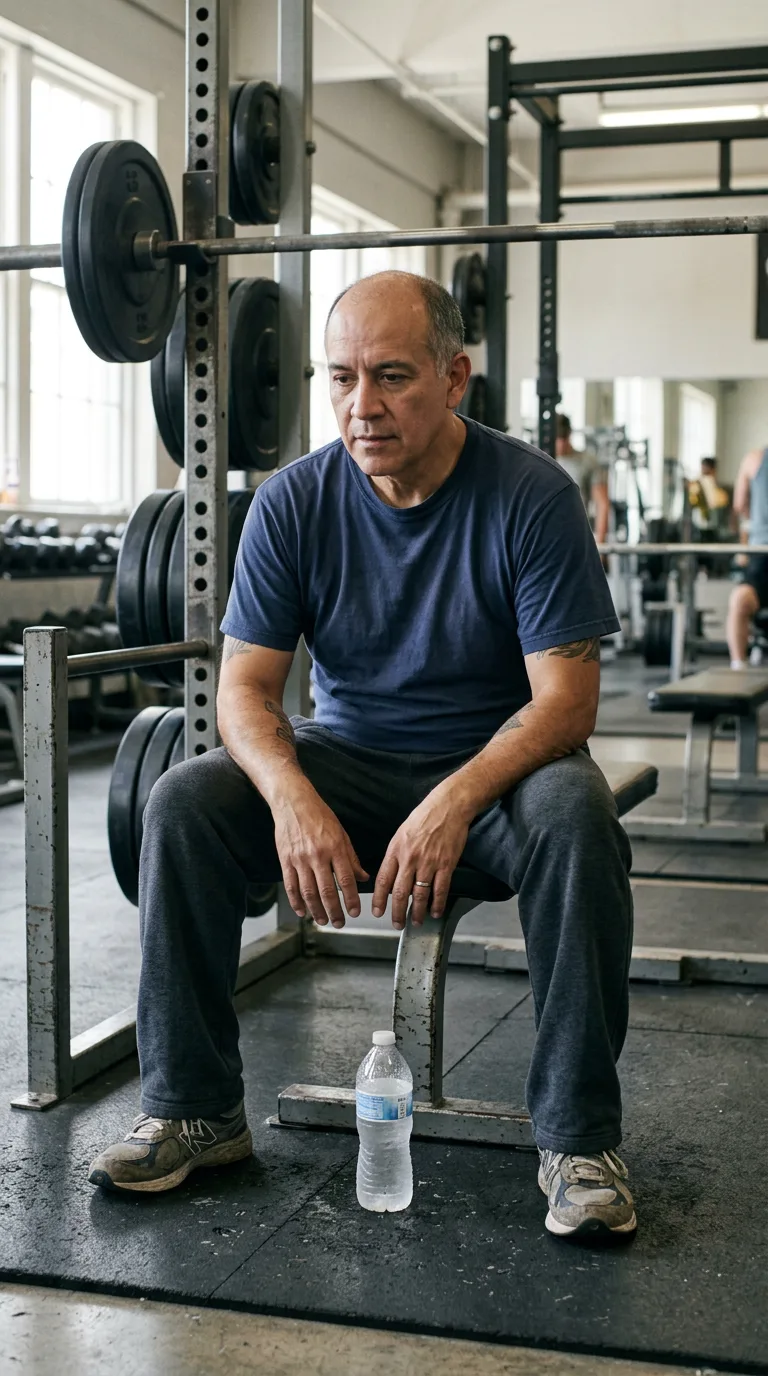
Rarest thing about him: A horseshoe, kept short — common, 1 in 81
Season 1seed 1949410601 · engine v11
Character card
lineage 2NZHHJ
His body-swap story
@colin.hasbrook, wearing Declan Ferriter, rolled the wheel on and woke up as Rafael Contreras, spent under a minute in him, then spun the wheel and woke up as Terrence Kalama
Declan Ferriter's hands ache before you've done anything with them, which is the first thing you notice, standing in the freight bay at eleven in the morning with a hand truck's handle biting into your palm and the cold coming up off the concrete through boots that were never quite broad enough. Fifty-five minutes into a shift with six hours left in it. You have been him less than a minute and already you know the whole shape of the day: pallets, a supervisor named Gdurski who breathes through his mouth, a body that carries its weight low and wrong, and at the end of it a walk-up apartment with a radiator that clangs. Boston in the middle of a Thursday morning, gray going on grayer. Nothing wrong with him. Nothing right either. You spun him up from nowhere seven hundred and fifty-two times ago and he has been serviceable, which is its own kind of tired — you know his hands, his knees, the particular ache behind his sternum from a heart that works a little too hard, and you know you are done, the way you are always eventually done, not from cruelty but from the plain fact that there is a wheel and you are standing in front of it and you have never once, in seven hundred and fifty-two spins, been able to leave it alone. So you go back. You always go back.
Two inches wider on the bar than he's set it all year, and that's the first thing that's wrong, except it isn't wrong to you — it's just where your hands already were.
You are sitting, then you are not quite sitting, thighs and back locked into the bottom of a rep, and the weight is real in a way that Declan's hand truck never was, pressing down through your shoulders into a spine that is fifty-seven years old and knows it. Air goes out through your teeth in a hiss you didn't start. Your body finishes something it started before you got here — one more rep, slow, ugly, the face in the mirror across the gym doing none of the things a last rep's face should do, no strain in it, no grimace, just a kind of mild, faraway attention, like a man listening to weather two towns over. Then the bar's racked and you're sitting again, forearms on your knees, and a water bottle is sweating against your calf.
The tattoos on your forearms come first, which surprises you — you didn't expect a professor to have any — and with them a flash: a tattoo parlor in the Marigny in 1989, a woman's name that isn't his wife's under one of them now grayed into illegibility on purpose, a friend from graduate school laughing at how much it hurt. Gone before you can hold it. Then the water bottle, plastic gone soft and warm under your fingers where you pick it up, and with it Thursday mornings for eleven years — the only slot the gym had that didn't collide with office hours, the same bench, the same rack, a nod exchanged with a retired cop named Gus who spots for nobody and expects nobody to spot for him.
The wedding band is the one that opens wide. Cool metal, a little loose now on a finger that's lost muscle it had at forty. Behind it: a courthouse wedding in 1994 because his mother was dying and there wasn't time to wait for the wedding they'd planned, Marisol in a green dress because it was the only clean one, both of them laughing too hard at the judge's tie. Three kids after that, then a fourth who didn't make it past a second trimester and is never spoken of but is there, always, under the number three whenever someone asks how many. A shotgun house bought too young and paid off too late, steam coming off Dauphine Street after rain, sun already back out before the water's finished running. Chalk dust and the particular quiet of an amphitheater at 7 a.m. before the first student arrives, and under that, older, a boy in Metairie sounding out English in the back row of a classroom while his mother sat outside in the car because she didn't trust the office to explain anything to her in Spanish.
The gray t-shirt — sweat already darkening it at the chest — gives you the drive over, coffee in the truck's cup holder gone cold before he touched it, a lecture on colonial land grants rattling loose in his head that he was rehearsing at red lights out of habit thirty years old. The sweatpants give you almost nothing, just gray cotton and the memory of pulling them on in a bathroom with the fan broken, Marisol still asleep, one of the boys — grown now, thirty, calls every Sunday — texting something about a grandkid's fever that made him smile before he put the phone face-down on the counter.
Your knees know how to do this without you: the particular ninety degrees of a squat's bottom, the exhale timed to the drive up, the small mean satisfaction of adding five pounds a side and pretending it isn't a small mean satisfaction. Fifty-seven and the body middling — not soft, not hard, a man who has kept a promise to himself three mornings a week for a long time without ever quite believing it's doing anything. It aches now in the good way, thighs lit up, water bottle sweating against your palm, and none of it is a complaint he's ever going to make out loud, not to Marisol, not to Gus, not to the mirror.
You turn your hand over on your knee. It is not the hand you had a minute ago in a freight bay in Boston — no ache behind the knuckles, a ring loose instead of tight, ink on the forearm that means nothing to you yet and everything to somebody who signed off on it thirty-six years ago in a shop that probably isn't there anymore.
You look up into the mirror across the weight room, into a face you did not choose and cannot un-choose, and you say, out loud, to no one:
"One more set."