Douglas Meffert
Fictional. Generated by AI — not a real person, and no likeness of one is intended.
46, waiter in Las Vegas · rolled by @colin.hasbrook · card — no film
History
who has worn him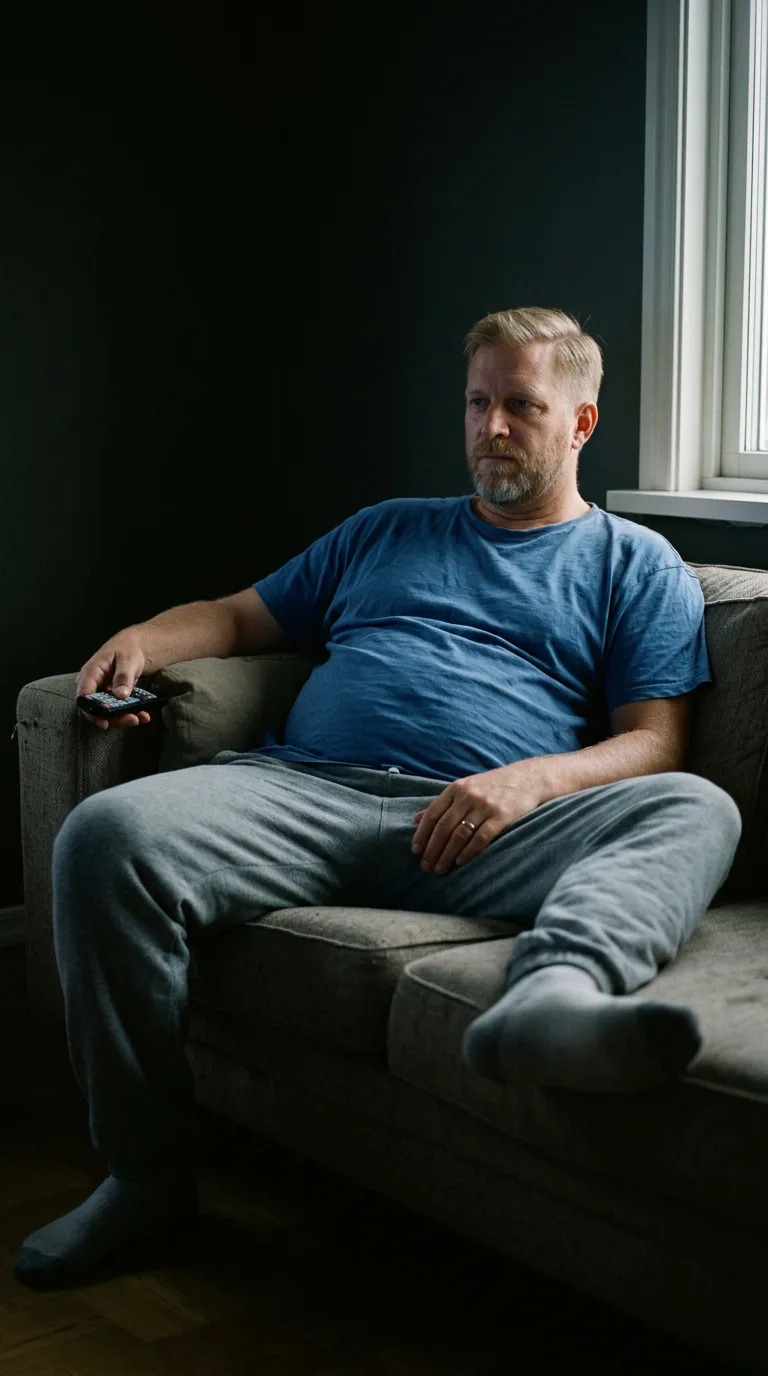
Rarest thing about him: 6'5" — rare, 1 in 229
Season 1seed 1848122574 · engine v11
Character card
lineage 2NZHHJ
His body-swap story
@colin.hasbrook, wearing Cody Thibodeaux, rolled the wheel on and woke up as Douglas Meffert, spent under a minute in him, then spun the wheel and woke up as Farid Azadi
Cody Thibodeaux's barracks room smells like gun oil and Febreze, and you have been him for three minutes, standing at the window with the late morning glare cutting across a floor you have never swept. Twenty-three years old, green eyes, a moustache you haven't earned yet, a soldier's body that does everything asked of it without complaint — and that's the trouble. It's Thursday, mid-morning, New Orleans humidity pressing on the glass, and there is nothing wrong with this man at all. That's what does it. Three minutes in and you already know every hour ahead of him: formation, chow, some sergeant's voice. A body with no give in it. You want weight. You want a life with rooms in it you haven't seen yet. You open the laptop still logged into vessel.cards from whenever the last one of you sat here, and you spin without even sitting down.
The television cuts to a bright frame — some laugh track swelling toward a punchline — and in the gap between the dark room and the light of it, you arrive sitting up straight, spine unbending itself out of a slouch that took years to earn, a remote settling out of a loose grip onto the couch arm like it was placed there on purpose. The room is dark except for the screen and one window going gray-blue at the edges, not sunset, not quite morning either. Your body — his body — is enormous in a way that surprises you, thighs filling the sweatpants, gut soft under a blue T-shirt gone thin at the collar. Socked feet. A wedding band pressing cold against a finger that has worn it so long it doesn't register as jewelry anymore, just as finger.
The show delivers its joke and you don't laugh, and somewhere underneath you, in the couch cushions gone slack with his weight over years, something like a memory stirs at the base of it — not from you. From the couch itself, holding the shape of him.
It comes in through the shirt first, worn-soft cotton dragging a whole morning behind it: standing in a bedroom with the blackout curtains still drawn because the wife sleeps days too, easing the shirt over his head one arm at a time so the shoulder that's been barking at him since he turned forty doesn't complain, her breathing steady behind him, one of the kids' voices already going somewhere down the hall — the oldest, probably, arguing with a sibling about the bathroom. Douglas doesn't turn the light on. Doesn't need to. Twenty-two years of dressing in this dark.
The remote's ghost is still warm in the memory of his palm and it brings the couch with it, the actual couch, this actual couch, at 4 a.m. after a double — the shift that started at four the afternoon before and didn't let him go until near midnight, and then the drive home along the Strip with the casino lights doing that thing they do, insisting it's always some hour worth being awake for. He came in, kissed his wife's shoulder where she lay half-asleep, checked on the youngest, and sat here in his boxers with a beer he didn't finish, needing an hour of nothing before his body would let him sleep. That's this. That's what this is. Some nights the schedule flips so hard he's watching sitcoms at sunrise like a man on the wrong planet, wide awake when the whole city's just getting up, and this — this exact rerun, this exact couch groove worn into the shape of his own spine — is the only unclenching he gets.
His feet against the floor bring the restaurant: the particular ache of the arches, eleven years on that floor, upended chairs waiting to come down before the doors open, a corkscrew in his apron pocket he's had since he started, the smell of bleach water in a bus tub. He is good at this. He is good at balancing four entrées up one arm without a tray, at reading a table's whole marriage off how they're not talking to each other, at the crooked-nose joke he's told nine hundred times — got it playing rec league basketball at nineteen, an elbow he never saw coming — and he tells it now the way a man tells a joke he stopped finding funny around telling four hundred.
The ring brings her — not the wife, not first. Brings someone from before, a name that still has a temperature to it though he hasn't said it out loud in years, a girl in Baton Rouge who he thinks about sometimes on nights this long and empty, not with longing exactly, more like checking that an old wound has actually closed. It has. Mostly. He touches the ring without meaning to, an old habit, and that closes it up again, brings him back into the room he's actually in, the wife he actually chose, the three kids down the hall whose noise he'd rather have than any quiet with anyone else.
The dad-bod belly under the shirt holds its own weather: four kids' worth of late-night kitchen raids, a slowing metabolism he complains about and does nothing about, a drink or two most evenings that never became more than that because he watched it become more than that in someone else once and doesn't want the sequel. He is forty-six and everything on him works, mostly, if you don't ask his knees about doubles anymore.
You sit inside all of it — the body's tiredness, the specific gravity of a man who works nights and loves people who work days, the ache that is just Thursday — and something in you, some accounting you did while you were twenty-three and impatient, settles like a held breath let out.
You look down at the hand with the ring on it, turn it over once in the gray light, watching the wide, blunt fingers that know a corkscrew and a cocktail tray and, once, apparently, three or four small children's hands crossing a street.
"Hey," you say, to no one, to the room, to the television that's still going, "you're up early."
You don't know how long you get to be tired like this. You never do.