Yusuf Nassar
Fictional. Generated by AI — not a real person, and no likeness of one is intended.
53, landscaper in El Paso · rolled by @colin.hasbrook · card — no film
History
who has worn him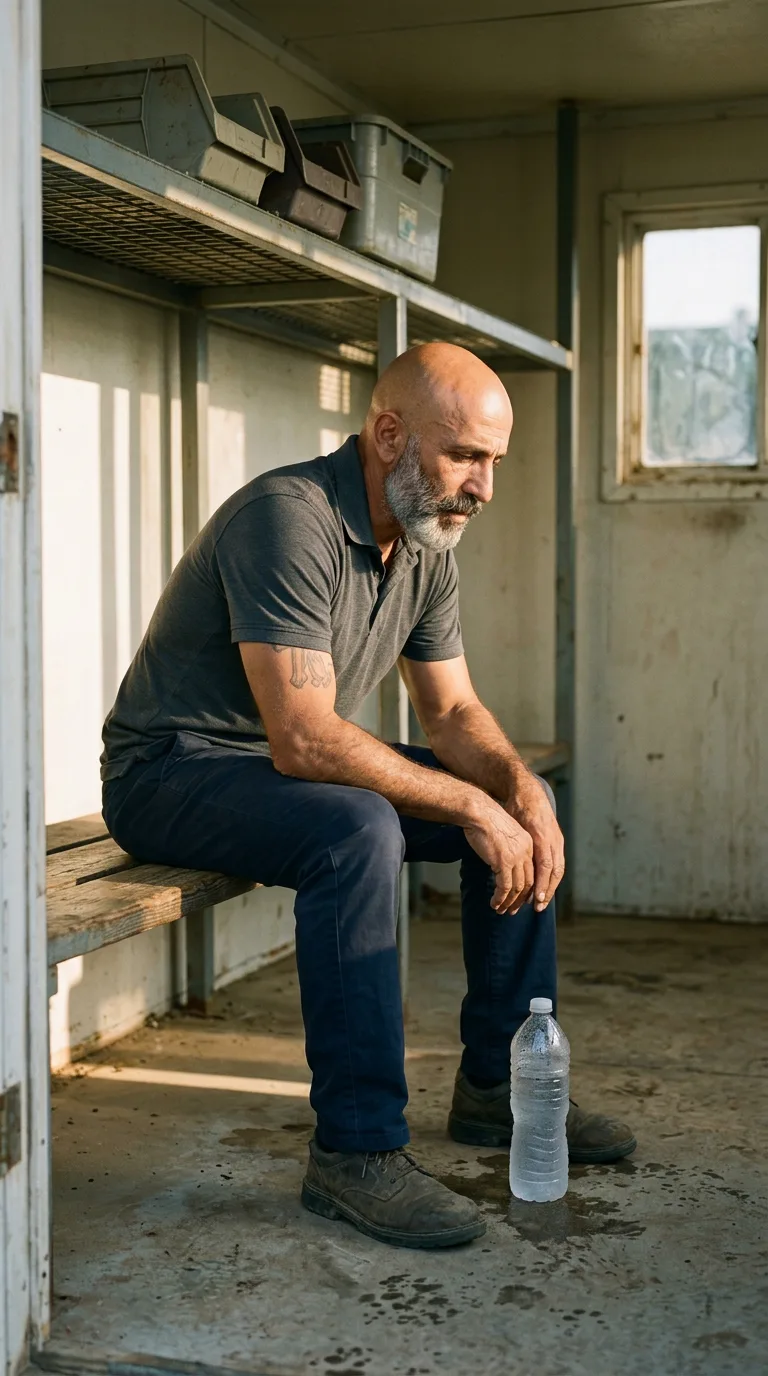
Rarest thing about him: Smokes when he drinks — common, 1 in 42
Season 1seed 1341255589 · engine v11
Character card
lineage 2NZHHJ
His body-swap story
@colin.hasbrook, wearing Kenji Amasawa, rolled the wheel on and woke up as Yusuf Nassar, spent under a minute in him, then spun the wheel and woke up as Ramón Estrella
The stockroom smells like cardboard and the particular staleness of a phone screen held too close to your face too long. You are Kenji's hands right now — soft in the palm, a little thick at the knuckle, a wedding ring you never asked for and do not wear anymore because Kenji's wife left eight months before you took him, though he doesn't remember that the way you do, in fragments, through the ring finger's ghost. You are supposed to be restocking shelves. You have been standing here for eleven minutes instead, thumb over the screen, watching the wheel spin in your mind before you've even opened the site.
It isn't boredom exactly. It's that Kenji's knees ache going up the ladder to the top shelf, and there's a customer out on the floor who called him "boss" in a tone that wasn't respect, and somewhere in Kenji's own memory — thin as it is, secondhand, arriving through his clothes the way everything does — there's a version of this exact stockroom he's stood in for six years, and you are tired of the smell of it before you've even smelled it long enough to be tired. You want out of him the way you always eventually want out of everyone. Five weeks. That's all he got.
You open the site on your phone, in the alley behind the store where the light is dying early because it's autumn here and Kenji never got used to that, being from somewhere the seasons don't announce themselves. You pay. You spin. Something lets go of you before it lets go of you.
—
The bar is a live thing in your hands, cold-knurled steel biting your palms, and your arms are wide, wider than they were a half-second and thirty years ago, and your chest is full of a breath that isn't finishing the way it should. Your teeth stop hissing air between them a beat before they meant to. There is a rack over you, a bench under you, sweat already stinging one eye. The last rep grinds up slow and wrong-feeling to whoever was in this body a moment before, and nothing in your face tells the gym mirror across the room what just happened, because there was no room in this body for two of you at once, and now there is only you.
You rack the bar. It rings against the metal supports, and your arms — his arms — drop and hang, and you sit there breathing.
The water bottle sweating on the concrete floor beside your boots is the first thing you touch on purpose. Cold plastic, condensation, and it comes up through your fingers like a current: the same bottle, refilled a thousand evenings, a gas station off Alameda where he buys the twelve-pack because it's four dollars cheaper than the gym vending machine, and Marisol laughing at him for it once, calling him cheap in that voice she uses when she's not really annoyed, and something in your chest — his chest — goes warm and simple at the thought of her before you've even decided to think about her.
The shirt is next. Grey, damp through at the spine, and touching your own forearm through the sleeve gives you the tattoo before you even look down — cross and praying hands, faded green-black now, done at twenty-two in a garage in Ysleta by a cousin with a homemade gun and a Bible open on the workbench for both of them, half joke and half not, and his mother crying when she saw it not because she was angry but because she recognized the hands. You feel that morning arrive whole: pulling this exact shirt over his head at five-forty, the house still dark, Marisol's arm thrown across the empty side of the bed where he'd been, the smell of her shampoo on the pillow he didn't have time to miss all day. He'd stood in the kitchen eating cereal standing up, looking out the window at the trailer hitched to the truck, thinking about the Ochoa job, the crepe myrtle that needed taking out before the heat really set in.
The boots against the gym floor bring the lawns. Forty-one years old inside but the body is fifty-three, and it knows things you don't have to ask it to know — how to walk a slope without thinking about your knee, how to gauge a mower blade's height by the sound alone, the particular ache that lives permanently in the lower back now, filed away and worked around rather than fought. Strong through the shoulders in a way that has nothing to do with this gym and everything to do with twenty-six years of trailers and root balls and August. Two daughters somewhere in this — a flash of a graduation gown, a flash of a phone call that went badly, a girl he loves and doesn't know how to reach anymore since her mother, the ex, the one who still texts him about nothing at eleven at night and he still answers. Sara. The name arrives with the ring — no, there's no ring, his hand is bare, and that absence carries its own small permanent grief, something about a divorce nine years gone that he doesn't examine anymore, just carries, the way you carry a stone smooth from carrying it.
The bench under you gives you the gym itself — Tuesdays and Thursdays, an hour, non-negotiable, Marisol teasing him about vanity and him saying it's the back, it's always the back, I have to be able to work tomorrow. Beer twice a month, maybe, with the guys after a big job closes out, a cigarette he only wants when there's a drink already in his hand, the smoke feeling like punctuation rather than habit. Mass some Sundays, less than his mother would like, more than he admits to the other men.
None of it is dramatic. That is what you notice, holding all of it at once in a body that is not shaking, not straining anymore, just sitting, chest working, forearms on knees exactly as they were a half-second before you arrived. A whole ordinary life, scraped-together and unremarkable and his, and you are standing in the middle of it with no plans yet for how long you'll stay.
You look at your hands. Not Kenji's hands — softer, younger by twelve years and thicker in nothing. These: veined, sun-browned, a callus at the base of each finger that took decades and belongs to no one who is you. You turn them over once.
You look up, into the gym mirror, into a face that isn't going to tell anyone what just happened in it, and you say, quietly, to no one:
"Bueno. Otra vez."