Ramón Estrella
Fictional. Generated by AI — not a real person, and no likeness of one is intended.
39, mechanical engineer in Los Angeles · rolled by @colin.hasbrook · card — no film
History
who has worn him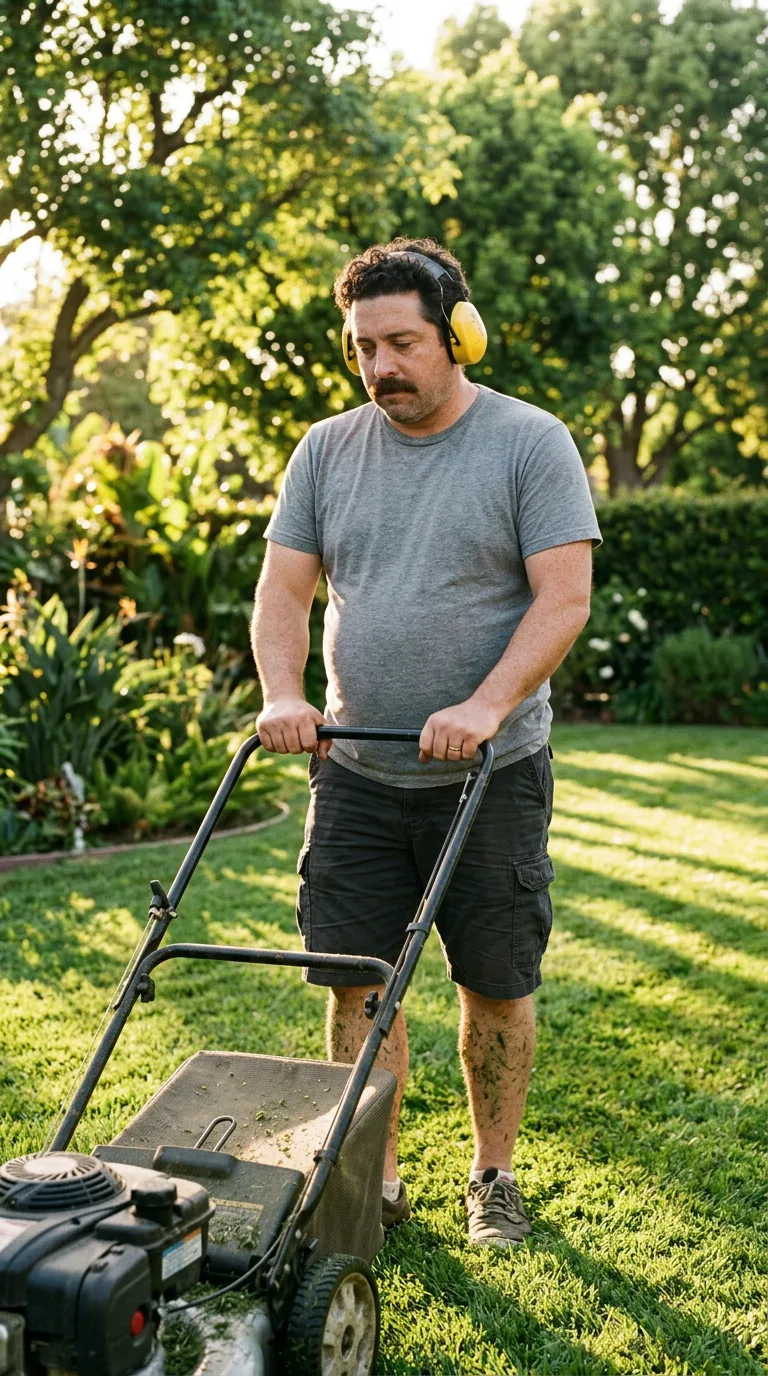
Rarest thing about him: Mowing the lawn — common, 1 in 57
Season 1seed 1837758477 · engine v11
Character card
lineage 2NZHHJ
His body-swap story
@colin.hasbrook, wearing Yusuf Nassar, rolled the wheel on and woke up as Ramón Estrella, spent under a minute in him, then spun the wheel and woke up as Marcus Whitfield
---
The caliper is still in Yusuf's hand when the itch starts.
You have had him less than a minute — you feel that, actually feel the newness of him, the beard not yet familiar under your own palm when you touch it, like wearing someone else's coat that fits in the shoulders but not anywhere else. The prototype bracket on the bench in front of you is half-measured. Yusuf Nassar liked this. Fifty-three years of liking things, and somewhere in there a love of tolerances, of a part that fits because a man made it fit. You could stay. You have stayed in worse.
But the itch isn't about Yusuf. It's the shape of the day — El Paso light going long and orange through the shop window, a Wednesday ending the way six hundred Wednesdays have ended, competently, without incident — and competent-without-incident is exactly the thing that sends you back to the wheel. Six hundred and two men taught you that boredom doesn't announce itself. It just makes the caliper in your hand feel like a caliper in your hand, and nothing more, and that is unbearable in a way pain never was.
You set it down. You don't finish the measurement. Somewhere behind Yusuf's ordinary brown eyes you are already gone, already at the site, already spinning.
—
The mower coughs, catches, and you are the one holding the bar.
Not holding it — your hands were already on it, mid-stride, mid-afternoon, grass wet-green and clinging to shins that are not the shins you had four seconds and eight hundred miles ago. The engine note dips under your palms and you do not startle, you do not stumble, because the body knows this machine better than you know your own arrival. The loose earmuff swings at your jaw. You reach up — his reach, economical, unthinking — and settle it back over your ear before you've had a single thought of your own.
The next pass runs dead straight.
—
The vibration of the mower comes up through the grips first, and it brings a year with it: a Saturday like this one, and another, and another, a hundred Saturdays stacked so close they've worn a single groove into him — into you, now — the specific ache that sits low in the back after twenty minutes bent slightly forward over this bar, a lower back that carries thirty-nine years and a frame that never lost the softness at the belly no matter how much yard he mowed. Dad bod, his wife called it once, laughing, not unkindly, pressing a hand flat there like she was fond of the argument for it. You feel that fondness arrive with the memory, foreign and warm, not yours but sitting in your chest like it might be.
The gum. There's a piece of it going soft and forgotten at the back of his jaw, and the second you notice it you understand it was never a decision — he chews without knowing he's chewing, has since he quit the cigarettes a decade back and never told anyone how hard that year was, and his jaw just kept moving after, empty, until gum filled the emptiness and nobody asked why.
The shirt is gone — this is a mower shirt, gray cotton gone soft with washing, and it gives you the morning it went on: he'd pulled it over his head in the bedroom with the blinds still down, Marisol's side of the bed already made because she's always up first, and he'd caught his own reflection in the dresser mirror — the curl of hair flattened on one side from the pillow, the moustache he's worn since twenty-six because his father wore one and it felt like the right kind of continuing — and he'd thought, not unhappily, *there you are*, the way you greet a face you've stopped being surprised by. Cargo shorts next, the left pocket already carrying his phone, the right his wallet, muscle doing all of it while his mind was somewhere on a bracket at work he hadn't finished on Tuesday.
The wedding band is warm from the sun. Through it: not the wedding — a Tuesday, ordinary, Marisol laughing at something one of the kids said at dinner, the third one, the youngest, still losing teeth, and Ramón watching her laugh instead of watching the kid, thinking he'd take that laugh over almost anything the job could give him. And under that, quieter, not touched but close enough to bleed through anyway: an ex-wife's name, no anger left in it, just the specific shape of a Sunday handoff at a curb years ago, both of them tired in the same key.
The freckles aren't a memory, they're just a fact of the face, but you find yourself noticing them anyway, the way you notice things that will belong to you for however long this lasts — scattered across a nose that's been sunburned in this exact yard a hundred times, cheeks that go pink before they go brown. A face that has never once, his whole life, looked like it was hiding anything.
The lab comes back last and thinnest — steel under his palms instead of a rubber grip, the particular satisfaction of a part measuring true, three kids' names taped inside his locker in handwriting not his own — and you let it go. There isn't room for the lab in a lawn.
—
The engine idles under your hands, patient, and you look down at them — his hands, thick-fingered, a line of grass-green ground into the left knuckle, the ring catching the late sun.
You turn the right one over slowly, like you're checking it's real, the way six hundred and two men before him have all had their hands turned over by you in the same first minute, and every time it still isn't yours and every time it still, for a second, feels like it could be.
You lift your eyes off the hand and into the afternoon — hedge, dry palm past the fence, grass clippings drying to gray on his shins — and you say it out loud, to nobody, to the yard, to whatever's listening:
"Okay. Okay, let's see."
The mower is still running. You have no idea, and neither does anyone, how long you'll let it.