Marcus Whitfield
Fictional. Generated by AI — not a real person, and no likeness of one is intended.
53, teacher in Las Vegas · rolled by @colin.hasbrook · card — no film
History
who has worn him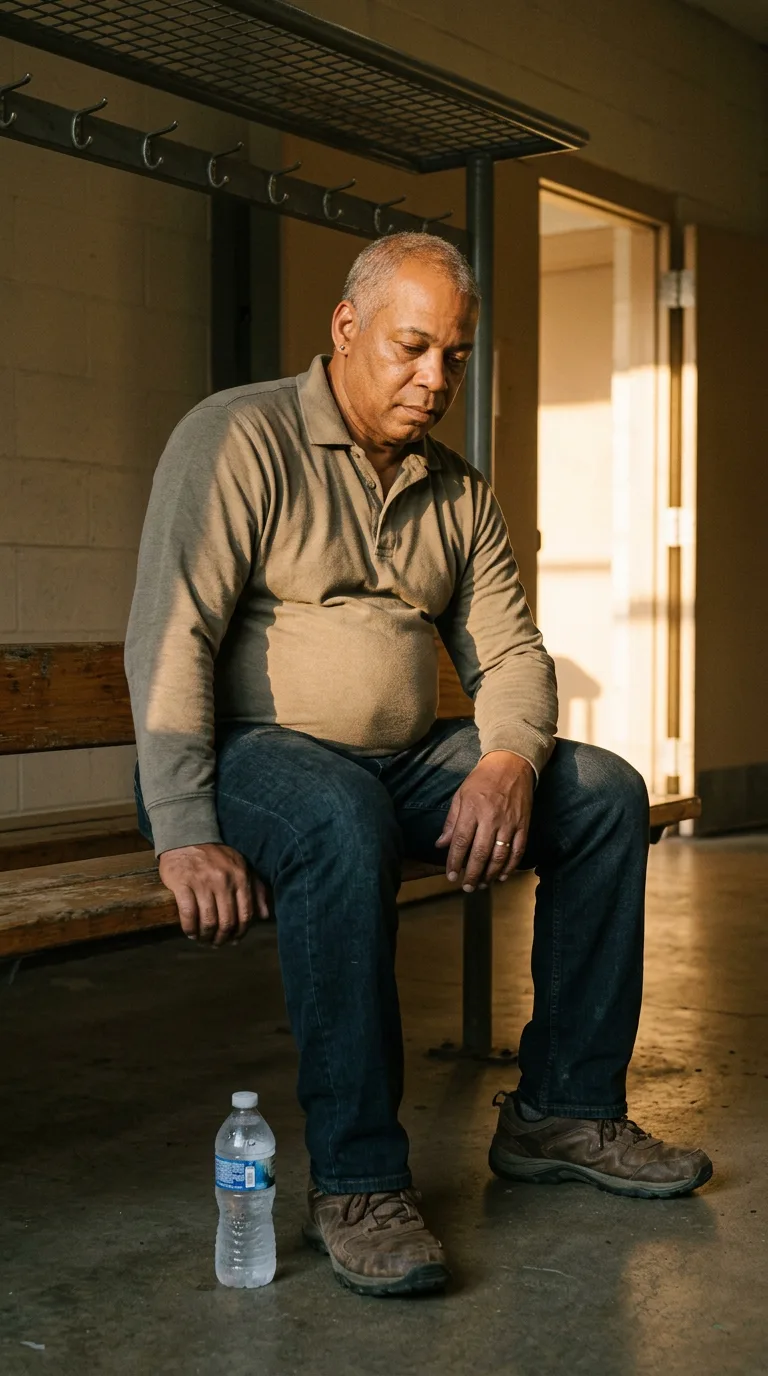
Rarest thing about him: Both earlobes — common, 1 in 31
Season 1seed 212693583 · engine v11
Character card
lineage 2NZHHJ
His body-swap story
@colin.hasbrook, wearing Ramón Estrella, rolled the wheel on and woke up as Marcus Whitfield, spent under a minute in him, then spun the wheel and woke up as an unnamed body
Ramón Estrella's kitchen smells like burnt coffee and his moustache itches in a way it never used to, forty seconds into being him, and that is somehow the thing that decides it. Not boredom exactly. Not the freckled forearms on the counter, not the mechanical engineer's life waiting patiently to be picked back up like a jacket on a hook. Something smaller: the itch, and the phone on the counter with a notification from a wife you have never met and never will, and the specific tiredness of a body that is, this second, only forty seconds old to you and already asking things of you. You want to not be asked things. You want the wheel again, the two-second nothing of the site loading, the wanting that always comes back faster than you tell people it does. You put your palm flat on the counter, you do not sit down in his life, you open the site instead.
The wheel spins. It always looks like it could give you anything. It gives you a locker room bench, sunlight coming low and orange through a propped door, and the smell of chalk and rubber and somebody else's sweat cooling on your own back.
You are mid-motion — his motion. Forearms on his knees, the last hard breath through his teeth cut off a beat early, and your hands are already moving to the bar overhead, setting themselves two inches wider than habit, and his body — this body, 53 years old, a softness gathered low at the belly, shoulders that still remember being younger — grinds a rep out slow while his face does none of the things a last rep does. No grimace. No relief. Just a stillness underneath the effort, like someone let go of the wheel on a car already rolling straight.
The bar is the first thing that talks to you. Cold knurled steel, familiar to hands that are not yours yet, and it gives you a flash — Tuesdays and Thursdays, 5:40 a.m. before the shift, a gym two blocks from the casino employee lot, a place he goes because his cardiologist used the word *pre* in front of a scarier word and Marcus Whitfield has never in his life let a warning finish its sentence before acting on it. The bar becomes a whole year: plates added slow, a training partner named Desmond who moved to Henderson and stopped showing up, the particular ache in the left shoulder that means rain is coming even in a city that barely has weather.
The water bottle sweats on the concrete by his shoe and that gives you nothing — it's new, unhandled — but the polo shirt against your back, damp now, was ironed this morning by his own hands at 2 p.m. his time, because he sleeps days and works the graveyard end of things, the employee entrance at four in the morning, badge on a lanyard, walking under fluorescent light past men half his age who call him Mr. Whitfield without being told to. The shirt remembers the iron, remembers him buttoning it one-handed while holding his phone against his shoulder, his daughter's voice tinny and far off, asking would he make it to her thing Saturday, and him saying baby I'll try, meaning it, half-lying the way tired fathers do.
The wedding band gives you the most. Twenty-six years. A woman named Denise who prays over food he privately thinks doesn't need praying over, and loves anyway, has loved anyway for twenty-six years, through two kids now grown enough to not need him in the room, through a bank account that never once got comfortable, through him coming home smelling like other people's cigarette smoke though he's never smoked a day, through Sunday mornings he sometimes falls asleep in, through nights he drinks more than the pastor would call wise and nobody in that house says a word about it because they know why, mostly, and love him anyway, still.
His earlobes carry two small studs he put in decades ago on a dare he doesn't remember losing. His scalp, thin now where the part runs low, remembers the barber's clippers guard-three, a Tuesday habit older than his marriage. And his leg — his leg is bouncing right now, under the bar, a thing his hands would still and his mind never gives permission to, going since before you arrived and going still, a small motor that runs on something older than nerves.
You finish the rep. The bar goes back in the rack with a sound that lands in his chest like punctuation.
You look down at your hands — his hands, brown, a plain gold band catching the low gym light, knuckles a little swollen the way knuckles get at fifty-three from nothing in particular, just years — and you turn them over once, like you're checking they're real, which they are, more real than you have been in longer than you'd say out loud to anyone.
Then you lift your eyes to the mirror across the rack, to nobody, to no camera that exists inside this story, and you say, quiet, mostly to see if the voice matches the weight of him:
"One more set."
You don't know yet if you mean it.