Yusuf Bakir
Fictional. Generated by AI — not a real person, and no likeness of one is intended.
39, home health aide in Detroit · rolled by @elian.carrizal · card — no film
History
who has worn him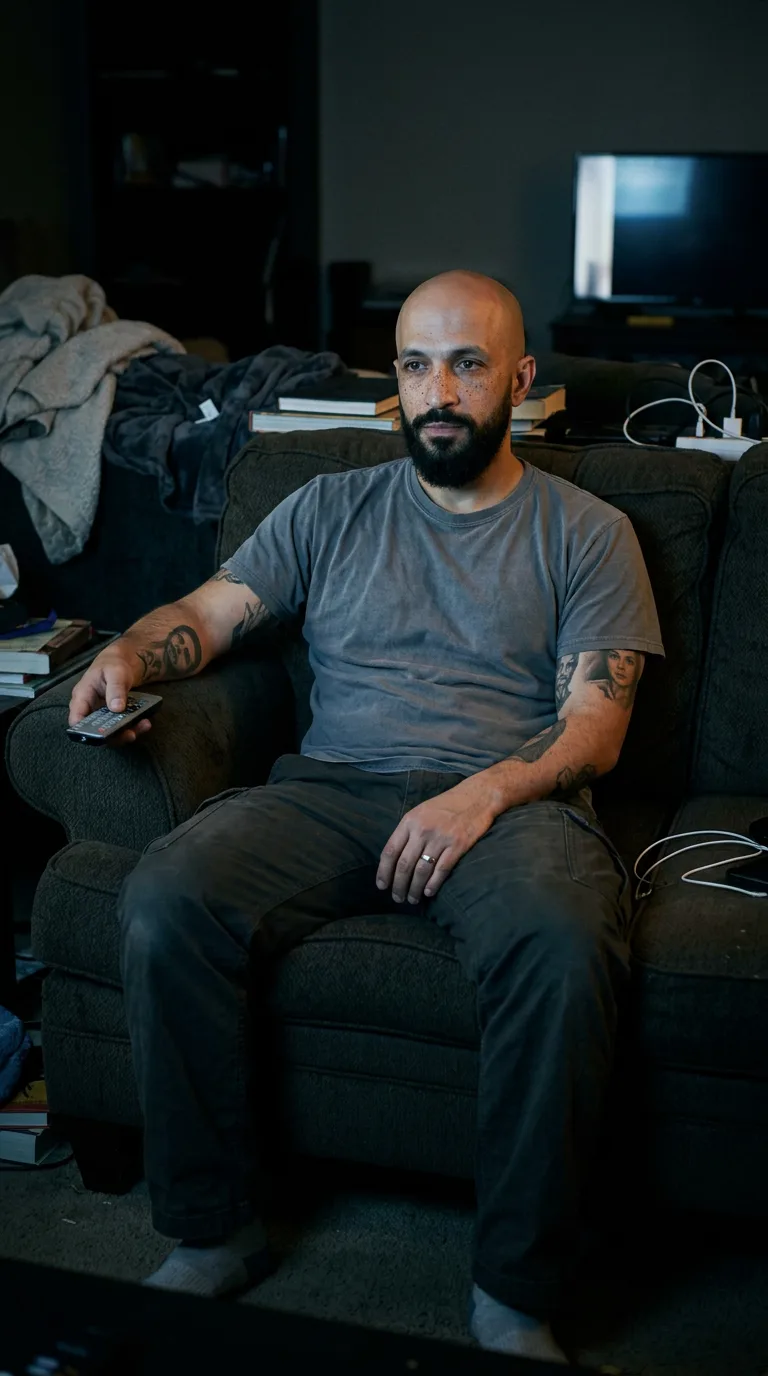
Rarest thing about him: Flips a lighter — common, 1 in 37
Season 1seed 1160362010 · engine v11
Character card
lineage 9IC4OB
His body-swap story
@elian.carrizal, wearing Nathan Pawlicki, rolled the wheel on and woke up as Yusuf Bakir, spent 3 minutes in him, then spun the wheel and woke up as Darius Whitehorse
Nathan Pawlicki's apartment is too quiet for a Friday night, and that's the problem. Three hours and thirty-five minutes in this one — green eyes, a beauty mark, hands that know a keyboard better than they know anything else — and already the itch is back. Not boredom with the body exactly. Boredom with the kind of life that fits a body like this: a man who orders the same takeout, who has never been punched or prayed or really lost anything. You spun last time wanting clean and easy, and you got it, and clean and easy turns out to have no weather in it at all. You want to feel something load-bearing. A life with debts in it. You sit on his overpriced couch, open the laptop that isn't yours, go to vessel.cards out of a habit that is only sixty spins young, and you spin before you can talk yourself out of it the way you always almost do.
The wheel doesn't ask why. It never does.
You land behind his eyes mid-sentence with the television, a blue-white flash cutting to a bright frame, and your spine straightens before you've decided to sit up. The remote is already down on the couch arm, set there by a hand that isn't used to being watched. The room smells like somebody else's detergent. Your chest — his chest — is wider than you left, shorter too, compact, packed with a kind of tired density Nathan's body never had. There's a beard pressing warm against your own throat. Freckles you can't see yet but already feel, like a texture, like weather on a face.
The gray t-shirt is the first thing that talks to you. Soft from washing, a little thin at the collar, and underneath it comes a whole morning — not this morning, a thousand mornings folded into one — him pulling this exact shirt over his head in a bedroom with the shade half down, his wife still asleep with one arm thrown over the dog that isn't allowed on the bed but is always on the bed, him checking his phone for the day's client list without really reading it because he already knows: Mrs. Okafor at nine, pills sorted by color since she stopped trusting the labels; then the Petrossian place off Six Mile where the daughter calls every day at noon whether anything's wrong or not. The shirt gives you his shoulders rolling into the sleeves, a small ordinary satisfaction in cotton against skin that's been up since five.
The remote, before you set it down — no, after, the ghost of the grip is still in the palm — gives you something else: nights exactly like this one, lights off, a show he's seen enough times to recite, laughing at the same joke in the same place every time out of loyalty more than surprise. Yusuf. The name arrives with the laugh, attached to it, the way a smell arrives attached to a house. Yusuf Bakir, who came up on the east side, whose father wanted him to be a pharmacist and settled, grudgingly, for this — hands-on, underpaid, essential. Yusuf who married young, divorced at thirty-one, remarried at thirty-four, and somehow kept both women speaking to him, which his mother still calls a miracle in front of company.
The couch under you is worn in a specific place that matches a specific weight, his weight, and it gives you a whole year of Friday nights — this couch, this show, his wife upstairs already asleep because she works mornings and he works whatever shift the agency hands him, which this month means days, which is why eight o'clock finds him parked right here instead of pulling into some stranger's driveway at midnight. The tattoo on your forearm when you glance down — her face, the ex-wife's, inked on when he was twenty-six and certain about things he wasn't certain about for long — pulses up a memory of the shop, the noise of the gun, a friend laughing that he was an idiot, him not caring, meaning it anyway. He never got it covered. Says it's a reminder. Doesn't say of what.
Your feet in his socks remember standing twelve hours at a stretch, the particular ache behind both knees that never fully clears, the small practiced economy of motion that comes from turning an old man in a bed without hurting either of you. These hands have learned things Nathan's never did: how to count pills into a Tuesday slot without looking, how to hold someone's wrist to find a pulse gently enough that they don't wake. Your jaw itches where the beard meets the throat, and under that itch is a flicker of the lighter he isn't holding right now — the one that lives in his jacket pocket, flipped open and shut a hundred times a shift out of nerves, though he never once lit anything with it. Doesn't smoke. Never did. Just needed something for his hands between houses.
A door somewhere upstairs. Water running, then stopping. His wife, awake after all, moving around up there in a life you have not yet earned the right to call home.
You look down at your own hands — his hands, wide, nicked at the knuckle, the wedding band plain and a little loose from months of hand sanitizer drying out the skin under it — and you turn them over slowly in the blue light still crawling off the screen, like you're checking they're real, because for one more second they aren't quite yours.
"Okay," you say, out loud, to no one, your voice landing lower and rougher than Nathan's ever did. "Okay."
Upstairs, the water starts again. You don't know yet how long you'll let it run before the wheel calls you away from it.