Darius Whitehorse
Fictional. Generated by AI — not a real person, and no likeness of one is intended.
41, manager (mid-level) in El Paso · rolled by @elian.carrizal · card — no film
History
who has worn him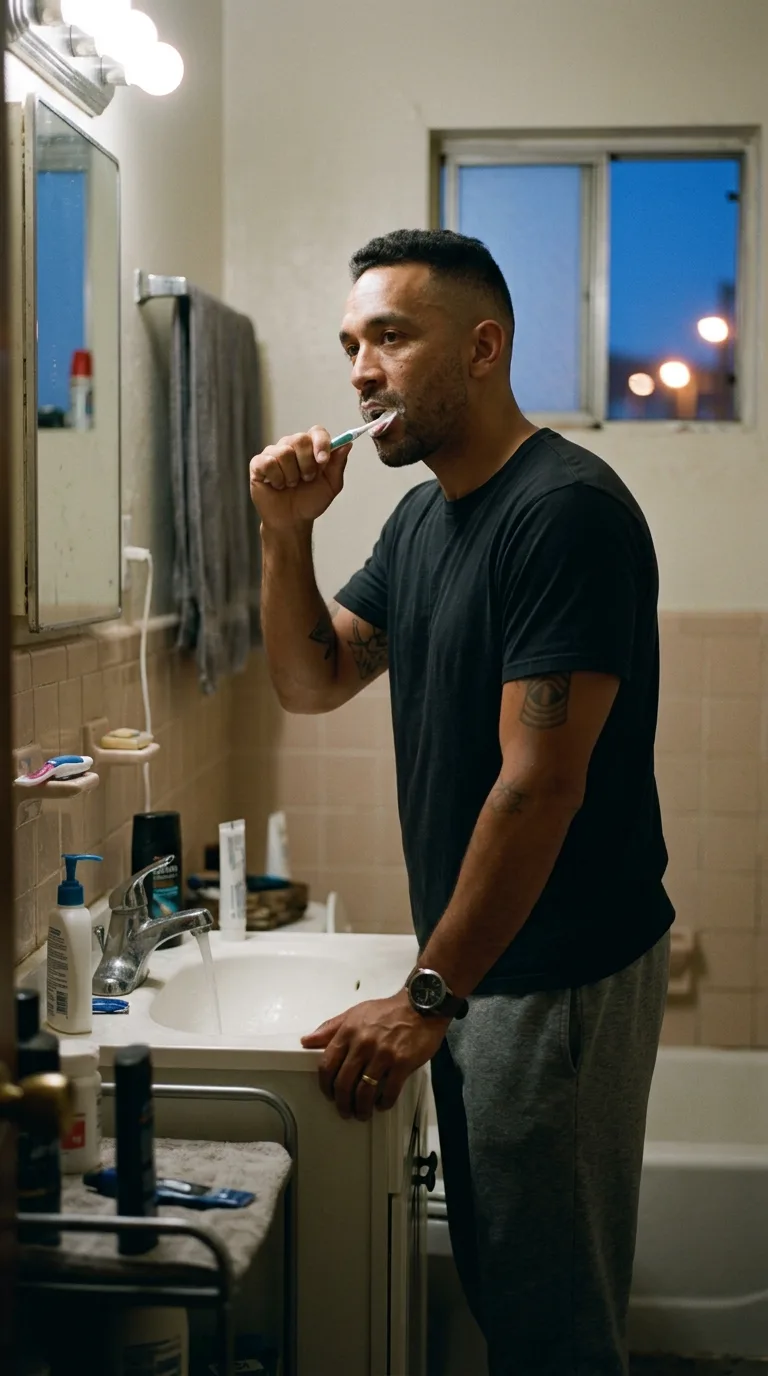
Rarest thing about him: Brushing his teeth — common, 1 in 53
Season 1seed 507908879 · engine v11
Character card
lineage 9IC4OB
His body-swap story
@elian.carrizal, wearing Yusuf Bakir, rolled the wheel on and woke up as Darius Whitehorse
Yusuf's hands are still foreign to you when you make the decision — small hands, a home health aide's hands, careful with turning bedridden bodies, gentle in a way that has nothing to do with you. You have been him for three minutes. The apartment smells like someone else's dinner going cold on the stove, bitter lentils, a TV muttering in the next room that isn't yours and never will be. Three minutes of a stranger's Friday evening in Detroit, and already the itch starts under the skin that isn't yours to itch. Sixty times now you have felt this: the flatness that comes right after, the sense that a life handed to you fully built is somehow smaller than the one you gave up to take it. You don't examine it too hard. You never do. You open the laptop that is not yours, on a desk that is not yours, and the wheel is already loaded, already spinning lazy colors across the screen like it's been waiting on you specifically. You pay. You spin.
The water is running when you land, warm on your fingers where they brace the sink, and there's a toothbrush in your mouth — bristles soft, waterlogged, mint going bitter at the edges. The stroke you're mid-way through finishes on its own, muscle doing what it was already doing, and you feel yourself — him — switch sides, start on the other, slower now, like something in the rhythm has gone thoughtful. Foam at the corner of his mouth. Tap running loud against old porcelain. Eyes on nothing in the mirror, and then, for one half-second before anything else arrives, eyes on you.
The mirror gives you him first — close beard, black hair faded tight, a face with nothing remarkable about it except that it's a face, a whole life sitting behind brown eyes that don't know yet they have a passenger. Then the sink rim comes up through your palms: cool, a little tacky with old toothpaste, and with it a flash — this exact sink, years of it, a toddler propped on the counter here once having her teeth brushed by this same hand, giggling, kicking the cabinet door. Gone before you can hold it. You rinse the brush twice, stand it up bristles-first the way he always does, out of the grey puddle it's sat in a thousand evenings, and that motion alone unlocks something bigger — a hardware store run eleven years back for this exact faucet, the old one having dripped through two winters, his wife handing him the wrench and saying *you're not getting out of this one*, and the pride, stupid and real, of fixing something with his own two hands in his own house.
The shirt is next — his T-shirt, soft through a hundred washes, and wearing it gives you his morning: getting dressed before five, the glass-walled office waiting for him with its fluorescent hum and a stack of schedules that never balance right, the small satisfaction of a door he can close when he needs to and mostly doesn't. The polo shirt from some other day, navy, a name badge clipped at the belt — W&S stitched small over the heart — comes through sideways, a memory of a memory: checking his own reflection before a shift, the badge catching light, thinking *not bad for forty-one*, thinking it without vanity, just gratitude that the knees still worked, that the body still did what he asked.
The sweatpants against your legs bring the couch, three kids loud in it at once, the youngest asleep on his chest heavier than she thinks she is. The wedding band is cool and solid on the hand still gripping the sink, and that alone is a flood — a church in El Paso, white dress glowing under bad fluorescent lights, his mother crying in the second row, his own voice cracking on *I do* and not caring who heard it. Church again, more recent, a Sunday with all three kids fighting over the last doughnut in the fellowship hall, his wife's hand finding his without either of them looking.
The tattoos on his forearm — ink under your fingers as you brace the counter — bring back a desert he does not talk about much, heat that got into the bones and stayed there, men's names he still says at dinner sometimes so the kids will know them. A different color of grief than the rest, folded in with everything else like it belongs there, because it does.
Your — his — feet are bare on cracked bathroom tile, cold enough to notice, and that brings the house itself: turquoise paint peeling at the trim, chain-link fence his father-in-law keeps threatening to replace, white desert light that turns everything the color of bone by noon. None of it ever enough money and somehow always enough. Evangelical hymns on the radio Sunday mornings. Grace before dinner, even on the nights nobody's hungry.
You stand there a moment longer than the last stroke of the toothbrush required, foam gone, mouth rinsed, water still running warm over nothing.
You look down at the hand on the faucet — broader than Yusuf's, darker along the knuckle, a plain ring catching the bathroom light — and you turn it over once, like you're checking it's real.
You shut off the tap, lift your eyes to the mirror, and say, quiet, almost to yourself: "Okay."