Soren Nakashima
Fictional. Generated by AI — not a real person, and no likeness of one is intended.
39, contractor in Small-town Ohio · rolled by @elian.carrizal · card — no film
History
who has worn him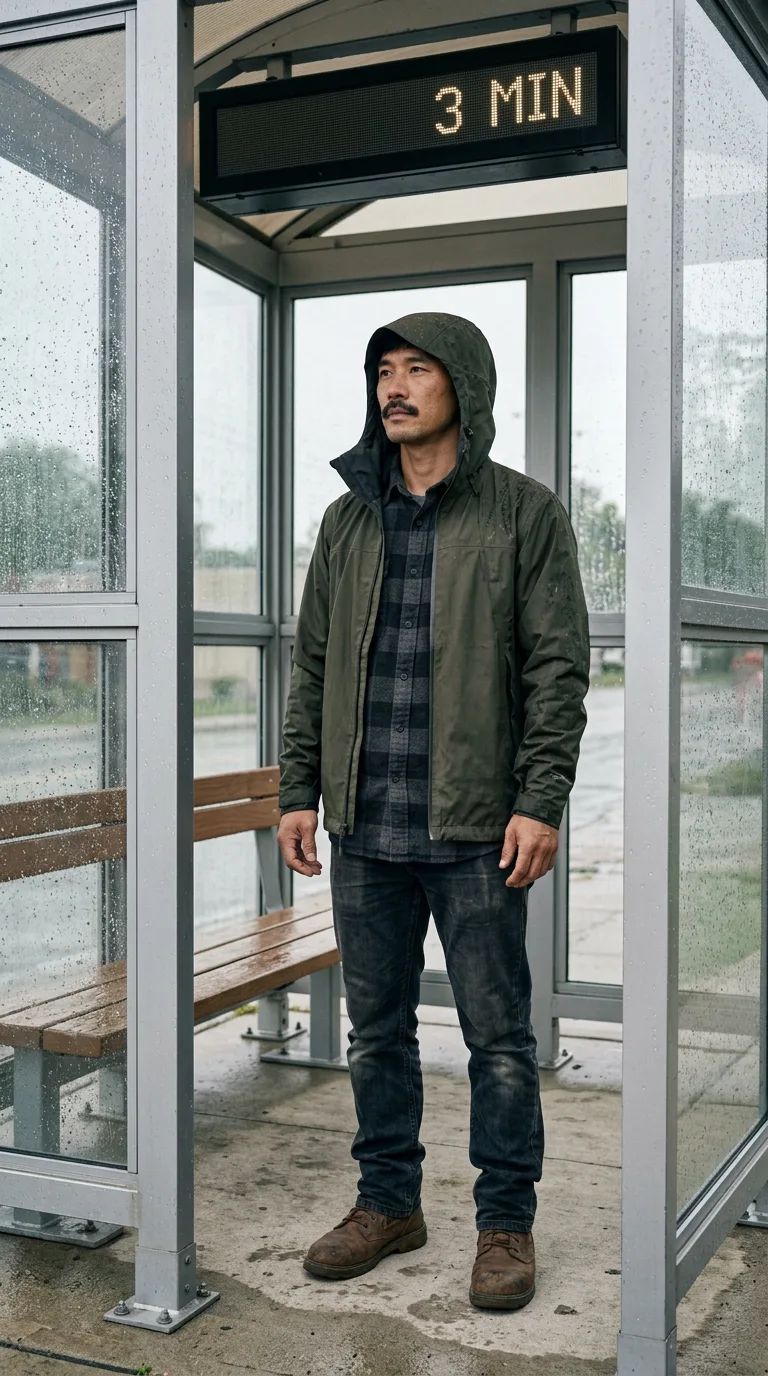
Rarest thing about him: Buddhist — common, 1 in 49
Season 1seed 814596801 · engine v11
Character card
lineage 9IC4OB
His body-swap story
@elian.carrizal, wearing Darius Whitehorse, rolled the wheel on and woke up as Soren Nakashima, spent 3 minutes in him, then spun the wheel and woke up as Dennis Wachowski
---
Darius Whitehorse's apartment is quiet in the particular way a place gets when its owner has somewhere else to be. You are standing in his kitchen in his boxers at a quarter to seven on a Sunday, and the coffee maker is gurgling through its last cycle, and you are bored of him in a way you can't quite put a reason to. He is a good body — 5'6" of gym-discipline, a job that pays, a condo he is proud of three years into owning. You have been him for a day and eleven hours and you already know the whole shape of what he wants from this week, from this year, and it does not interest you. There is a meeting tomorrow he has already prepared for. There is a woman he is seeing who texted twice last night and both times you felt the small flare of his interest and did not share it. He is thirty minutes from waking up for real, and you do not want to be here when he does. You want the part that is still new: the spin, the drop, the stranger's weight landing on you like weather.
You open the laptop at his kitchen table, the login already saved, and you spin for the sixty-second time.
---
Water. That's the first thing — not falling on you but already soaked into you, cold through a flannel shirt and a canvas jacket both gone heavy with it, beading off a hood you've just pushed back. Your face is tipped up into open rain and you are not flinching from it. Your chest expands around a breath that isn't yours yet, slow, unbothered, like whoever owns these lungs has made some kind of peace with being wet. Your weight is up on the balls of your feet, stepped forward off a curb into running water that's found the seam of your boot and started to climb your sock. Somewhere behind you, under a steel shelter, an arrivals board you can't see anymore still reads three minutes.
---
The jacket is the first thing that gives you anything — canvas gone slack and cold against your shoulders, zipper pull tapping your collarbone, and underneath it: a flash of a hardware store three winters back, him turning the jacket over in both hands under fluorescent light, deciding it was worth the money because the last one quit keeping rain out around the elbows. You feel the decision like it's still being made. Frugal, but not cheap — there's a difference he's proud of.
The flannel under that is older. You get a whole morning off it at once — him buttoning it with the TV on low, some golf tournament he wasn't really watching, in a house that creaks the way houses do when nobody else is in them. That's not sad to him. It's just Sunday. He likes Sunday. He thinks of it, distantly and without complaint, as the day the job site is quiet and his hands get to decide for themselves what they're doing, which today was: nothing, a walk to catch the 10:40, a thing to do out of the house because the house gets loud in its silence if he sits in it too long.
The boots come up next, through the cold climbing your socks — leather gone soft and dark with years, resoled twice, and in them a decade of framing crews, of him up on joists before the rest of the guys have their coffee, of a foreman years back saying he had good hands, the kind of praise that lodges somewhere and stays. Your shoulders know how to carry a weight they aren't currently carrying. Your forearms remember the particular drag of a nail gun's hose, the give of pine under a square, the smell of sawdust turning to mud in weather like this. This body is thirty-nine and strong in the specific places a thirty-nine-year-old who works with his back stays strong, and tired in the specific places he doesn't mention to anyone.
Your right hand, loose at your side, finds a ring in your jacket pocket — not worn, carried. That's new information and it comes with weight: a woman's name you don't get, just the fact of her, gone two years now, and a habit of turning this ring between his fingers like a worry stone when his hands have nothing else to do. He never remarried. He didn't go looking. Some Sundays he takes the ring out just to hold it and doesn't examine why. There's no grief flaring up in it anymore, just a smoothness, like a stone a river's had a long time.
There's a temple he goes to, not every week, incense-smell threading up through this memory unbidden — kneeling, the particular quiet of it, a quiet that isn't empty the way the house is. He believes, in his unspectacular way, that this is not the only lap of this. That thought sits in you strange and calm, a man's whole private architecture for getting through a life alone, handed to you in the space between one raindrop and the next.
The bus board clicks over somewhere behind the shelter glass. Three minutes becomes two and you don't move toward it. You are standing in runoff with your face in the rain because some version of him, some morning months back, decided that getting fully drenched before the bus even came was its own kind of funny, its own kind of fine, and you're wearing that decision now like it's yours.
---
You bring your hand down out of the rain and look at it — broad-knuckled, callused along the base of the fingers, a thin white worry-groove where a ring sat for years and isn't on it now. You turn it over slow, the way he does without thinking, watching water run off the heel of the palm.
Then you lift your eyes to find whatever's in front of you, hold there, rain still coming down past your face.
"Three minutes," you say, to no one, "and I'm still not cold."