Dennis Wachowski
Fictional. Generated by AI — not a real person, and no likeness of one is intended.
51, construction foreman in Phoenix · rolled by @elian.carrizal · card — no film
History
who has worn him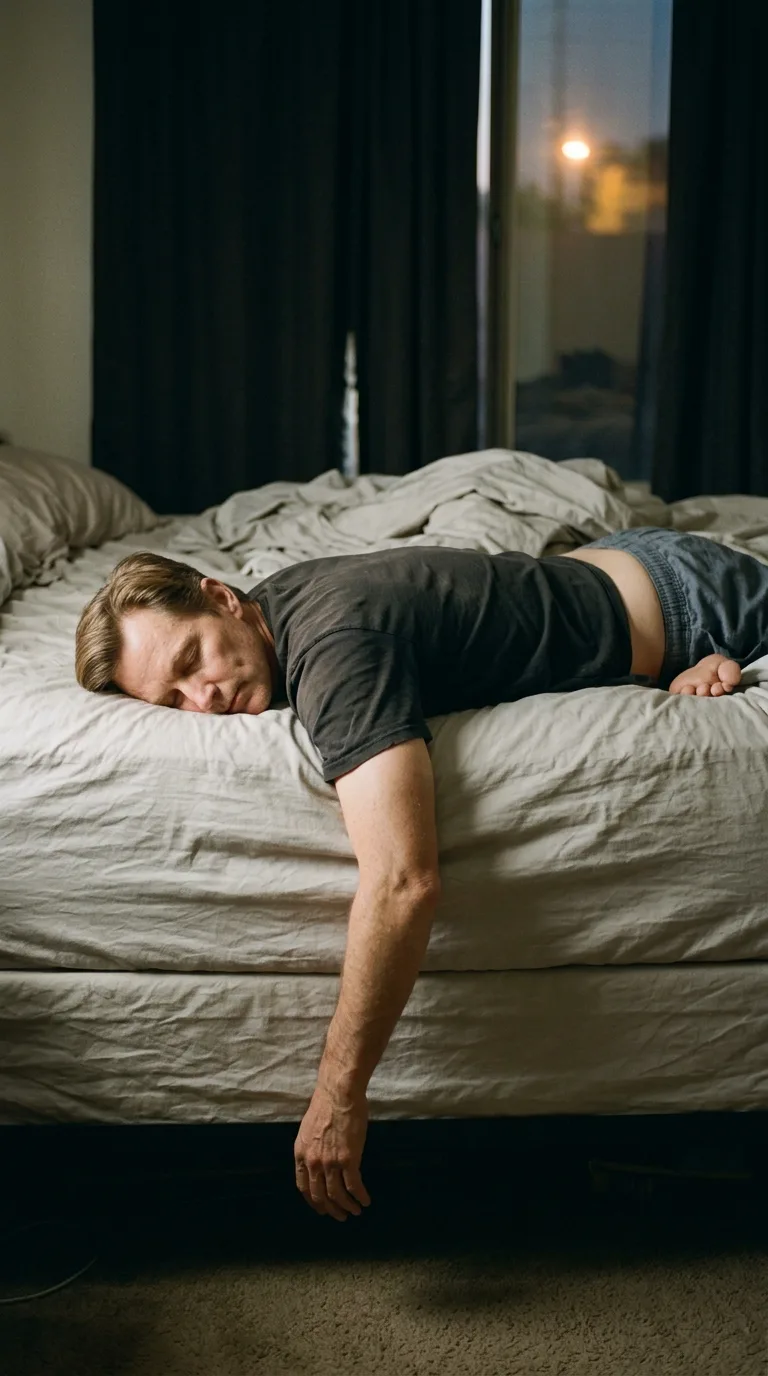
Rarest thing about him: Cigars only — common, 1 in 30
Season 1seed 2043417046 · engine v11
Character card
lineage 9IC4OB
His body-swap story
@elian.carrizal, wearing Soren Nakashima, rolled the wheel on and woke up as Dennis Wachowski, spent 3 minutes in him, then spun the wheel and woke up as Philip Castagno
The coffee's gone cold in Soren Nakashima's hand and you haven't even noticed, because that's the thing about this body — three minutes in and already it feels like a coat you tried on in a store you're not going to buy from. Athletic build, good jaw, moustache you keep catching in the hallway mirror like it belongs to somebody more interesting. His kitchen smells like cut lumber and a candle his girlfriend left burning out in the other room. Small-town Ohio does that particular Sunday-morning quiet where you can hear a lawnmower two streets over. You picked him last night for his hands, for the contractor's confidence in his shoulders, for the three words engraved on his pocketknife, and none of it did what you wanted. Three minutes of being a man who has his life handled, and it turns out handled is boring. You set his mug in the sink. You are already thinking about the site, the wheel, the little animated spin that costs you money you no longer think about spending. Sixty-two men behind you and every single one of them stopped being a decision a long time ago; it's just an itch now, familiar as a tongue finding a chipped tooth. You open the laptop on his counter, log into vessel.cards with his hands on his keyboard, feel nothing about that small theft, and spin.
Morning doesn't arrive so much as resume. You are face-down, and then you are face-up, and the arm that was hanging dead off the mattress edge is already drawing itself up and folding over a chest that is not Soren Nakashima's chest — softer through the middle, slack in a different way, a weight you recognize from nowhere because you have never worn it before. Streetlight is still coming low and orange through a gap in blackout curtains, which makes no sense for a Sunday morning until you remember whose Sunday morning this is and realize it isn't one — it's the dead dark hour before a Phoenix shift starts, and somewhere the body you abandoned is drinking coffee in daylight. The breathing under you goes even. You are on your back in a bed you've never slept in, in a posture — hands folded like a man laid out for viewing — that some part of this body, some wordless animal part of it, flags immediately as wrong, as not how he sleeps, and then forgets to care.
The sheets are cheap cotton going nubby at the corners and that's the first thing that comes through, just from lying in them: a flash of a Fiesta Bowl afternoon years back, beer sweating rings onto a side table, a woman's laugh from the kitchen that isn't the girlfriend's laugh, that belongs to someone named Carol who left in a May that this body still measures other Mays against. You don't ask for it. It just comes, the way his skin remembers the sheets before you do. Your own hand — his hand — is resting on your sternum and from the hand you get calluses, a half-healed scrape along one knuckle from a form board that kicked back Thursday, and underneath that, worn into the muscle like a path through grass, the memory of cracking these same knuckles one at a time on a tailgate at lunch, a tic so old it isn't even restlessness anymore, just maintenance.
The room gives you more once you let it. The streetlight through the gap is the same light that's been coming through that same gap for four years in this apartment, a two-bedroom off Thomas Road with a swamp cooler that never quite keeps up, and the memory of moving in here comes with a specific flavor of failure — divorce furniture, a mattress bought alone, the particular shame of assembling a dresser from a box by himself on the floor of a bedroom he didn't choose. There's a crucifix on the wall by the door, small, brass, his mother's, and touching it in memory — though your hand hasn't moved yet — brings back a funeral in Flagstaff and a priest who talked too long and a decision, made in that pew, never fully honored, to go to Mass more.
Then the shirt. It isn't on you yet — you're bare-chested under the sheet — but the memory of yesterday's shirt going on is so recent it's still sitting in the muscle of his shoulders: sleeve over one arm, then the other, the henley's collar snug at a throat that's gone a little heavier than it used to be, the vest after it, orange and striped, zipped halfway because he never zips it all the way, the pencil and folding rule slotted into the pocket by feel, no looking, thirty years of the same small ritual. His hands know a chalk line, know how to sight a wall true down its length with one eye closed, know the particular give of a steel beam swinging into place before the crane operator's radio call even finishes. Skinny fat, his body, soft where it shouldn't be and still strong enough in the forearms to matter, and it carries a lower-back ache that lives there permanently now, that he irons out every morning with the same two stretches, that no one younger would understand.
A name comes with the dresser drawer his hand isn't touching but remembers opening: Natalie, a daughter, nine years old, a gap-toothed drawing of a crane taped to his site trailer wall because she asked what Daddy builds and he showed her a picture once and she's drawn him a hundred cranes since. The girlfriend's name arrives separately, gentler, newer — Priya, two years in, patient with him in a way Carol never had the chance to be or he never let her. And under all of it, worn so deep it barely registers as thought anymore, there's a six-pack's worth of a feeling that comes every night around eight whether he invites it or not, and a cigar on the back step that is less about tobacco than about five minutes nobody can ask anything of him.
Your hand — his hand — lifts off his chest on its own, the way a hand does when the person behind it finally remembers it's there. You turn it over in the orange light. Thick fingers, a scraped knuckle healing dark, a wedding band that isn't there and hasn't been for six years, calluses in a map you didn't make and don't need to read twice to understand what thirty years of concrete and steel does to a body that was never going to be an athlete's. You crack the knuckles, one two three, without deciding to, the way he always has, and the sound in the dark room is enormous.
"There you are," you say, to no one, in his voice, which is rougher than you expected and catches a little on the dry morning air — and you don't know yet if that's relief or just a man talking to an empty room, and you don't know, not even a little, how long you intend to let him finish waking up before you go looking for the wheel again.