Nathan Pawlicki
Fictional. Generated by AI — not a real person, and no likeness of one is intended.
23, software engineer in Chicago · rolled by @elian.carrizal · card — no film
History
who has worn him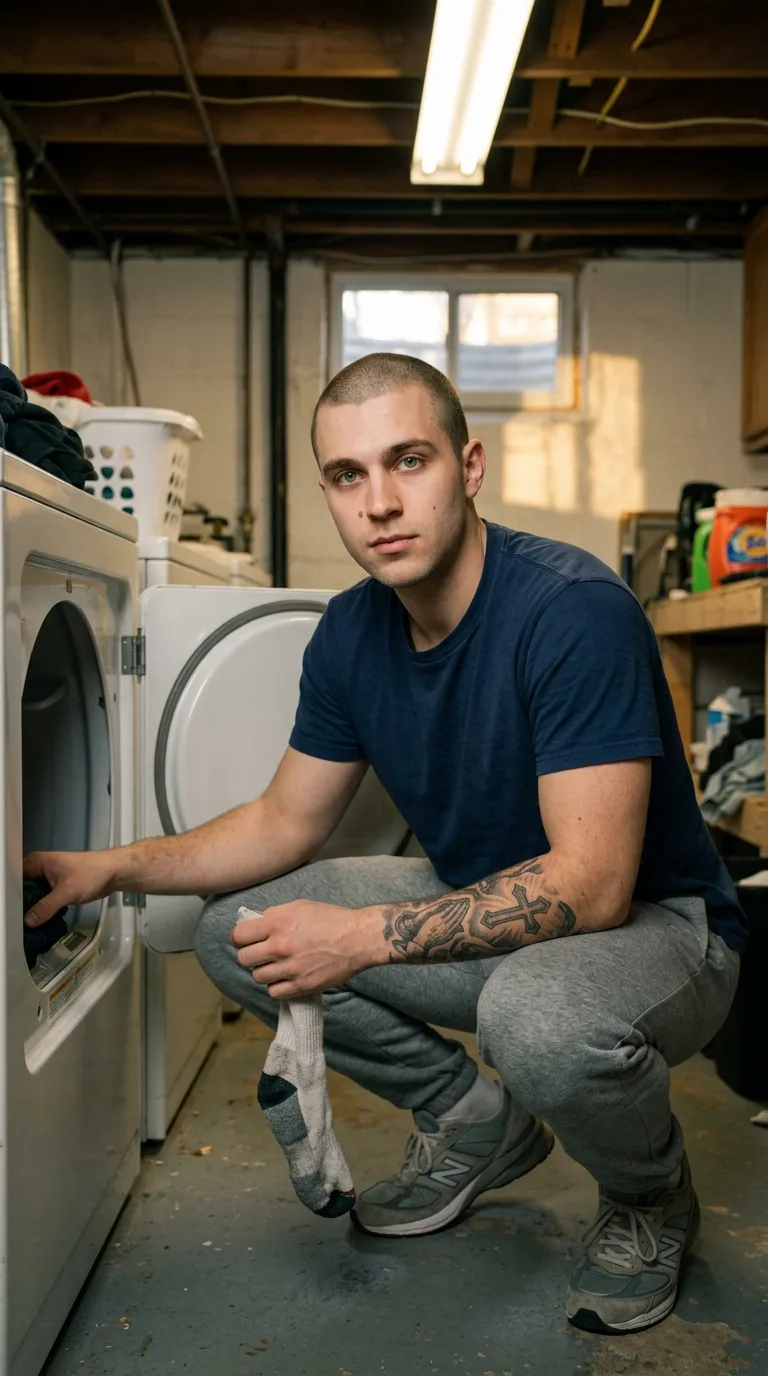
Rarest thing about him: Full sleeve — common, 1 in 53
Season 1seed 2112691443 · engine v11
Character card
lineage 9IC4OB
His body-swap story
@elian.carrizal, wearing Elian Carrizal, rolled the wheel on and woke up as Nathan Pawlicki
The barracks room smells like gun oil and somebody's microwave burrito, and Elian Carrizal's phone is face-down on the bunk because you already know what's on it — a message from a sergeant about PT in the morning, a life that isn't going anywhere interesting tonight. One day, eighteen hours in this one. Good arms. Good knees, for now. Freckles across a nose that's been broken once and set straight. None of it is yours and none of it is the point. The point is that Friday evenings in this town end the same way they start, quiet, and you have spun fifty-eight times already knowing that quiet is the one thing you can't sit in. You open the laptop. The wheel is already loaded from last time, spinning lazy and gold under your cursor like it's been waiting. You don't even finish deciding. Your thumb does it.
The dryer door is open and warm air is rolling off it into your face, and there's a sock in your hand, one gray-heeled New Balance sock, damp-warm, and your knees are bent under you at an angle that isn't how you'd ever crouch. Fluorescent light buzzes white overhead. For one full second there is no one driving and the sock just hangs there between two fingers, and then there is, and the first thing you do in him is finish the motion his body already started — you toss it into the basket, and reach back in for the next one.
The shirt comes first, because it's against your back, thin cotton gone soft from a hundred washes, and it opens like a door: this morning, pulling it over his head in a cold bedroom with frost on the inside of the window, the heat in this unit always two degrees short of enough, him grabbing the navy tee because it was the one on top of the pile on the chair, not because he chose it, laundry day meaning the drawer is down to nothing and he knows it, that's why he's down here at all. The sweatpants against your knees give you the rest — gray, a hole starting at one inseam he keeps meaning to throw out, him stepping into them half-asleep, the elastic gone soft, thinking about the standup meeting at ten and whether the API thing from yesterday would still be broken when he got to it. It was. He fixed it anyway, hunched over two monitors with a coffee going cold at his elbow, the kind of small ugly bug that eats an afternoon and leaves nothing to show for it but a commit message nobody will read.
The basket under your arm, plastic ribbed and familiar in his grip, brings the apartment itself — the L train two blocks off, close enough that his windows shiver on a schedule he's stopped hearing, brick going gray-blue in the window at this hour, the particular hush of a Friday with nowhere to be. He thinks about his ex sometimes on Fridays, not sadly exactly, just a key that still fits a lock that isn't there anymore — her laugh at a bar that doesn't exist to him now, the specific weight of missing someone you're glad you don't have back. The buzz under your scalp when your hand drifts up without you telling it to — buzzed hair, a habit of touching it when he's thinking, static under his palm — and under that, further down, a memory of the chair at the barbershop two weeks ago, the clippers' hum almost exactly the pitch of the fluorescent tube over your head right now, which is maybe why his hands keep squaring these shirts with more care than the job deserves: counting is a way of not thinking about anything.
Your arm — his arm — moves to fold, and the sleeve tattoo drags against the dryer's warm metal lip, praying hands under a cross inked into skin that's never once prayed, a thing he got at twenty-one on a dare that outlived the friend who dared him, the friend moved to Denver, they don't talk, the ink stayed. His jaw is smooth, freshly shaved this morning in a mirror fogged from the shower, a routine so automatic it isn't even a memory, just a motion his hands know. His mouth wants a vape that isn't in his pocket right now, a small itch under the ribs that is entirely his and arrives anyway, uninvited, yours now too. His nails are bitten down past comfortable — you feel that in the fingertips when they close around fabric, a rawness that is just how his hands always feel to him, unremarkable, his.
The basket fills. Corners squared, the fast precise folding of someone who does this every single week alone and has made a small competence out of it, nothing like whatever mess waits for him upstairs — no, waits for you now, upstairs, in a drawer that isn't folded like this, that this version of him is about to fix.
You straighten up out of the crouch and your knees — his knees, twenty-three and fine, untouched, nothing like the ones you left in a barracks three states and one body ago — take the weight without complaint. You look down at your hand, the one still holding a single black sock with no match yet, nails chewed to the quick, a hand that has never held a rifle, has never been anyone's but his.
You look up into the laundry room's one small window, where the light outside is going from gray to the particular dead blue of a Chicago winter evening, and you say, to no one, to the humming tube, to the version of yourself that might already be somewhere else tomorrow:
"Okay. Let's see what you've got."