Wyatt Solberg
Fictional. Generated by AI — not a real person, and no likeness of one is intended.
21, farmhand in Anchorage · rolled by @marco.villagrana · card — no film
History
who has worn him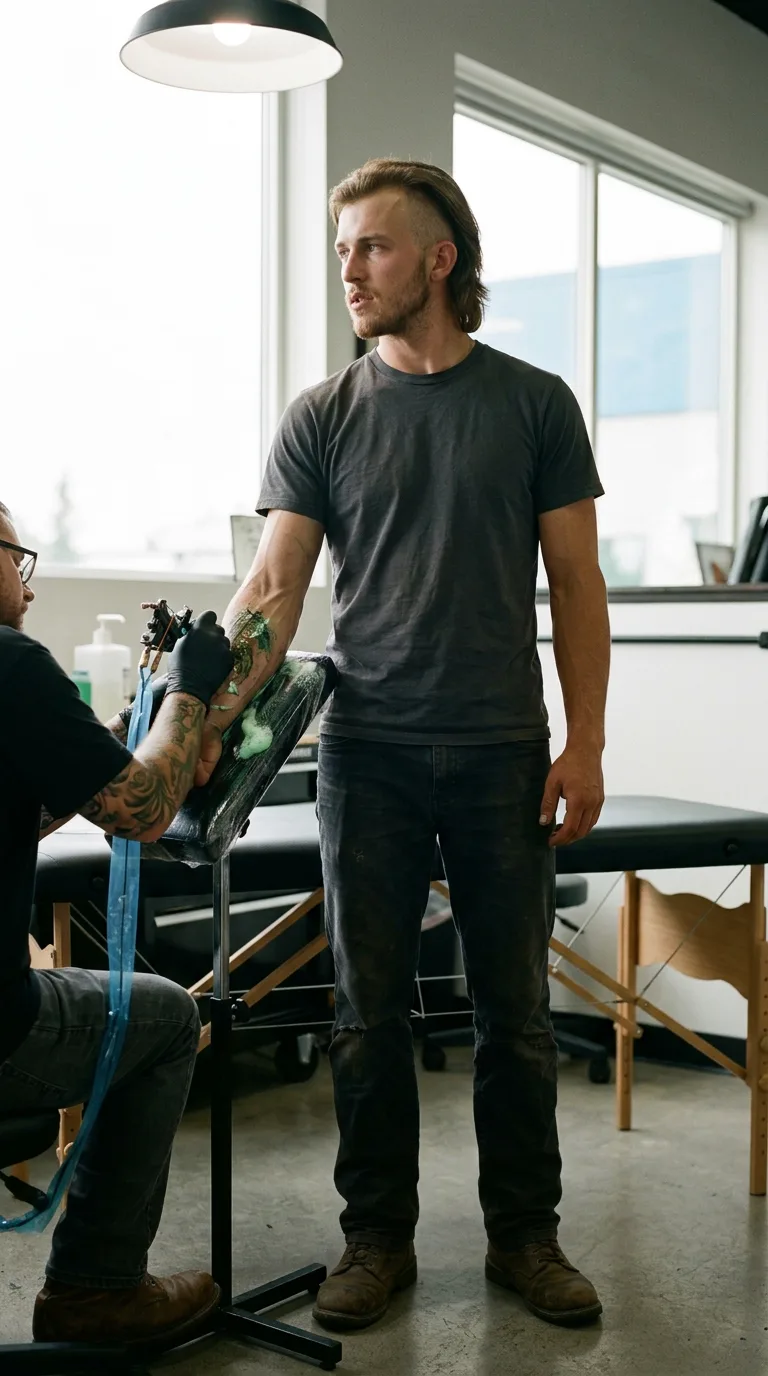
Rarest thing about him: Getting a tattoo — uncommon, 1 in 128
Season 1seed 1245504568 · engine v11
Character card
lineage LJL8SV
His body-swap story
@marco.villagrana, wearing Kaleo Freitas, rolled the wheel on and woke up as Wyatt Solberg, spent 4 minutes in him, then spun the wheel and woke up as Ray Cisneros
---
Kaleo Solberg's arms — no, not his, not really, but they are for three more minutes — are thick from ten years bending sheet metal on the line, and they ache in the specific way of a body that clocked in at six and has four hours left before lunch. You are standing in a break room that smells like burnt coffee and machine oil, back against a vending machine that hums against your shoulder blades, and you are so tired of this man you could scream. Not tired of the muscle. The muscle is fine. You are tired of the smallness of him — the way his whole Wednesday is a vending machine and a punch clock and a wife texting about whether he remembered the thing he did not remember. Three minutes ago you spun into a machine operator and felt, for three minutes, exactly like a machine operator. It is the 166th time you've done this and you already know the tell: when you start narrating your own boredom to yourself, it's time to spin again. So you take out the phone that isn't yours, open the page that's always open, and you spin before the coffee's even gone cold in a cup you didn't pour.
The lights don't dim where you are. They dim somewhere else.
The wheel lands and the world changes without a seam: fluorescent tube light overhead instead of break-room fixtures, a low mechanical whine instead of a punch clock, and your right forearm — braced, foreign, twenty-one years old and nothing like the arm you just had — is lit up red and green under cling film while a needle chews into it in long, wet, buzzing passes. The power in the shop flickers, just two seconds, black then back, and in that gap something in the jaw lets go. The head, which had been turned hard away, held rigid against the pain, goes loose on the neck. You watch the needle go into the arm like you're watching somebody else's TV.
The shirt is the first thing that talks. It's not on him — he's down to a gray t-shirt, sleeve shoved to the shoulder — but the memory comes anyway, riding up out of the muscle memory of an arm that has worn a hundred flannel shirts exactly like it: a denim one, sun-bleached at the shoulders, sleeves rolled twice not three times because three times cuts the circulation when you're hauling crates all day. Wyatt Solberg. The name arrives with the shirt-memory, stitched into a tag he's ripped out a dozen times because it scratched. Twenty-one years old, and the body under the t-shirt knows things before you do: how to close a hand around a crate handle without looking, the particular ache across the lower back that isn't injury, just August, just a season of bending.
The boot on the floor gives you the field. Frozen ground under a green haze of potato tops, dew still on everything at five-forty in the morning, his breath a small cloud, a straw hat that isn't on his head right now but that his fingers still expect to find brim-first when he reaches for it. Rows and rows of them, and at the end, crates stacked chest-high, and a foreman named Dale who calls everybody "chief" and means nothing by it. The tag on the jeans — Wrangler, third pair this year, the knees already gone pale — gives you a whole autumn: hauling squash into a truck bed in the rain, laughing with a guy named Petey about nothing, the particular satisfaction of a full crate lifted clean.
The tattooed arm itself gives you the newest thing, because it is the thing happening: a vine, green ink still weeping under the wrap, climbing from wrist toward elbow. He'd wanted something that grew. He'd said that to the artist, embarrassed by how it sounded out loud — *something that grows* — and the artist, a big quiet guy with his own arms sleeved solid, had just nodded like it was a normal thing to want. Why now. Because of her. Because of the kid.
That's the memory that comes in heaviest, off nothing you're touching — off the whole shape of the room, maybe, off the smell of green soap and antiseptic that is exactly the smell of a hospital hallway eight months ago. A girl named Bree, laughing too hard at something so she wouldn't cry, and a daughter with Wyatt's gap in her teeth already promised by genetics though she's got none yet, no teeth at all, four months old and sleeping in a car seat in the waiting room while he got his first tattoo ever, because Bree said *get something for her, not just for you*, and he hadn't known what to say back so he'd just gone and booked it. Anchorage light this time of year comes in long and amber even in the afternoon, slanting through the shop windows the way it slants through the kitchen window at home when he gets back from the fields smelling like dirt and she doesn't care, kisses him anyway.
His leg is bouncing. It's been bouncing the whole time, a motor that runs under him whether he's nervous or not, has run under him since he was a kid getting yelled at in church for it, and right now it's the only motion left that's still all his, still old habit, still true — a small percussion under a body that has otherwise gone quiet and let itself be worked on like furniture, like the facts said it would, and you didn't even have to make it happen. It was already true before you got here.
The tattoo gun stops. The artist leans back, says something about the outline being done, wants to know if he's good.
You look down at the arm — vine, wet ink, cling film gone loose at one edge — and turn the hand over slow, like checking if it still works. Gap-toothed, hazel-eyed, twenty-one, a kid's face somewhere behind it you haven't met yet and won't. You lift your eyes to the artist, not the camera, because there is no camera, just a man with a machine waiting on an answer.
"Yeah," you say. "Keep going."