Ray Cisneros
Fictional. Generated by AI — not a real person, and no likeness of one is intended.
62, pastor in Houston · rolled by @marco.villagrana · card — no film
History
who has worn him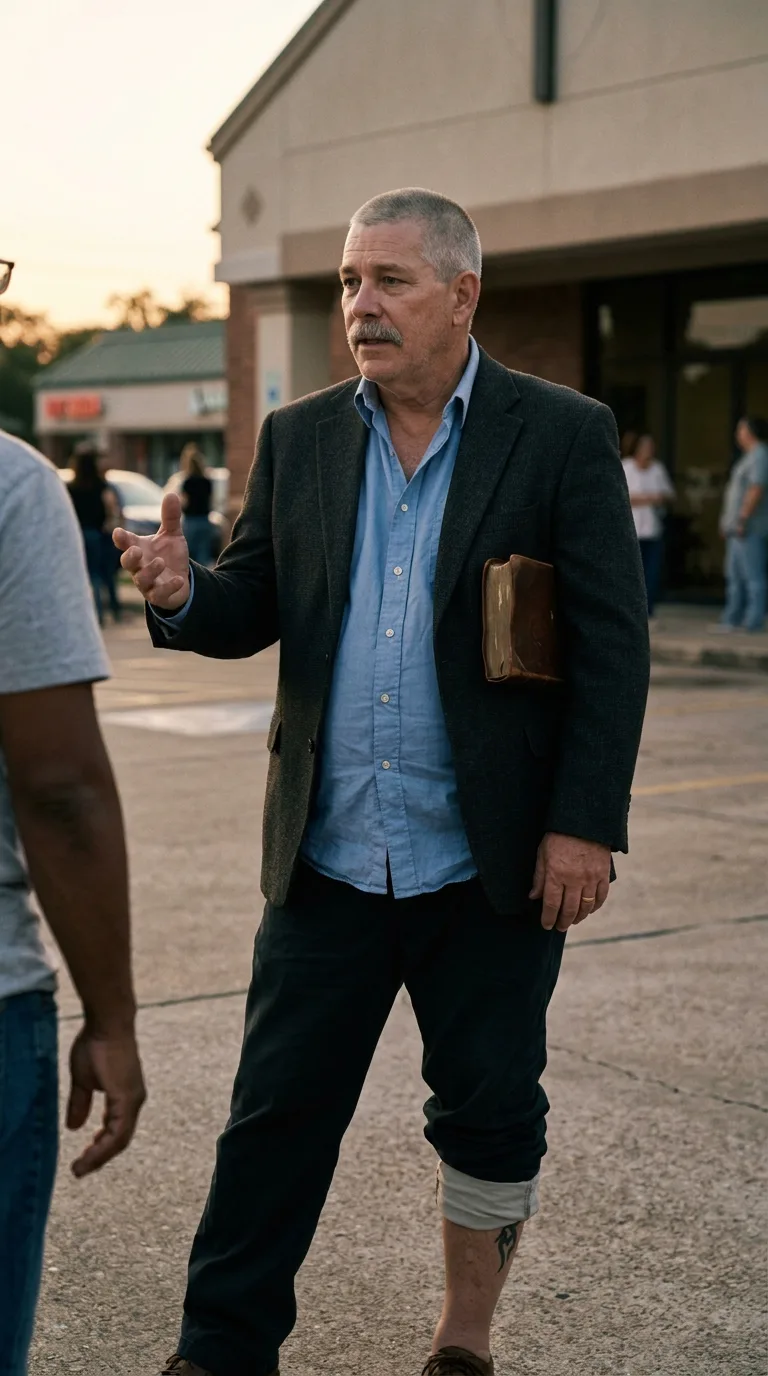
Rarest thing about him: Pastor — common, 1 in 432
Season 1seed 1239229185 · engine v11
Character card
lineage LJL8SV
His body-swap story
@marco.villagrana, wearing Wyatt Solberg, rolled the wheel on and woke up as Ray Cisneros
Wyatt Solberg's hands smell like diesel and hay dust, and they have been doing this same motion — grip, twist, lift, set down — for four minutes, and you already hate them. Not the boy. The boy is fine, strong, twenty-one and easy in his own skin, hazel eyes and that gap-toothed thing he does when he laughs that you haven't made him do yet. But the hands. You watched them thread a bolt wrong on the third try, watched them do it right after, and something in you went cold and impatient in a way that had nothing to do with Wyatt at all. A hundred and sixty-six men and you know this feeling now: not boredom exactly, more like standing at the edge of a pool you've already swum. You want the drop. You want the half-second where the floor isn't there. You wipe his palm on his jeans, walk him to the truck's cab where the phone is, and you spin because four minutes was never going to be enough and it never is.
The wheel gives you a strip mall in Houston, dusk instead of afternoon, and a book already in your hand.
It is heavier than you expect — leather gone soft at the corners, warm from being carried against a body all evening — and your arm is up, bent, offering it or gesturing with it, mid-sentence, mid-thought, and the sentence breaks. Whatever you — whatever *he* was saying stutters on itself, one word repeated, and then the next words come out slow and careful, like a man rereading a verse he's preached a thousand times to make sure he still has it right. Your knee is cocked forward. There's a young man beside you, close, mid-conversation, his arm cut off at the edge of your seeing. The parking lot smells like hot asphalt cooling and somebody's fryer vent two doors down.
The book does it first. Leather, and the corners you already knew were soft, and a whole church rises up out of your palm — not this parking lot but the sanctuary, folding chairs put away, sun coming low and orange through the glass block windows behind the baptistry, the particular ache in your lower back from three services back to back. You are Ray Cisneros, sixty-two, and your knees complain on the second step down from the pulpit every single Sunday and you have stopped mentioning it to Delia because she'll worry. Delia. The wedding band is a small dumb weight and it brings her whole face up at once — thirty-one years, her reading glasses always pushed up into gray hair, the specific furious patience of her when the deacons run a meeting long. Before her: Carol Ann, a name that still has a temperature to it, a girl in Beaumont in 1981 you did not marry and have never once, across three decades, stopped comparing your marriage to in the smallest unfair ways, and you're ashamed of that and you keep doing it anyway.
The blazer against your back gives you this morning — you, dressing in the little room off the office, sliding your arms into the same gray tweed you wear every week because a congregation likes to see the same man show up, right down to the jacket, and there is comfort in being reliable that way, in being the fixed point. Cufflinks you don't wear. A comb through what's left of your hair, silver going to nothing at the crown, and you don't mind it, mostly. The undershirt sticks a little at the small of your back, the AC in the church always fighting the outside heat and losing by four o'clock. Your body is soft in the middle in the way of a man who used to be strong and now mostly stands and talks and eats potlucks, and your knees are the worst of it, and your left shoulder aches faintly all the time from nothing anyone can name. The tattoo on your calf itches under the sock — thirty-eight years old, a young man's tribal thing from a young man's dumb week in Corpus Christi, hidden now under trousers every day of your working life, which feels, when you remember it at all, like keeping a secret from your own congregation that isn't really a secret, just a version of you that got buried under the good one.
Two kids — grown now, a son in Dallas who calls on Sundays like clockwork and a daughter you worry over more than you'd say. The wife's supper waiting, probably, forty minutes from now, and you were just telling this young man — Marcus, his name arrives with the tone of voice you use for the men still finding their way to faith, patient, unhurried — that grace isn't a feeling, it's a fact you stand on whether you feel it or not. Your right hand, the one not holding the Bible, wants badly to go to your mouth, wants to bite at the nail on the thumb the way it has wanted to since you were nine years old and scared of something you can no longer name, a habit Delia teases you out of and you slip right back into anytime you're thinking past what your face is showing.
You look down at that hand. Turn it. The nails are bitten short already, a stranger's small ruined habit, and the wedding band catches the parking lot lights just starting to buzz on overhead.
You look up, past Marcus's cut-off shoulder, into the low gold light, and you say, "Sorry — lost my train of thought," in a voice you didn't build and don't own, not yet, maybe not for years, maybe not past tonight.