Wesley Graham Tanner
Fictional. Generated by AI — not a real person, and no likeness of one is intended.
62, trucker in Small-town Ohio · rolled by @marco.villagrana · card — no film
History
who has worn him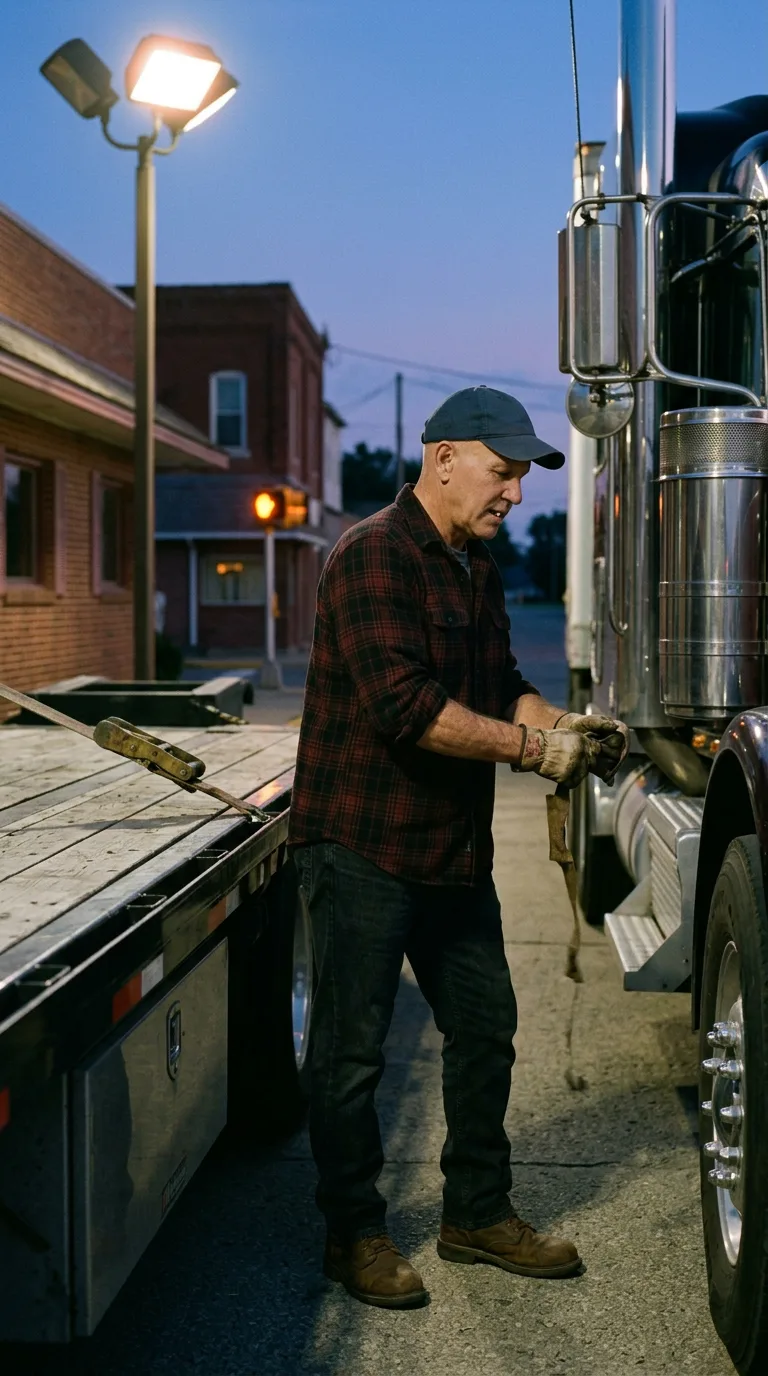
Rarest thing about him: A gold tooth — uncommon, 1 in 141
Season 1seed 1332050006 · engine v11
Character card
lineage LJL8SV
His body-swap story
@marco.villagrana, wearing Craig Delvecchio, rolled the wheel on and woke up as Wesley Graham Tanner, spent 3 minutes in him, then spun the wheel and woke up as Nestor Aguilar
You are four minutes into being Craig Delvecchio and already the body is boring you.
It's a Monday evening in New York, the kind of gray dusk that comes down over the scaffolding like a lid, and you are standing in a stranger's walk-up with mortar dust still in the creases of his knuckles, and you hate it here. Skinny fat, blond, a nose that healed a half-degree crooked, hands that ache in a way you didn't ask for and don't want to keep. Craig had a beer in the fridge he was thinking about before you took the wheel from him — you can feel the shape of that thought, secondhand, like a coat that isn't yours. You didn't come here to live his Monday. You came because the site was open on the phone in his pocket, vessel.cards, the wheel still spinning lazy circles on the screen from last time, and paying again felt easier than deciding to stay. That's the whole reason, if you're honest, which you're not required to be. You open the site. You pay. You spin.
The wheel stops.
And you are bent at the waist in cooler air, a floodlight overhead throwing your shadow long across a flatbed trailer, a rag in one gloved hand and a tie-down strap in the other, and the motion you were mid-way through — feeding the strap through its ratchet — comes out wrong, fumbled, the hook catching on nothing. You do it again. Slow. Correct. Then the next one, and the one after, checked, every single one, on hands that have done this ten thousand times and have not needed watching since sometime in the Clinton administration.
It's earlier here, or later — the light says early evening but your body says two in the morning, says the ache behind the sternum of a man on the back half of a night run, alone at a truck stop off a dead main street with one stoplight cycling to nobody. The diner behind you is dark, has been dark since before this shift started. Somewhere under the cap on your head, a headache is deciding whether it wants to happen.
The glove against your palm gives you the first thing: leather gone soft in exactly the places his grip lives, and under that, a warehouse dock in Zanesville, twenty-six years old, hands raw before they were ever this calloused. Wesley. The name arrives the way his own name always does to him, unremarkable, worn thin as a coin. You feel the gearshift-shape his right hand has learned without him, the specific give of a clutch pedal that isn't there right now but that his foot still angles for out of habit, resting on the running board.
The rag in your hand smells like diesel and something citrus-fake, and that opens a wider door — a laundromat on a Tuesday, folding this exact shirt warm out of the dryer, the flannel gone soft red-black with washing, a ring of paler thread at the left cuff where it's been mended once. He put this shirt on eleven hours ago in a room with a window unit rattling and a Bible he doesn't read but keeps on the nightstand because his mother would have wanted it there, and he pushed his left arm through the sleeve first, always the left first, an old unexamined ritual, then buttoned from the collar down out of some instinct that says a man should be able to see he's dressed right without a mirror. The cap went on last, brim snapped into shape between two fingers.
The strap under your other hand gives you the job itself in long unbroken years — thirty-one of them on routes that shortened as the company got bought and rebought, a CB radio he still talks to like it listens back, a load he jackknifed outside Bucyrus in weather that should have killed him and didn't, and the particular loneliness of a cab at 3 a.m. that he has made into something almost like peace, almost, on the nights it isn't something else.
The pale line on your ring finger tells you about Donna before it tells you her name — nineteen years, three kids raised in the gaps between hauls, a house he doesn't live in anymore on a street he still drives past when the route allows, a divorce that wasn't cruel, just tired, both of them worn down to the studs by all that coming and going. He calls his daughter on Sundays. He hasn't called Donna in four years and some nights, out here under a sodium light with nobody to hear him, he still reaches for the phone before he remembers he isn't supposed to.
Your jaw finds the smoothness of this morning's shave without being told to notice it, and your tongue finds the gold tooth like it's checking it's still there, a vanity from a good year, the only gold thing he ever bought himself. Under your boots the flatbed's boards are worn silver-gray, and your knees know this particular kneel, this particular reach for the binder, better than you know anything you've ever done with your own body, whatever that would even mean anymore, a hundred and fifty-one men in.
He dips a pinch of tobacco most mornings and never touches a drink, hasn't since a night in his twenties he doesn't like to remember, and there's a church he doesn't attend that he still thinks about sometimes at these hours, some half-formed prayer he says isn't a prayer.
You straighten up. The strap's cinched. The floodlight hums.
You look down at the glove, then peel it off finger by finger, and look at the bare hand underneath — the tan line pale as a scar where the ring used to sit — and you turn it over once in the light like you're checking it's real.
"Long way from a bricklayer," you say, and the gold tooth catches the floodlight when you say it, and you don't know yet if that's a joke or a relief.