Nestor Aguilar
Fictional. Generated by AI — not a real person, and no likeness of one is intended.
36, taxidermist in Philadelphia · rolled by @marco.villagrana · card — no film
History
who has worn him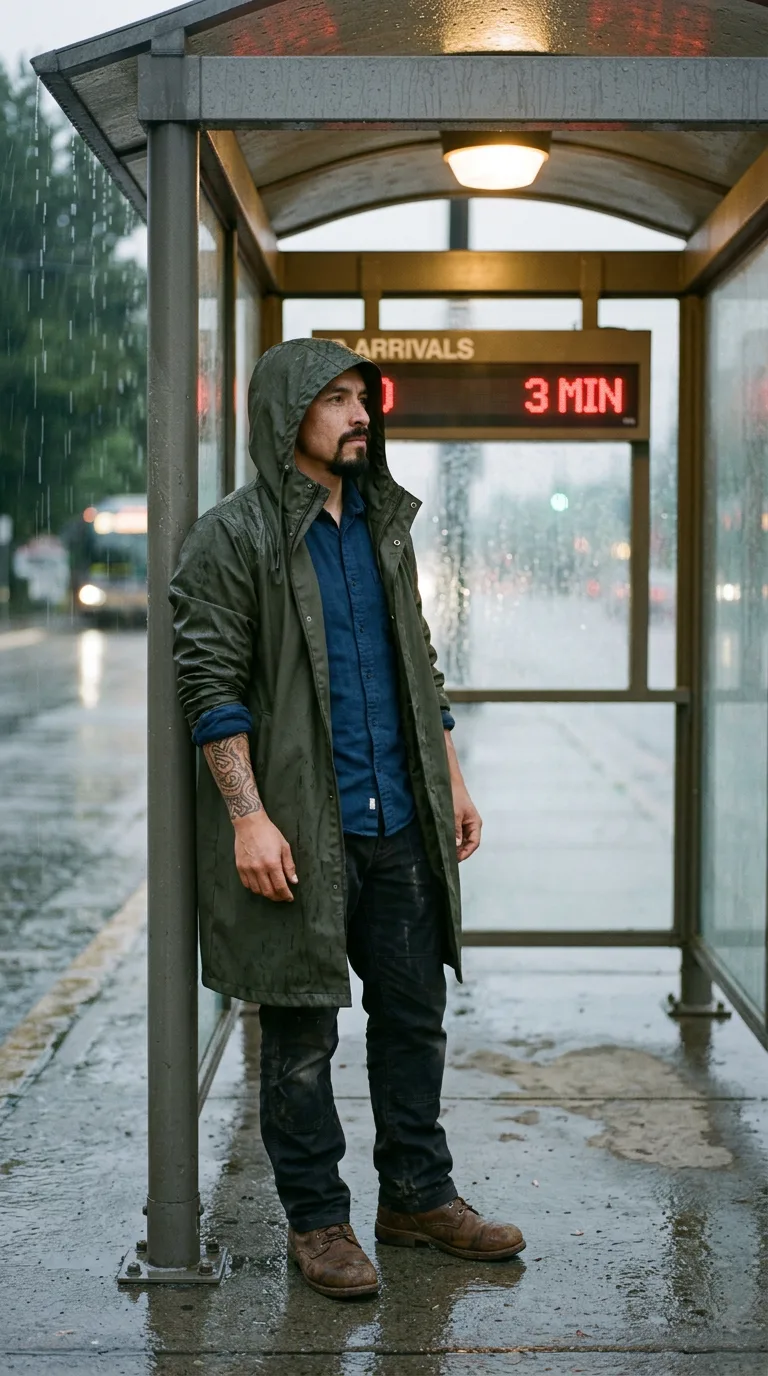
Rarest thing about him: Taxidermist — uncommon, 1 in 2,434
Season 1seed 1489511336 · engine v11
Character card
lineage LJL8SV
His body-swap story
@marco.villagrana, wearing Wesley Graham Tanner, rolled the wheel on and woke up as Nestor Aguilar
The gold tooth catches the last light through Wesley's kitchen window, and you feel it with his tongue before you feel anything else — a habit that isn't yours, tapping it against his molars while he decides. Two minutes in him and already the wanting is back, the way it always comes back, quiet as a second heartbeat. Wesley Graham Tanner is sixty-two and his knees ache standing at his own counter and his rig is parked out front with a load he doesn't want to think about and his phone has three missed calls from a woman he stopped loving before you ever got here. None of that is the reason. The reason is smaller and worse: he is fine. He is exactly what the wheel gave you, no more, no less, and after 151 men fine stopped being enough a long time ago. You open the laptop on his kitchen table with his thick trucker's fingers, the nail beds still a little black from the diesel, and you go to vessel.cards, and you spin.
The rain finds you first — not sound, not sight, weight. Water coming straight down onto an upturned face, into open eyes that do not blink against it, and you are that face, mid-motion, hood already fallen back off dark hair, a man's body shorter and denser than the one you just left, weight riding low and solid through the hips, one boot half off the curb in the runoff. The bus shelter light is behind you. Somewhere a board still says 3 MIN in red. You are standing in a stranger's stopped breath with rain running into his open collar, and for one full second there is nobody driving him at all — just water and a face turned up to take it.
Then the shirt against your back speaks first, because that's what's touching you, and it says: denim, worn soft at the elbows, and a Tuesday six years gone, standing at a bedroom dresser in a rowhouse with a baby crying two rooms over and Marisol saying his name like a question — Nestor, you hear it in his own chest, not yours — and him buttoning this exact shirt one-handed because the other hand was holding a bottle, testing the weight of the day before he'd even started it. The name arrives with the shirt. Nestor Aguilar. It sits down inside you like something remembered rather than told.
The jacket comes next, the wet canvas of it pulling at his shoulders, and with it a workshop smell that isn't in the jacket at all but comes anyway, cedar shavings and Borax and something faintly, sweetly wrong underneath — the smell he stopped noticing fifteen years ago. Deer eyes on pegboards. A bobcat mid-snarl that took him four tries to get the ears right. His father taught him on pheasants in a garage in Kensington, patient old hands guiding his, and Nestor hated it until he didn't, until the day he understood that this was the one thing that would let him stay still with his own head for eight hours at a stretch, a gift he never told anyone he needed. The tools remember his hands better than his hands remember them — thumb finding the exact worn hollow in the handle of the skinning knife, that photograph from the studio still in his good jacket pocket at home, apron folded over a chair he isn't wearing right now but the ghost of its weight is in his shoulders anyway.
The half sleeve on his right arm is next, rain running down script he can't read from inside his own arm but feels the shape of anyway, feels the year it cost him at the shop on Front Street, feels a name laid into his skin in his own hand — Isabelle — and under it a date that comes back whole and sudden and hard: not a birthday. A day in a hospital hallway with fluorescent light and a doctor's face arranged the careful way doctors arrange their faces, and Marisol's hand crushing his, and the two of them walking out afterward into ordinary Philadelphia weather with one fewer of the three car seats in the back needed anymore. He got the tattoo that October. He has never once, not drunk, not sober, told anyone what the date is for.
His boots are heavy with rainwater already, soaked through the leather he oiled himself last month at the kitchen table while the other two kids did homework and the third one, the youngest, banged a spoon on a highchair tray, and Marisol laughed at something on her phone and didn't look up, and it was, if you are being honest inside him, a good hour, one of the ones he'd take back if he could only take back a handful. He goes to Mass some Sundays, more when it's been a hard month. He has a drink most nights, sometimes two, a cigarette on the back steps if the drink's already in him, watching the neighbor's cat pick along the fence, thinking about nothing, which is its own kind of relief for a man who spends his days with dead things' faces six inches from his own.
The bus shelter light hums. His face is still turned up. Rain is still running down through a mustache and beard he trims himself every third morning without needing a mirror, the blade knowing the line by feel. He was not cold, standing there, because some worn-down part of him likes this — likes the rain doing something to him that isn't a decision, for three minutes, at the end of a Monday that started at five a.m. with a raccoon skull that wouldn't degrease right.
You bring his head down out of the water. You look at his hands — broad, short-fingered, a nick of old scar tissue across one knuckle from a blade that slipped in 2019 — and they are not shaking, and that surprises you more than the rain did.
"Three kids," you say, out loud, to no one, your voice coming out lower than Wesley's ever was, "and I don't even know their names yet."