Wendell Purcell
Fictional. Generated by AI — not a real person, and no likeness of one is intended.
63, cop in Houston · rolled by @colin.hasbrook · card — no film
History
who has worn him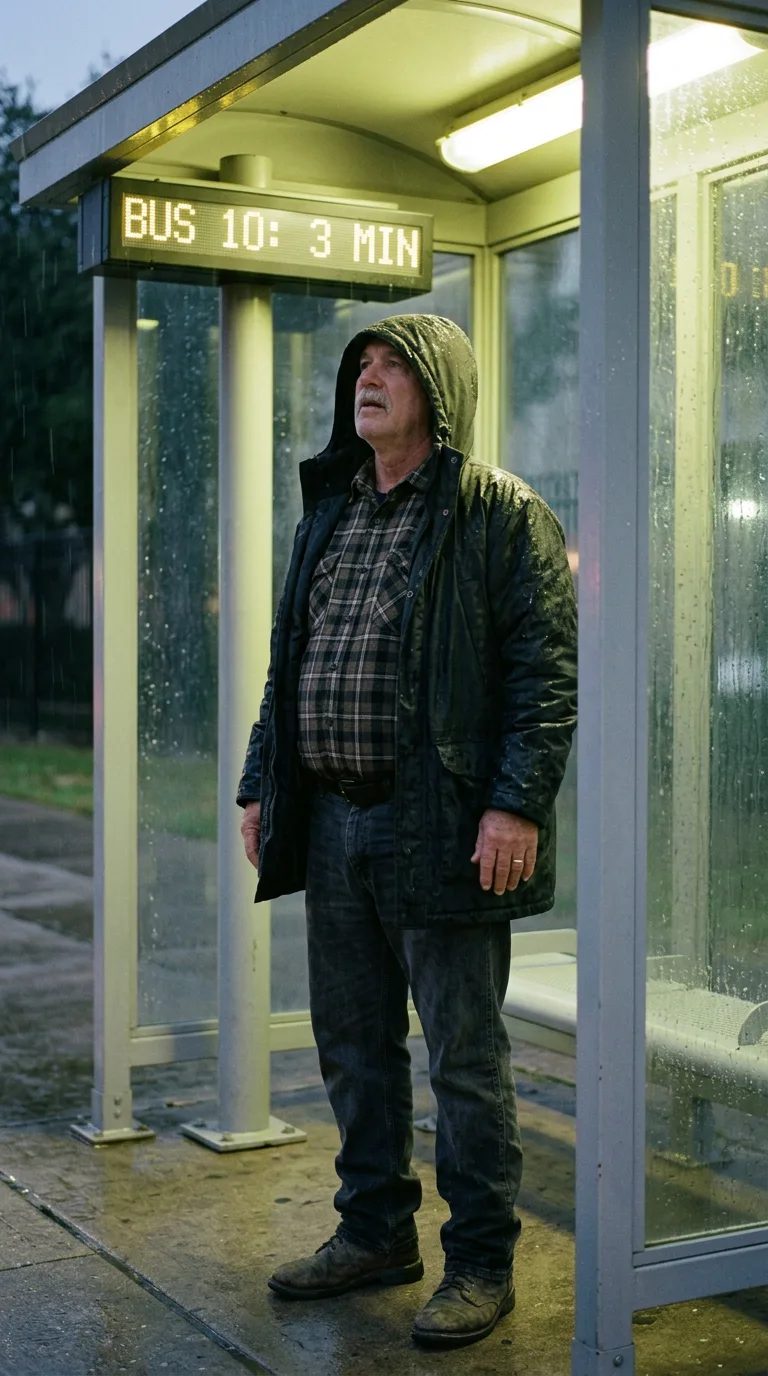
Rarest thing about him: A missing front tooth — uncommon, 1 in 158
Season 1seed 180289924 · engine v11
Character card
lineage 2NZHHJ
His body-swap story
@colin.hasbrook, wearing Delroy Ashwood, rolled the wheel on and woke up as Wendell Purcell, spent under a minute in him, then spun the wheel and woke up as Colin Tavernier
Delroy Ashwood's kitchen is dark except for the fridge light, and you are standing in it at 5:40 in the morning in a robe that isn't yours, because it has never been yours, because none of this has ever really been yours. Sixty seconds a chief executive. That's what he got. You feel the granite counter cold under his — your — palm, and somewhere under the sternum there's the flat gray nothing that always comes first: the little click where the last man's whole life goes quiet and becomes information instead of feeling. Delroy had a board meeting today about a plant closing in Zanesville. Three hundred jobs. He had, apparently, already decided what he was going to say about it, and it was going to be a lie, and some sliver of him — of you, now, standing in his slippers — did not want to be the man who said it. That's the itch. That's always the itch, some version of it: not tragedy, just a Tuesday you don't want. You set the orange juice down without drinking it. You have done this seven hundred and forty-one times and it never gets old the way people think it should. It gets easier. You find the laptop already open on the counter, vessel.cards glowing soft blue in the dark kitchen, the wheel already loaded from last night because some nights you just look at it before bed like a man looking at a fridge he isn't hungry for. You spin.
Rain. Not Ohio rain — Houston rain, thick and warm even through a rubber-lined jacket, and it is hitting your face and you are already walking forward into it, hood sliding back off gray-silver hair, and there is a bus shelter behind you with a board that says 3 MIN and it doesn't matter anymore because you — he — is not waiting for that bus. Weight settles into you all at once: heavier through the middle than Delroy was, shorter, a low ache riding both knees that has clearly been there through thousands of shifts, the specific fatigue of a body that spent last night standing in a parking lot. Water runs off your nose. Your tongue finds, on its own, without you asking it to, the gap where a front tooth used to be — an old reflex, checking a hole the way you'd check a pocket. The gap is enormous to the tongue and invisible to the mirror probably, after this many years. You do not turn out of the rain. Something in the shoulders decides, before you do, to just stand in it.
Then his life starts arriving, and it arrives through your hands, because that's the only door.
The jacket first — slick rubberized shell, unzipped collar, the plaid flannel underneath gone damp at the yoke — and it gives you a closet in a one-story brick house on the north side, a wife's hand smoothing this same collar down two winters ago saying you'll catch your death, Wendell, and you laughing because you have never once in sixty-three years caught anything worth mentioning. Wendell Purcell. The name comes with the coat, settles into your mouth like it was always going to be there. Twenty-two years on patrol, four before that in a cruiser you hated, a department that gave him a gold pin he keeps in a dish by the bed and never wears. The belt under the jacket, buckle heavy and familiar at your hip even though tonight he isn't wearing the duty rig — off shift, off the clock, just jeans and boots and a jacket that used to be his father's — gives you dusk, a strip-mall lot, leaning against the warm hood of the cruiser at the end of a double, watching traffic braid together on the feeder road, thinking nothing in particular, which is the whole reward of thirty years of thinking about everything.
Your left hand, cold, finds your own left hand — the wedding band, plain gold, worn soft at the edges — and that opens the widest room of all. Carol. Twenty-six years. The wedding in her mother's backyard in Pasadena, Texas, a preacher who talked too long, her laughing into his shoulder afterward because his tooth was already gone by then, chipped off a curb at nineteen and never fixed because fixing it felt like vanity and he'd rather spend the money on her. No kids — a fact that sat on the marriage for a decade like furniture nobody discussed, then stopped being furniture and became just the shape of the room. Church on Sundays when the shift allowed it, hands raised only a little, embarrassed by his own feeling, meaning every word of it anyway. And under Carol, further down, a name he doesn't say out loud anymore — Denise, twenty-two years old and gone to Baton Rouge in 1984 in a car he helped her pack, the one who got away not because anything went wrong but because nothing ever got a chance to go right, and some nights, standing exactly like this, in exactly this kind of rain, he thinks of her without deciding to, the way you think of weather in a city you don't live in anymore.
The boots under your feet, waterlogged, give you the last thing: this morning — his morning, hours behind the one you left — pulling them on at the edge of the bed in the dark so as not to wake Carol, lacing them by feel, the flannel shirt buttoned crooked once and re-done, checking his own gap-toothed reflection in the dark hallway mirror and not minding it, forty years of not minding it. Bad knees swung careful over the mattress edge. A body fifty-eight pounds heavier around the middle than it used to be and strong anyway, in the arms, in the hands, a strength that never had to be asked for twice in his working life.
You stand there under the full weight of him, water running warm down a face that isn't drawing back from it, and you lift both hands up out of the rain and look at them — thick fingers, a wedding band, a life on them that isn't yours and now, for as long as this lasts, is nothing else.
"There he is," you say, out loud, to no one, in his voice, and you don't yet know if you mean it about him or about yourself.