Delroy Ashwood
Fictional. Generated by AI — not a real person, and no likeness of one is intended.
58, chief executive in Small-town Ohio · rolled by @colin.hasbrook · card — no film
History
who has worn him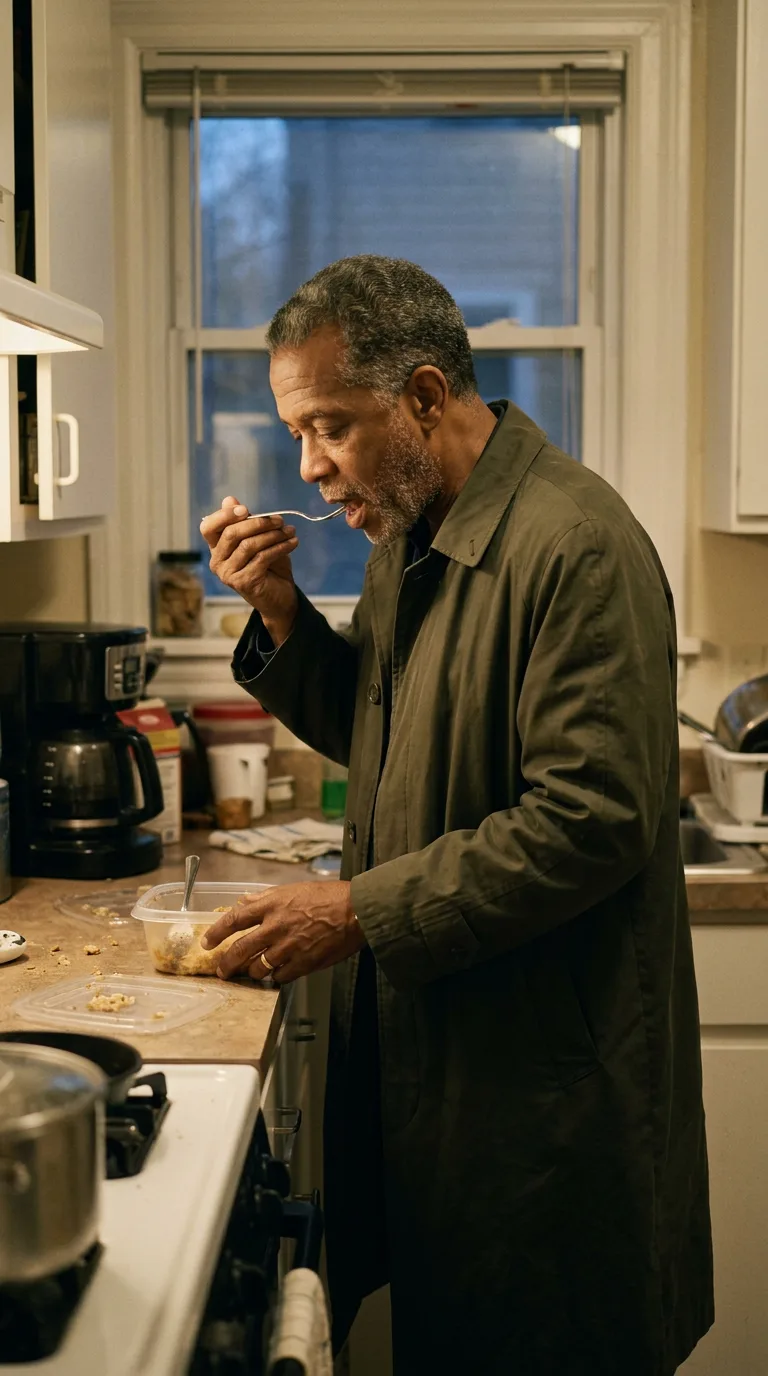
Rarest thing about him: A tremor in the hands — common, 1 in 79
Season 1seed 1591555341 · engine v11
Character card
lineage 2NZHHJ
His body-swap story
@colin.hasbrook, wearing Cornell Trask, rolled the wheel on and woke up as Delroy Ashwood, spent under a minute in him, then spun the wheel and woke up as Wendell Purcell
Cornell Trask's forearms still ache from a call eleven hours old — a kitchen fire on Normandie, the kind that leaves smoke in your sinuses for a day. You are wearing that ache like it's yours, because for eleven hours it has been. He's fifty-seven, average build going soft at the middle in the way men who used to be strong get soft, black hair cut close, brown eyes that have seen enough house fires to stop flinching. He's asleep in his own bed, technically. You are the one still awake inside him, sitting up in the dark with his phone's light in your face, the wheel spinning lazy circles on the screen like it has all night, because it does, because you do.
You have been him less than a minute of his life and seven hundred and forty of your own. That's the thing nobody who hasn't done this understands — the boredom isn't with the man, it's with the waiting. Cornell is fine. Cornell is decent, even, a man who pulls children out of windows for a living. But decent wears thin at 3 a.m. the seven hundred and forty-first time, and there is a hunger under your borrowed ribs that has nothing to do with him and everything to do with not knowing yet who's next. You spin because stopping feels like dying a little. You tell yourself it's curiosity. It has stopped being that in a while.
Your thumb — his thumb, technically, forearm still smelling of smoke under the soap — taps the wheel.
The fork is halfway to a mouth that is not yet yours when you land, and your first sensation is not sight but weight: shorter, softer around the middle in a different way, a coat heavy on shoulders that ache faintly and specifically, an old man's ache, low-grade and permanent. The fork stops in the air. You feel the hand — his hand — hover there a half-second too long, uncertain, before it comes down and sets the fork on the counter with a small clean click. The coat comes off his shoulders like a decision he didn't make on purpose. He — you — sit. There's a kitchen chair that takes his weight like it remembers him. Outside the window the sky is doing something between black and gray that has no name, and you understand dimly, before any memory tells you so, that here the day hasn't started yet, that somewhere a version of you left a room where dawn was hours off in the other direction and arrived in a room where dawn is a rumor.
The container is cold macaroni, gone a little gluey, and even before memory comes you know from the tremor in the hand holding the fork that this body has been shaking, faintly, for longer than it's willing to admit.
Then the shirt on your back speaks first — navy, soft through years of washing, and the memory arrives like a held breath let go: a bedroom with the blinds still down, his wife's shape a warm hill under the blanket, the quiet discipline of dressing without waking her because he has done this six hundred mornings and knows exactly which floorboard to avoid. Sleeve over the left wrist, the wedding band catching once on the cuff the way it always does, a small private irritation thirty years old. He buttons top to bottom without looking, the collar recognizing his neck. This is Delroy Ashwood, and the shirt gives you his name before anything else does, stitched faint in laundry marker inside the collar from some hotel dry-cleaner years back — D. ASHWOOD — a habit from traveling too much for board meetings in cities that all had the same airport carpet.
The watch on the wrist gives you more: the corner office, glass on three sides, the city going amber and then black beneath him while he stayed late again, always again, phone calls to people in other time zones who called him "sir" without meaning it. He built something real out there — a supply company, unglamorous, the kind of business that quietly clears two hundred thousand a year and never gets written up anywhere — but he built it out of a hotel room and a filing cabinet and there were a lot of nights he ate standing up because sitting down felt like admitting the day was over and he wasn't ready, even after thirty years, to be a man who admits things are over.
The pants — creased, gray, the kind a wife irons because she likes the smell of the iron more than she minds the chore — bring her. Small kindnesses. Coffee already going in the pot before he's fully upright. A woman who married a striver and got, eventually, a tired man who still holds the church door for her every single Sunday without being asked, whose faith is not loud but is load-bearing, who prays in the car before board calls the way other men smoke. No children. There was a stretch of years, early, where that silence in the house had a shape and a grief to it, worn smooth now the way old grief gets, no longer sharp, just there, like a step you know to avoid in the dark.
The coat on the floor by the chair — thrown off a second ago by hands that aren't fully yours yet — gives you the drive home last night, or what was left of it: a stoplight blinking amber over an empty main street, a diner dark and shuttered that used to make the best pie in the county, the particular grief of a small town that used to have more in it. And under all of it, quieter, a body that shakes a little now when it isn't doing anything in particular, a tremor he's mentioned to no one, not even her, because a man who runs a company cannot be a man whose hands aren't steady, not out loud, not yet.
You finish the macaroni in even mouthfuls because his body already knew how, mechanically, gratefully, looking at nothing in the window glass where the black is just starting to go blue at the edges.
You look down. The tremor is there, small, insistent, in fingers that are shorter and darker and older than the ones you had an hour and eleven hundred miles ago, the wedding band loose enough to turn with your thumb. You turn it once. You lift your eyes to the black window, which holds you back like a mirror that hasn't decided what to show yet, and you say, to no one, in a voice with more gravel in it than you expected —
"Long way from home."
Somewhere behind that, underneath it, unspoken: the wheel is still open on a phone eleven hundred miles away, in a hand that is no longer yours, in a bed no one is sleeping in.