Wayne Sorensen
Fictional. Generated by AI — not a real person, and no likeness of one is intended.
57, security guard in Las Vegas · rolled by @colin.hasbrook · card — no film
History
who has worn him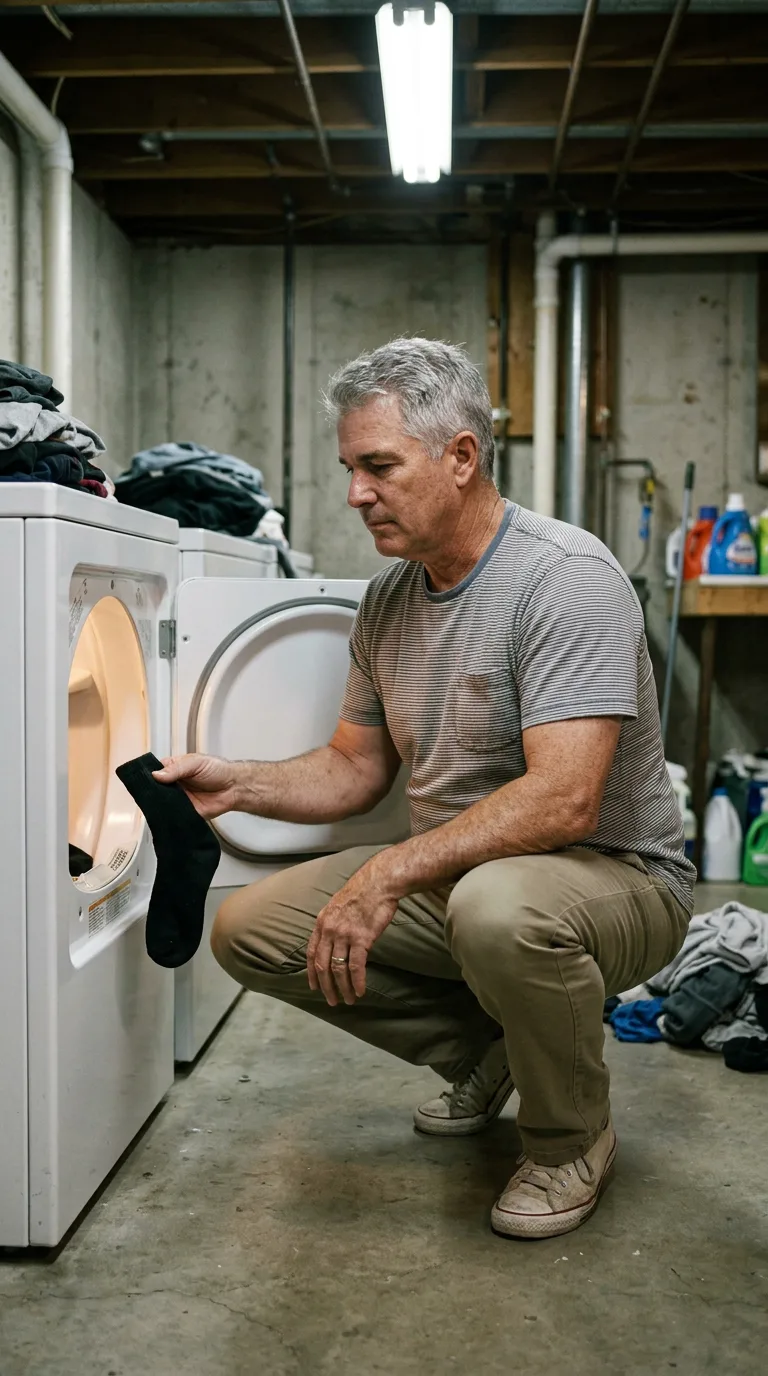
Rarest thing about him: Flips a lighter — rare, 1 in 52
Season 0seed 915857115 · engine v10
Character card
lineage 2NZHHJ
His body-swap story
@colin.hasbrook, wearing Marcus Delaine, rolled the wheel on and woke up as Wayne Sorensen, spent under a minute in him, then spun the wheel and woke up as Nasir Chaudhry
The dirt is under Marcus Delaine's nails before you even think about it, and that's the thing you can't stand anymore. Three weeks in this body and there is always dirt. You are standing in a field outside Atlanta with the sun flat and heavy on the back of his neck, a hoe leaning against your — his — shoulder, sweat already soaked through a shirt you did not choose, and somewhere behind you a dog is barking at nothing. It is a Monday afternoon. Marcus Delaine has a wife who calls him baby in a voice that catches at you sideways, a nose broken once by a horse and never set right, a whole life of getting up before light to do this exact thing again. He is a good man. He is, by any measure that matters, a better man than most of the ones you've worn. But he has been a good man for less than a minute in your accounting and you are already bored in the marrow of him, and boredom, for you, has always been the whole reason the wheel exists. You wipe his hands on his jeans, take out the phone that isn't yours, and open the page with the wheel on it.
You don't feel yourself leave him. You never do.
You feel yourself arrive as a crouch — knees bent, weight low, one hand closed around a sock still warm from the dryer's tumbling heat. Fluorescent light hums white overhead. Concrete floor, cool through the soles of somebody's canvas shoes. The body around you is heavier through the middle than Marcus was, softer, the shoulders wider and less used, and the first breath you take in it comes slow, like it's used to being unhurried. A wedding band clinks faintly against the dryer's metal lip. You are still crouched. You have not moved yet, and there is a strange mercy in that — the world gives you a second before it asks anything of you.
Then the shirt against your back says something.
*Sunday.* Not this one — a hundred like it, folding into one throb of feeling rather than picture: a striped shirt pulled over your head in a bedroom with the blackout curtains still drawn tight against desert daylight, because your body doesn't know day from night anymore, hasn't for eleven years, not since you signed on for graveyard at the casino employee gate and never signed back off it. The shirt smells like the dryer sheet Denise buys in bulk from the wholesale club. Your arms — Wayne's arms, you understand now, the name arriving with the smell of fabric softener like it was folded into the cotton — go through the sleeves without your permission, muscle memory older than thought. You've dressed like this ten thousand times: sock, sock, pants, shirt, the same order since your own father taught you to do it standing in a doorway in Reno when you were young enough to still ask why order mattered.
The sock in your hand gives you more. A drawer upstairs, crammed, mismatched pairs shoved in with the flat disregard of a man who folds shirts like a machine but cannot be bothered with socks, because socks are where he lets himself be human. You fold the rest of the load anyway — fast, exact, corners squared on the t-shirts like a man who spent four years in a rental uniform learning that creases are a kind of dignity you can still afford even when the paycheck doesn't stretch. The belt on the floor behind you, coiled with its little flashlight holster, gives you 4 a.m.: the hush of a casino loading dock, the particular tired quiet of watching a door nobody uses, badge clipped, radio silent, two grown kids asleep in a house you're still paying off at fifty-seven. It gives you the lighter, too — not for smoking, never that, just something your thumb does when your mind goes somewhere it shouldn't, flick, flick, a small mechanical prayer against nothing you'd call God exactly, more a felt sense that something is out there paying half attention to you. It gives you the pills in the medicine cabinet you don't hide from Denise anymore, the appointment on the second Tuesday of the month, the relief of just saying the word *anxiety* out loud to a woman who didn't flinch.
Your knees ache the way fifty-seven-year-old knees ache from a crouch held too long. Your gut sits soft and familiar over the belt you're not wearing right now. Your hands — thick-fingered, sun-freckled same as your nose, same as your cheeks — know exactly how to fold a fitted sheet, how to check a badge against a face at a service door, how to hold still for eight hours in a lobby chair without your mind wandering somewhere it can't come back from. Denise is asleep right now, upstairs, because your hours make hers strange too, and there is a whole marriage folded into that fact you don't have time to unpack, only feel: patient, worn smooth, still fond.
You straighten up out of the crouch. The basket is in your arms, warm laundry pressing into your forearms, and you look down at the hand still closed loosely around a folded sock, and it is not the hand you left an hour ago holding a hoe under a Georgia sun — it is broader, older, freckled to the knuckle, a plain gold band catching the fluorescent light.
You say it to the empty basement, to the humming tube light, to nobody: "Whose wash day is it now."