Marcus Delaine
Fictional. Generated by AI — not a real person, and no likeness of one is intended.
39, farmer in Atlanta · rolled by @colin.hasbrook · card — no film
History
who has worn him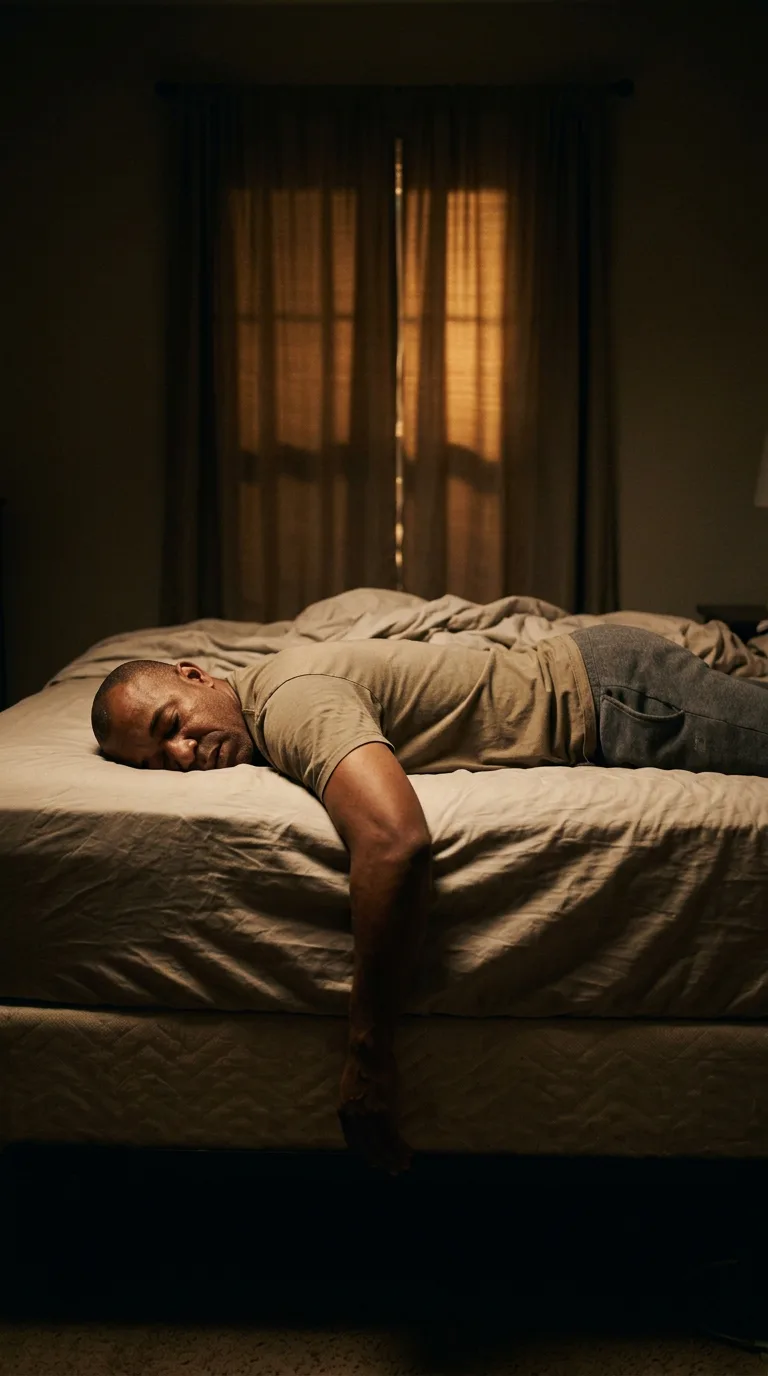
Rarest thing about him: Sober by decision — uncommon, 1 in 25
Season 0seed 1748293462 · engine v10
Character card
lineage 2NZHHJ
His body-swap story
@colin.hasbrook, wearing Anthony Marsala, rolled the wheel on and woke up as Marcus Delaine, spent under a minute in him, then spun the wheel and woke up as Wayne Sorensen
Anthony Marsala's radio is squawking on the passenger seat, and his knees ache from thirty-one years of getting in and out of a cruiser, and none of that matters because the call came in twenty minutes ago and it was nothing, a fender-bender on Geary, and you sat there directing traffic in a body that smells like coffee and Bengay and thought: this is it. This is the whole rest of the day. You have been him less than a minute of decision-time, but a lifetime of his knees, and that is somehow the thing that decides it — not boredom exactly, not greed exactly, just the small ugly certainty that fifty-seven is a number that keeps being true no matter which street you're standing on. You pull out your phone on the corner of Geary and Fillmore, thumb the site open under the dash light, and spin before the tow truck even arrives.
The bed takes you first — a mattress giving under weight that is suddenly lighter, shorter, younger by eighteen years. Breath that was ragged one instant goes even the next, an animal settling. The arm that had been hanging off the edge, fingers grazing carpet, draws itself up and in, and the whole body turns onto its back like it's being folded by something patient. Hands come to rest on the chest, laced. It is not how this man sleeps. It is exactly how you arrive.
Streetlight bars the ceiling through a gap in the curtain, but the clock on the nightstand says the day is nowhere near night — early afternoon, the blinds drawn against Georgia sun because he works fields, not a desk, and sleep has to be stolen wherever a body can steal it. The T-shirt against your back is thin and soft with washing, and it gives you the first flash: a woman's laugh, a kitchen, this same shirt pulled off over his head two summers ago while she teased him about the collar going gray. Denise. The name arrives with the shirt's smell — fabric softener and, underneath, a ghost of diesel that never fully comes out.
You lie still and let it come the way it always comes, in pieces that don't ask permission. The sheets under you remember a woman who isn't Denise — older memory, deeper thread, an ex named Toya who used to sleep on this same side of a different bed, in a different apartment, before the field, before any of it. She left over money, or the absence of it, and some nights he still does the math on what would've happened if he'd taken that warehouse job instead of coming back to his uncle's forty acres outside the city. He doesn't regret it. He tells himself he doesn't regret it the way a man tells himself lots of things at four in the morning with his blood pressure meds sitting unopened on the sink.
The mattress under your shoulder blades is the one true thing keeping his spine sane after ten hours at the gate yesterday, latch stuck again, sun going copper over rows he seeded himself. His right knee, when you shift it, sends up a low complaint that has nothing to do with age and everything to do with a tractor step he missed three years back. His hands — when you finally look at them without meaning to, still laced on his chest — are wide and rope-veined, the nails permanently rimmed no matter how hard he scrubs, and they know things you don't: the particular give of a gate latch, the weight of a feed sack settled correctly on a shoulder, the grain of a wooden post that tells you rot before your eyes do.
There's a jar on the dresser, out of reach but present in memory the second your tongue finds the packed-in taste at your cheek — the chew he's been working through the last hour of a nap that wasn't supposed to happen. He came in from the gate, sweated through, told his girlfriend Denise he'd close his eyes for ten minutes before dinner, and that was three hours ago. She's texted twice. He hasn't seen it. His leg — the one thing that never stops even when the rest of him has finally quit — starts up its small bounce against the sheet without you willing it, an old current still running under a body gone otherwise slack.
The broken place in his nose aches faintly with the pillow's angle, an old fight or an old accident, you can't tell which and the memory won't give it up cleanly, only a flash of gravel and somebody's forearm and the sound surprising him more than the pain did. Church on Sunday mornings comes through next, unbidden — his mother's hand flat on his back in a pew, a choir he can still hum four bars of, a faith he doesn't talk about but never quite set down either. He hasn't had a drink in six years and doesn't miss it except at other people's weddings.
Your breath — his breath — goes on being even. Nothing is being done to him. He is just, for these seconds, entirely quiet, and you are inside all of it: the ache, the leg's small betrayal, the taste at his cheek, the smell of a woman's shampoo two feet away in a hamper, the field waiting past the curtains with its gate that still needs oiling.
You open his eyes.
The ceiling is his. The gap in the curtain is his. Your hand comes up off your chest slow, and you turn it over in the copper light like you've never seen the calluses on it before, because you haven't, not from this side.
"Damn," you say, out loud, to the empty room, in a voice that isn't yours and already feels like it might be. "Gate's still open."