Nasir Chaudhry
Fictional. Generated by AI — not a real person, and no likeness of one is intended.
65, manager (mid-level) in San Francisco · rolled by @colin.hasbrook · card — no film
History
who has worn him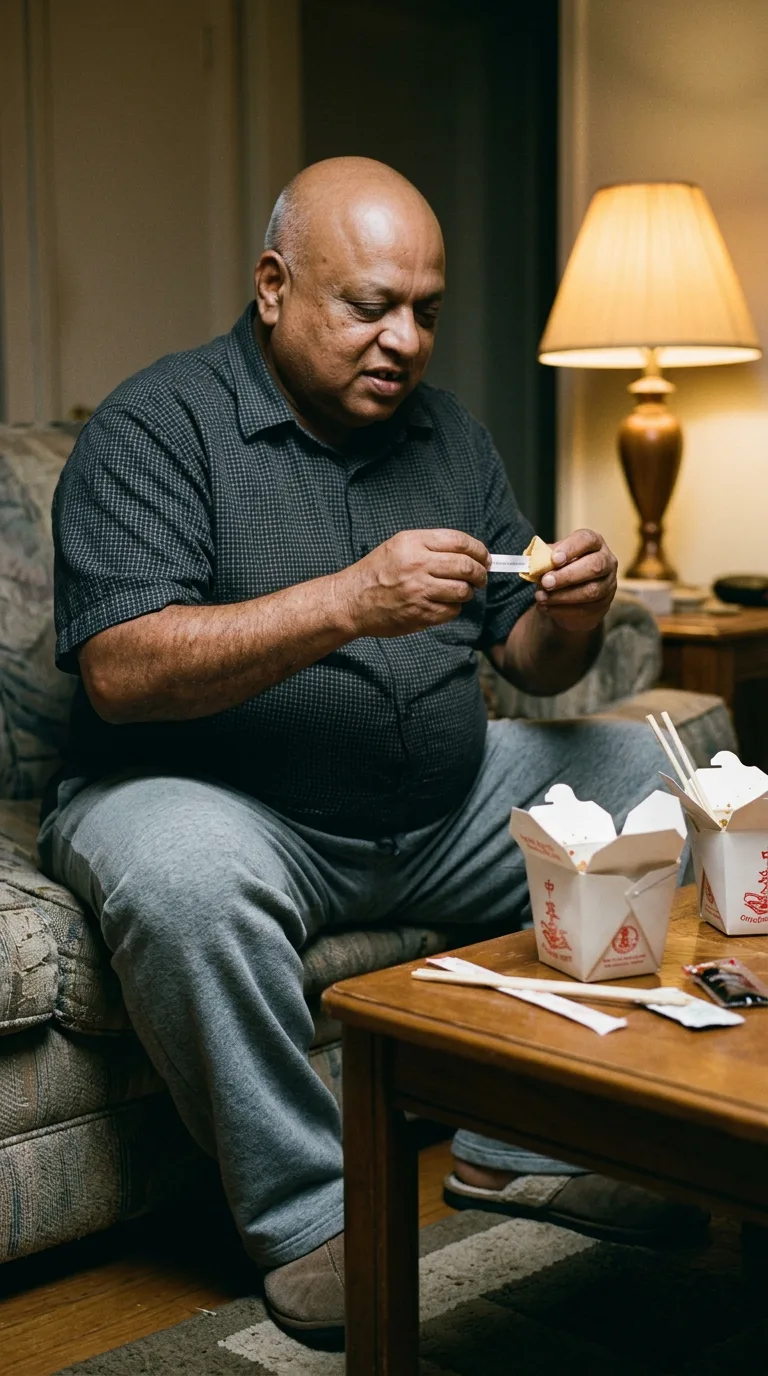
Rarest thing about him: South Asian — rare, 1 in 26
Season 0seed 1246844244 · engine v10
Character card
lineage 2NZHHJ
His body-swap story
@colin.hasbrook, wearing Wayne Sorensen, rolled the wheel on and woke up as Nasir Chaudhry, spent under a minute in him, then spun the wheel and woke up as Colby Renshaw
Wayne Sorensen's feet hurt in the government-issue boots, and that is the last thing you feel as him: two flat feet inside a security guard's Monday, standing post by a door nobody uses, badge heavy on a lanyard that has rubbed his neck pink for a year. It is the middle of the day here, the fluorescent kind of middle that never changes color. You have been him for less than a minute this time, and the minute was enough. There was a whole shift ahead of him, and the smell of the break room microwave, and you were already reaching for your phone before his hand had finished settling at his side. That's the tell, if anyone were watching you closely enough to see it: not misery, just a kind of restlessness that lives one inch under boredom, that has outlasted a hundred and sixty-five other men. You don't hate Wayne. You've simply already left him, the way you always have, the way the site's small print never has to explain to anyone: the wheel doesn't care what you had. Only what's spinning.
The page loads the way it always loads, patient and gray, the wheel already lit like it's been waiting on you specifically. You pay. You spin.
And then you are sitting down.
Weight arrives first — more of it than Wayne carried, settled low and permanent through the belly, through thighs that have made peace with a couch cushion that gave up its shape years ago. Bald skull warm under a lamp you didn't turn on. Your hand — his hand — is closed around a fortune cookie already broken open, one half still between finger and thumb, crumbs in the crease of a shirt stretched tight over the gut. The little paper slip is half out, caught at an angle, and the mouth that isn't yet fully yours is already reading it, already moving one word past where the sentence ends, the way a man does when he wants a sentence to mean more than it printed. It is the middle of the day here too, wrong on the face of it — an unopened bottle of soy sauce and two foil containers going lukewarm on a coffee table at an hour when this street is running errands and picking up kids — but the body isn't confused by that, only tired in a specific, bone-deep way, the tiredness of someone who works the swing rotation at a job with a door propped open onto a floor of desks, who has learned to eat his dinner-that-is-actually-lunch alone at whatever hour the world decides to hand it to him.
The shirt gives you the first flash — checkered, thin cotton, and his hands buttoning it this morning, or what was morning to him, in a bedroom with the blinds already down against a sun that made no sense to sleep through. Sleeves rolled once, the same fold every day for thirty years, a habit that outlived the wife who used to iron them and the wife after that who never did. Nasir Chaudhry has buttoned a lot of shirts alone. The gap in his front teeth catches faintly on his tongue when he thinks, a small click nobody else has ever noticed, and through it comes his mother's voice from a kitchen in another country, telling him a gap like that means he'll never go hungry, and him believing it his whole life the way you believe things your mother tells you before you're old enough to ask for proof.
The lanyard around his neck at the office — you feel it now, phantom, though it's not on him here — gives you the glass box he sits in most days, door propped open on purpose, because he learned once, from a manager above him who never opened his, that an open door is the only kind of trust that costs nothing and buys everything. He is good at that job in the unglamorous way middle managers are good: remembers everyone's kid's name, covers a shift without being asked, has money saved that nobody at that company would guess from the khakis. Well past half a million dollars, quietly, boringly, the way a man saves who has always expected to need it and never quite trusted anyone enough to spend it on them.
The coffee table under the containers gives you an ex-wife's laugh from a different table, decades gone, a woman who left not out of cruelty but out of some slow erosion neither of them ever named right, and no children came after her to fill the rooms, and he made a peace with that so old it doesn't ache anymore, just sits there like furniture. The cigarette pack in his shirt pocket, empty right now but its shape still pressed into the fabric, gives you twenty years of stepping out back of the office at the same two times a day, the lighter cupped against wind that this city always has. His arteries carry the weight of every cholesterol number a doctor has read him with a sigh; his knees carry the weight of him. Both of them ache right now, sitting, in a way he's stopped mentioning to anyone.
And the cookie slip in his fingers gives you the wish itself, made not five seconds before you arrived: not for money, he has enough. Not for love, he stopped keeping that wound open. He wished, reading a strip of paper that told him nothing, for one more year without needing anyone. That's what you're holding. That's what you just walked into the middle of.
You look down at the hand. Thick fingers, a paper slip folding itself, without being told, into quarters, toward the shirt pocket where it will live until laundry day the way it always has. It is not your hand yet and already is.
You look up into the lamp light, into wherever the day is going to put a camera on you, and the gap in his teeth whistles faintly on the first word.
"Careful what you wish for."