Warren Sikkema
Fictional. Generated by AI — not a real person, and no likeness of one is intended.
59, museum conservator in High-desert Nevada · rolled by @colin.hasbrook · card — no film
History
who has worn him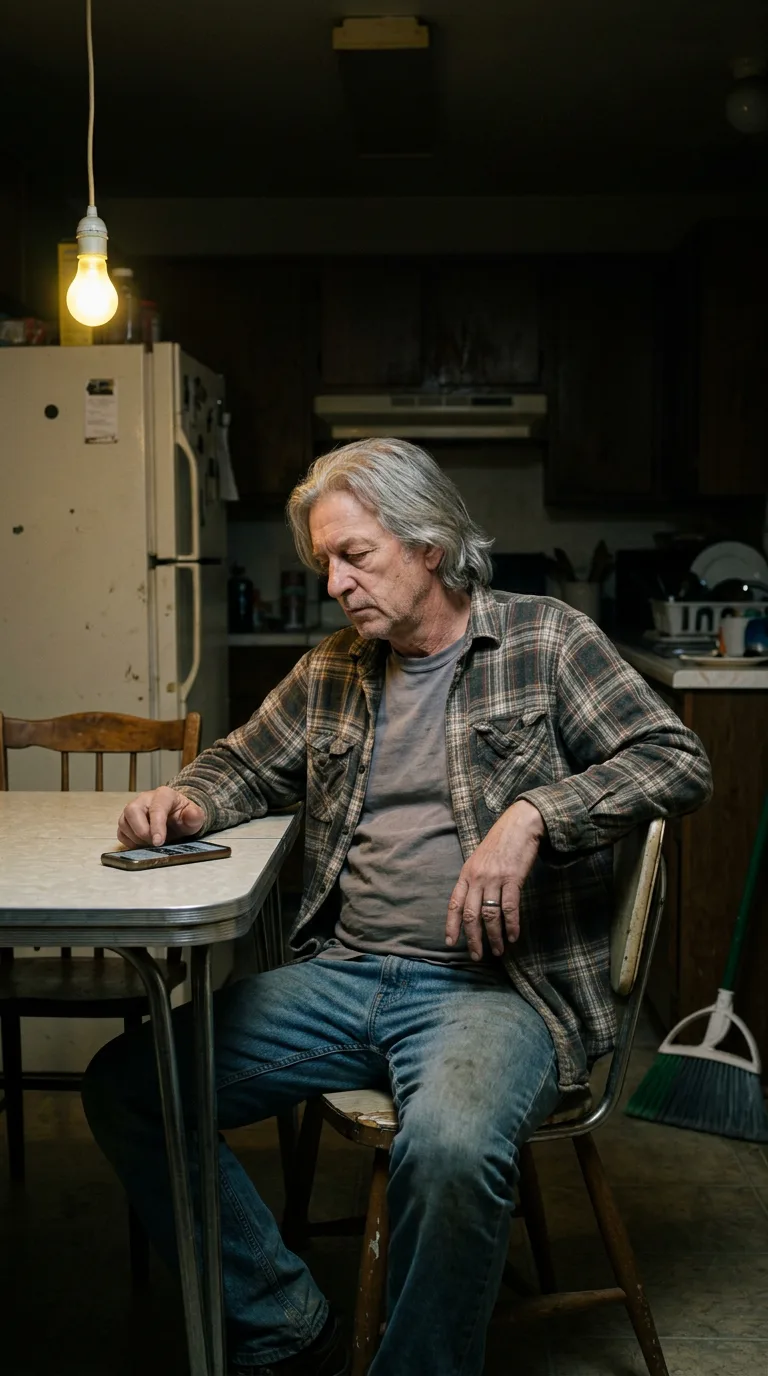
Rarest thing about him: Museum conservator — uncommon, 1 in 165
Season 0seed 573226104 · engine v10
Character card
lineage 2NZHHJ
His body-swap story
@colin.hasbrook, wearing Marcus Hoyt, rolled the wheel on and woke up as Warren Sikkema, spent under a minute in him, then spun the wheel and woke up as Perry Nakashima
Marcus Hoyt's kitchen smells like microwaved coffee and the inside of an ambulance you never fully leave behind, and you are so tired of it. Four days, fifteen hours, and you already know every groove of him: the ache behind the left knee from a bad landing off a stretcher ramp, the way his jaw tightens at sirens even off shift, the girlfriend who calls and calls and whom Marcus, you have learned, does not deserve and does not want to keep disappointing. It is Sunday afternoon in Philadelphia, light coming flat through blinds he never dusts, and you are sitting on his couch with his phone dead in your lap, not sad exactly, just finished. Four days is enough to know a man's ceiling. You want to feel what money feels like from the inside for once, not carried past it on a stretcher. You open the site on his cracked phone with his thumbprint. You spin.
The kitchen light is a single bulb on a cord and it is doing nothing against the morning outside, and that is the first wrongness — this much dark this late in the day — before you understand it is a trailer, and before you understand it is not day here at all in the way you mean day. Your thumb is lifted off glass, hovering, and the price under it does not change: an oyster-cased thing that costs more than a doctor's whole approach to a body. The hand — spotted, dry-knuckled at fifty-nine, a plain gold band snug on the fourth finger — sets the phone face-down on the formica without you telling it to. It does not pick the phone back up. You are sitting on a kitchen chair with a wobble in one leg, and under you, without asking, that same leg has already started to bounce.
The chair is chrome-and-vinyl, cracked at the seam under your right thigh, and it gives you 1974 for half a second — a boy's knee against a different kitchen table, his mother's voice — gone before you can hold it. Wrong decade, not yours to keep. You breathe out through a nose that pulls slightly left when you do, an old break healing crooked, and that ache behind the bridge brings the moment itself: nineteen, a bicycle, a curb, blood on his shirt and his father saying leave it, it'll set fine, and it did, mostly.
The flannel is what opens him wide. You feel your own — his — hand come up without deciding to, thumb and forefinger finding the collar, and it comes back in pieces: buying it at a Carson City thrift store the year after the divorce from Renata, before Sarah, when there was no money and no plan, just canvases in storage and a job application to a museum he didn't think would call back. It called back. Twenty-two years at the bench under those north windows, hunched with a scalpel-thin brush over some dead Dutchman's varnish, and loving it in the unglamorous way you love a thing that asks everything of your eyes and gives you Tuesdays. Under the flannel a gray tee, older, softer, and it gives you Sarah's hands smoothing this same collar flat against his chest the morning of Danny's wedding, saying you clean up, Warren, like she was surprised every time. Three kids, or four now if you count the one from Renata's second marriage he never stopped calling his — birthdays, a broken wrist on a rented dock, a daughter's college tuition paid because the museum's insurance had, six years back, quietly needed to pay for something else instead: the oncologist's office, the chair with the good arms, the twelve-week calendar Sarah kept on the refrigerator with a magnet shaped like a lighthouse, each week x-ed through until there were no more weeks to x through. Remission tastes like the specific relief of a scan coming back clean and then, right behind it, tastes like the watch he cannot buy, like every small refusal since, like living inside a body that beat something and still can't afford to want anything.
Under your palm flat now on the table's cold formica: a museum board's underpayment of a man they call irreplaceable, twenty-two years running, a wife who works the church rummage sale every fall not because they need the money — the money is elsewhere, is old, is Sarah's family's, sits untouched in accounts he does not check because touching it feels like touching something that was never fully his — but because giving things away is the only spending she lets herself enjoy. Eight million dollars sleeping in a bank two states over and a man in a trailer with a dead bulb over the table, comparing watch straps he'll never own because some old shame from being poor with Renata calcified into a habit neither remission nor money ever quite dissolved. The knowledge lands with his own feeling wrapped around it — not yours, his — tired and a little amused at himself, the particular tiredness of a man who quit drinking eleven years ago and finds he still misses, some Sundays, having a reason to sit very still.
Your eyes drop to the hand on the table. Ring first. Then the whole hand, spotted, familiar to nobody who is you, foreign the way every first hand is foreign — you turn it palm-up under the dead bulb's warm circle of light, watching the fingers curl and straighten like you're testing whether they'll answer, and they do, easily, the way a body answers a stranger who has just told it to move.
You look up into the dark window over the sink, where the glass gives back nothing but a gray-haired shape, and you say, to no one in the trailer and everyone who might someday be sitting where you're sitting:
"Guess I'm not done yet."