Perry Nakashima
Fictional. Generated by AI — not a real person, and no likeness of one is intended.
32, trucker in New Orleans · rolled by @colin.hasbrook · card — no film
History
who has worn him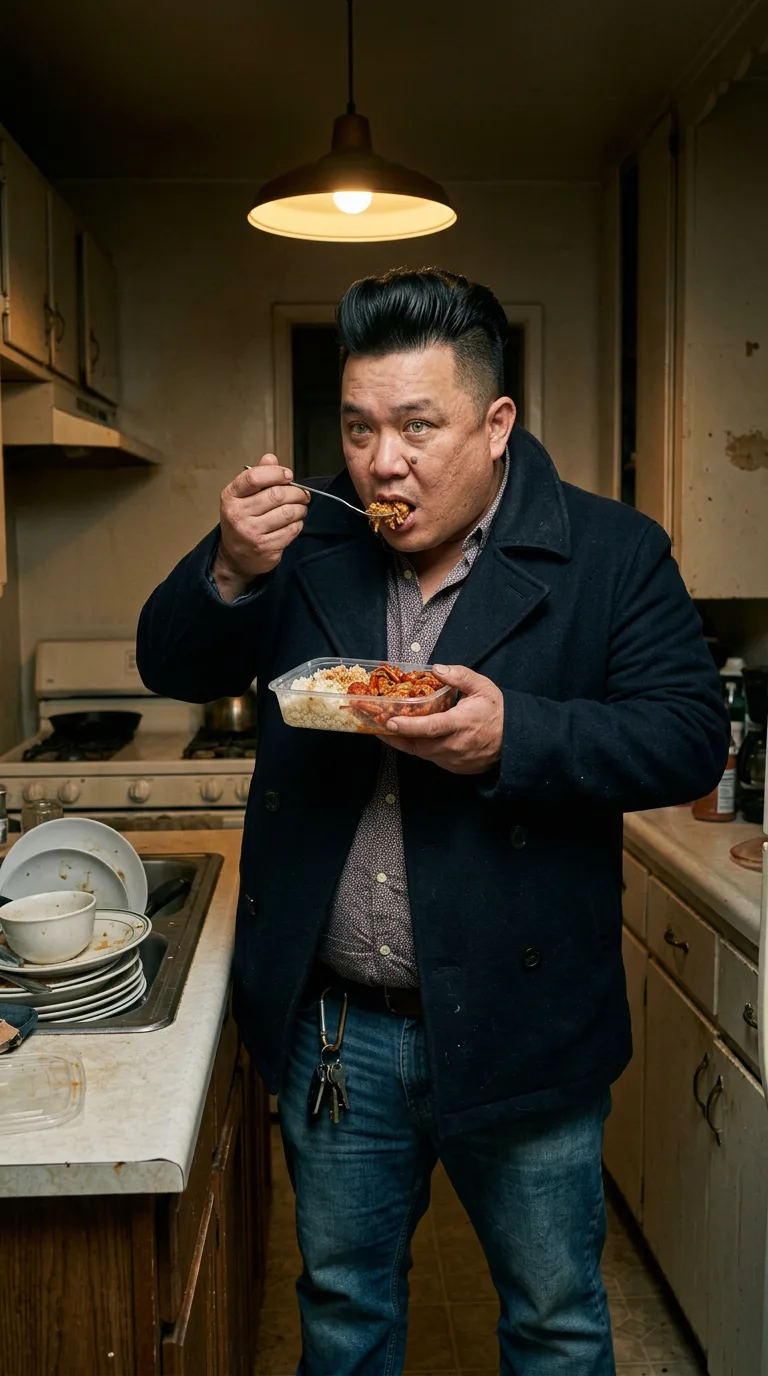
Rarest thing about him: Green — mythic, 1 in 500
Season 0seed 1828073318 · engine v10
Character card
lineage 2NZHHJ
His body-swap story
@colin.hasbrook, wearing Warren Sikkema, rolled the wheel on and woke up as Perry Nakashima, spent under a minute in him, then spun the wheel and woke up as Walter Prusinski
The gallery light in Warren Sikkema's museum office buzzes on a dimmer switch, and you have been staring at the same watercolor cradle for eleven minutes, not seeing it. You are fifty-nine in this one, silver-haired, a nose that healed a little wrong forty years ago, and you have been him for less than a minute of his own life but three hundred and second spins of yours. It is Sunday, mid-morning, high desert light flat and white through the clerestory windows. You paid for Warren the way you pay for all of them — quick, almost bored — and already the wanting is back, that specific itch behind the sternum that no amount of quiet, competent, salaried expertise ever touches. Warren has good hands. Warren has a pension. Warren has never once in his life eaten standing up because sitting down felt like too much to ask of the day. You want to know what that's like. You always want to know what the next one is like. You open the site on his museum-issued laptop, right there at his desk, and you spin.
The fork is halfway up when you arrive, and it keeps going up out of old habit before whatever is left of him lets it fall, clattering, back into the container. You feel the weight first — heavier than Warren, heavier than most of them, a gut that presses against a gray T-shirt, shoulders wide enough to fill the peacoat you're still wearing indoors. The kitchen is dim, one bulb hanging bare over a stovetop, dishes stacked wet in the sink. Your mouth still has rice in it. You swallow without meaning to. The coat comes off your shoulders — his shoulders — like it's shrugging itself, and you sit at a table that isn't there so much as a counter stool, and your body finishes the shrimp étouffée in even, unhurried mouthfuls, looking at the black window like there's a program on out there you already know the ending to.
The keys against your hip, still clipped to a belt loop, are the first thing that opens: a truck key, worn smooth, and under it the smell of diesel and pine air freshener and a cab he's slept in more nights this year than any bed. Perry Nakashima. Thirty-two years old and it comes back all at once and then in pieces, the way a bruise announces itself before you remember bumping into anything. Baton Rouge run, Memphis run, a stretch hauling seafood down from Houma that made the whole cab smell like brine for a week. The high pompadour under the trucker cap is a decision he makes every morning in a truck-stop mirror with a comb he keeps in the glovebox — vanity that has survived a divorce, three custody hearings, and a debt that sits somewhere north of sixty thousand dollars, cosigned on a rig that broke down twice last winter. The mole on his cheek — his mother used to touch it when he was small, tell him it meant something in the old way of counting luck, and he never found out if she meant good or bad.
The sleeve on his right arm answers when the shirt cuff brushes it — a ship, a rose, a swallow in bold faded color, done over three sessions in his twenties before the kids came, before the money went where money goes. Under the ink the arm remembers backing a fifty-three-foot trailer into a dock in the dark, remembers a woman named Chantal who left nine months ago and still texts him about the kids on Sundays like today, civil in a way that costs her something. Three of them, his — a boy who has his laugh, a girl who has Chantal's stubborn chin, a baby he's only held four times because the road doesn't stop for anybody's schedule but its own. He goes to church when he's home, which isn't often, and prays in the cab more than he prays in a pew, and the pills in the glovebox next to the comb keep something in him from tipping all the way over on the long nights outside Slidell.
His jaw is already tight — has been tight for years, a habit his hands don't know they're performing, clenching in his sleep, clenching at red lights, clenching now around a mouthful of rice that tastes like nothing because grief doesn't leave room for flavor. The shirt against your back is the one he put on this morning without looking, flannel over the gray tee, buttons done wrong by one and neither of you noticing yet. Feet sore in boots that have walked more truck-stop concrete than any floor he owns. He quit drinking two years ago, quiet about it, no group, no chip, just stopped one Tuesday and never told anyone why. He has never smoked. He eats standing up because sitting down at a table built for a family that isn't home yet feels like a joke somebody else is telling.
You look down at his hand — thick knuckles, a burn scar you didn't put there and won't touch in the telling of it, the fork still resting where he set it. You turn the hand over once, slow, watching the tattoo shift with the tendons.
"Didn't know I was that hungry," you say, out loud, to the dark window, in a voice that isn't yours and isn't quite his either anymore, and somewhere behind your sternum the old itch is already asking how long you'll let it be.