Walter Prusinski
Fictional. Generated by AI — not a real person, and no likeness of one is intended.
65, locksmith in New York · rolled by @colin.hasbrook · card — no film
History
who has worn him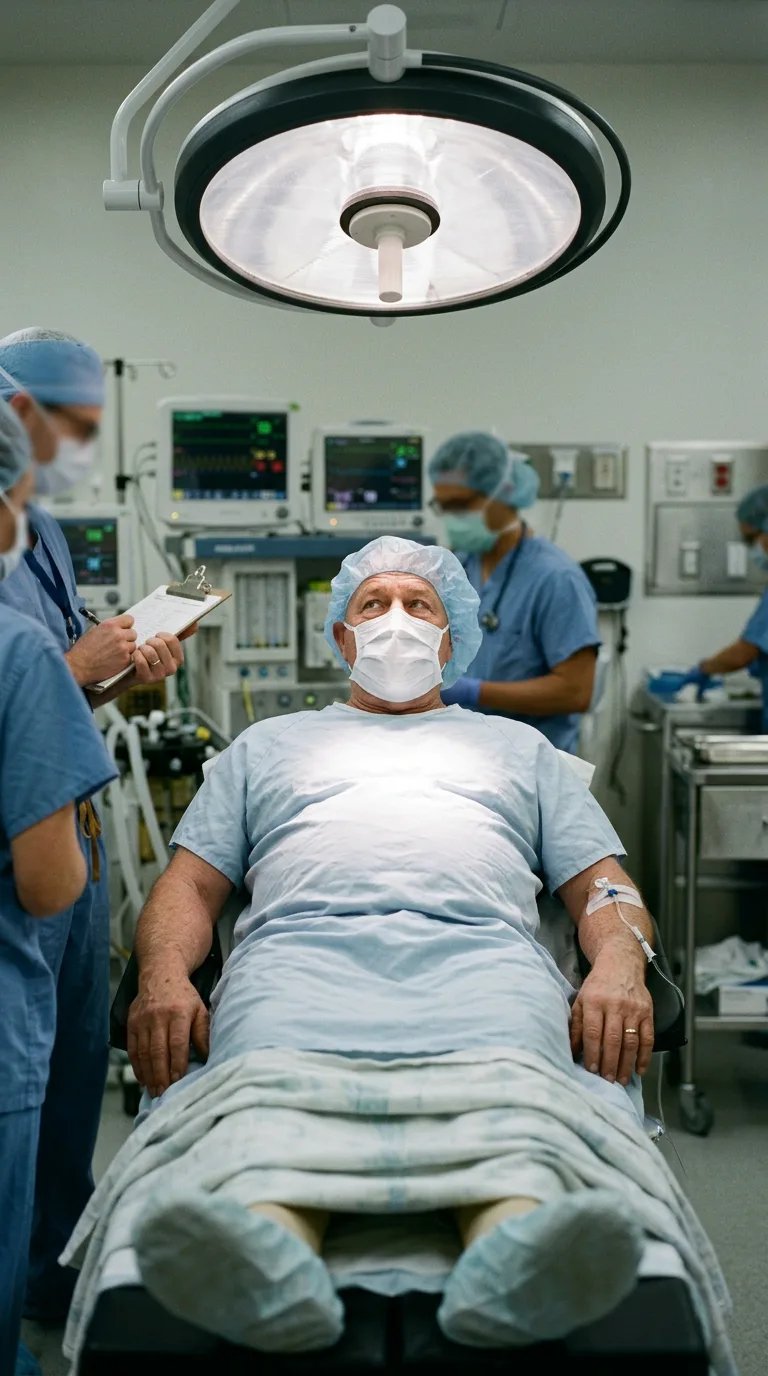
Rarest thing about him: Locksmith — rare, 1 in 127
Season 0seed 1941522540 · engine v10
Character card
lineage 2NZHHJ
His body-swap story
@colin.hasbrook, wearing Perry Nakashima, rolled the wheel on and woke up as Walter Prusinski, spent under a minute in him, then spun the wheel and woke up as Gary Trassit
The rig hums under you, and Perry Nakashima's shoulders ache against the seat belt where it's cut a groove all afternoon. Sunday, midday, New Orleans light coming hard and white through the windshield, and you have been him less than an hour — thirty-eight minutes of a stranger's diesel breath and a stranger's lower back pain, sitting in a truck stop lot outside Chalmette with the engine off and the phone in your borrowed hand already open to the site. That's the thing nobody tells you about a big body: how loud it is on the inside. Perry's knees don't fit right under this wheel. Perry's green eyes water in this sun. You spun once and got a man built like a door, and the door does not open the way you want it to, and forty minutes was enough to know you didn't want six-foot-even and heavy and this particular ringing pain behind the sternum that might be nothing or might be something and either way isn't yours to worry about. You don't stay to find out. You open the wheel again with his thick thumb and you spin it before you can think better of it, because thinking better of it has never once stopped you, not in three hundred and three tries.
The wheel lands. Somewhere an ocean of city blocks away it is not midday, it is afternoon shading toward evening, and a man is lying under a lamp with a mask fogging on his own breath.
You come up out of nothing into fluorescent white and a mask over your mouth and the tail end of a count — *seven* — dissolving before it can become eight. Your eyes track once, left to right, taking the room the way a man takes a room he's never seen: ceiling tile, the black arm of the lamp, a nurse's shoulder turning away. Your hand on the table opens. Closes. Opens again. Testing fingers that are shorter and thicker through the knuckle than the ones you had a second ago, a plain wedding band snug on the fourth. Somebody nearby says something about a lock — no, not a lock, a valve, they're closing a valve, and your body does not move, does not need to move, it is already halfway down into sleep and you are only a passenger riding in on the last of the anesthetic, and nobody in the room sees anything, because there is nothing to see. The monitors keep their long green rhythm. A nurse notes something and does not look up.
And then it starts arriving, not as story but as weight: sixty-five years of it, coming in through the tube taped to your arm, through the thin cotton gown, through the plain gold band pressing a memory of itself into a finger it has worn for thirty-one years.
The ring first. Ellen's kitchen, a Tuesday in October decades gone, her hand shaking a little sliding it on because the church had been cold and she'd cried through the vows anyway. You feel — not remember, *feel*, low and sudden — the specific gladness of coming home to her smell of onions and lemon dish soap every evening for three decades, a marriage so ordinary it never once made the papers of your life and so was never once in danger, either.
The gown against your back gives you nothing — it's new, borrowed, hospital cotton with no history — but under it, if it were there, would be the true shirt: the plaid flannel, buttoned that morning with these exact thick fingers, top button skipped the way it's been skipped every day since a doctor told him thirty pounds ago that his neck had gotten too big for it. You feel the memory of the Carhartt jacket going on over it, the zip catching a half-inch from the top the way it always does, the brass key fob — ACE LOCKSMITH, its edges gone soft and shiny from a decade of his thumb — dropped into the right pocket out of habit before he even checks for his van keys. He does this every morning without looking. His hands know the jacket the way they know a pin tumbler lock, which is to say completely, without consulting him.
There's a flash of kneeling — knees complaining, the good pair of kneepads left in the van again — in front of some bodega's grated door in Sunset Park, a cylinder in his palm still warm from the drill, the smell of graphite and cold rain-wet brick, a Sunday call-out because the owner's nephew lost the only key and the shop opens at six tomorrow whether the lock is fixed or not. This is a man who has never in forty years of the trade let somebody stay locked out overnight if he could help it, and there is a plain contentment in that, worn smooth, no drama in it at all — a job, done right, again.
The apnea machine at home, its mask waiting on the nightstand every night like a smaller, gentler cousin of the one over your mouth right now, and Ellen's hand patting his chest before she rolls over, a habit older than either of them can name anymore. A beer on a Saturday with the guys from the union hall, never two, church at ten on Sunday mornings except this one, because this Sunday there's a hernia that's been putting off surgery for two years too long and Ellen driving him to the hospital with her mouth pressed thin and worried the whole way, and him telling her, *I've fixed harder locks than this,* which wasn't even a good joke and made her laugh anyway because she needed to.
No children ever came, and there is an old smoothed-over grief in that, decades old, worn down to something almost gentle, the kind of thing a marriage absorbs and keeps walking. $61,000 in a savings account neither of them talks about. A shaved head that stopped being a choice around fifty-eight. Hazel eyes that are, right now, still closed, still under the lamp, still sixty-five years old and not going anywhere for the rest of this operation.
The mask is lifted. Someone says his name — *Mr. Prusinski, can you hear me* — and it means nothing to you and everything to the body, which stirs on its own toward waking the way a body does regardless of who's inside it.
You lift your hand off the table before anyone tells you to. Turn it over in the fluorescent light — thick fingers, the ring, a fleck of pipe dope still under one nail from Friday's job. Somebody's voice, worried, close: *sir, stay still for me* — and you ignore it, because you are looking at the hand like it arrived in the mail, and then your eyes come up, off the hand, into whatever is nearest that could pass for a lens — the black glass eye of the monitor, the nurse's phone forgotten face-up on the tray — and you say, thick-tongued, still swimming up out of the anesthesia, "Who forgot to lock this one."