Gary Trassit
Fictional. Generated by AI — not a real person, and no likeness of one is intended.
45, bus driver in Los Angeles · rolled by @colin.hasbrook · card — no film
History
who has worn him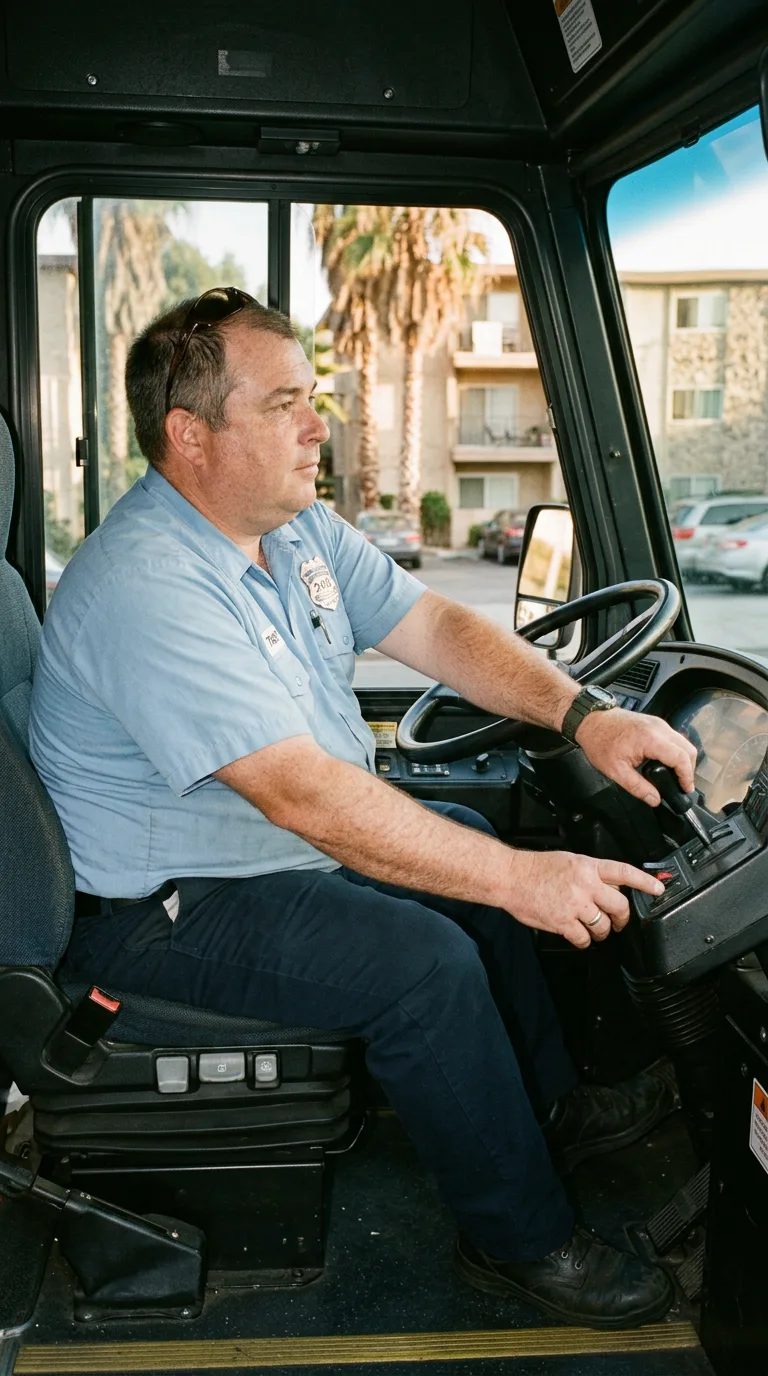
Rarest thing about him: It's a problem and it shows — rare, 1 in 33
Season 0seed 280535025 · engine v10
Character card
lineage 2NZHHJ
His body-swap story
@colin.hasbrook, wearing Walter Prusinski, rolled the wheel on and woke up as Gary Trassit, spent under a minute in him, then spun the wheel and woke up as Aidan Bhatt
The apartment smells like other people's coffee through the wall, and the locksmith's hands — bald head still damp from the shower, the ring you never take off because it isn't yours to take off, it came with the body — are doing nothing. That's the trouble with a body that works. Nothing hurts today. No jobs on the book. The Sunday paper unread on a card table that came with the lease. Sixty-five years old, dad bod gone soft everywhere at once, hazel eyes staring at a wall that isn't yours either, and the wanting comes up out of the boredom like heat off a sidewalk — not unhappiness, just the specific itch of a Sunday with nothing in it. You open the laptop. The wheel is already loaded from three days ago, like it knew. You spin it before you can call it anything but curiosity.
The bus is already moving through you before you understand you're in it — hand on the fare-box release, mid-motion, index finger jabbing a button it has jabbed ten thousand times, except this time you jab it wrong, a half-second early, and the reader beeps its complaint. You freeze. Then you do it again, slow, deliberate, like a man relearning his own signature. Sun through the windshield lays a bar of gold across a heavy forearm dusted with red-gold hair. Your body — his body — is enormous in ways the locksmith's never was, gut pressed soft against the wheel, sunglasses pushed up into thinning hair that isn't the color it used to be, though you don't know that yet. The bus is empty this early. Palm shadows strobe across the dash. Somewhere behind you a stop-request bell you didn't ring goes off in your chest like a memory arriving before its context.
The shirt gives it up first — pale blue, damp already at the collar though the day's barely started, and the smell of it is Tide and sweat and the ghost of this morning's coffee, and behind that smell is a bathroom mirror, fluorescent, Gary buttoning this shirt one-handed while the other hand held a mug, humming nothing, his wife's radio going in the next room, gospel on Sunday mornings though neither of them go anymore, hasn't been inside a church in six years, still says a prayer sometimes over the sink, not sure who it's for. The badge over the pocket — 246 — is cool under two fingers and it brings a whole promotion ceremony, handshake, photo nobody printed. The watch is heavier than it looks, a Father's Day gift, his son's handwriting on the card, block letters, DAD in caps because the kid was showing off the caps lock at nine years old. The wedding band catches light off the windshield and that's the deepest one — twenty years, her name is Denise, she runs a hand over his gut in bed sometimes and says less of you to hold onto and laughs and he laughs too because it's easier than the other conversation, the one about the drinking, the one she brings up on nights he doesn't come home smelling right after a shift that ended three hours before he walked in.
The wheel under his palm is worn smooth in two spots exactly where his hands fall, twelve years of the same grip, the same route, the same seventeen stops, and his body knows the pedals the way it knows nothing else anymore — knees complaining faintly, lower back a permanent low hum, blood pressure medication in the glovebox he forgets half the time, this build absorbing the bus's every pothole like it's used to absorbing things. Freckles catch the light on forearms gone thick with age; scalp warm under thinning hair he covers with dye he buys at the drugstore without looking anyone in the eye. Two kids — a daughter at UCLA he's proud of past words, a son who plays travel baseball on weekends he sometimes misses for a shift like this one, this exact one, a Sunday morning nobody needed him for except the schedule did.
Your hand — his hand — comes off the wheel and turns over in the light, freckled, ring catching gold, and you look at it like it's the first hand you've ever had, which in a sense, three hundred and five bodies deep, it always is.
"Well," you say, out loud, to no one, to the empty bus, to the palms going by. "Guess I'm driving."