Marcus Hoyt
Fictional. Generated by AI — not a real person, and no likeness of one is intended.
50, paramedic in Philadelphia · rolled by @colin.hasbrook · card — no film
History
who has worn him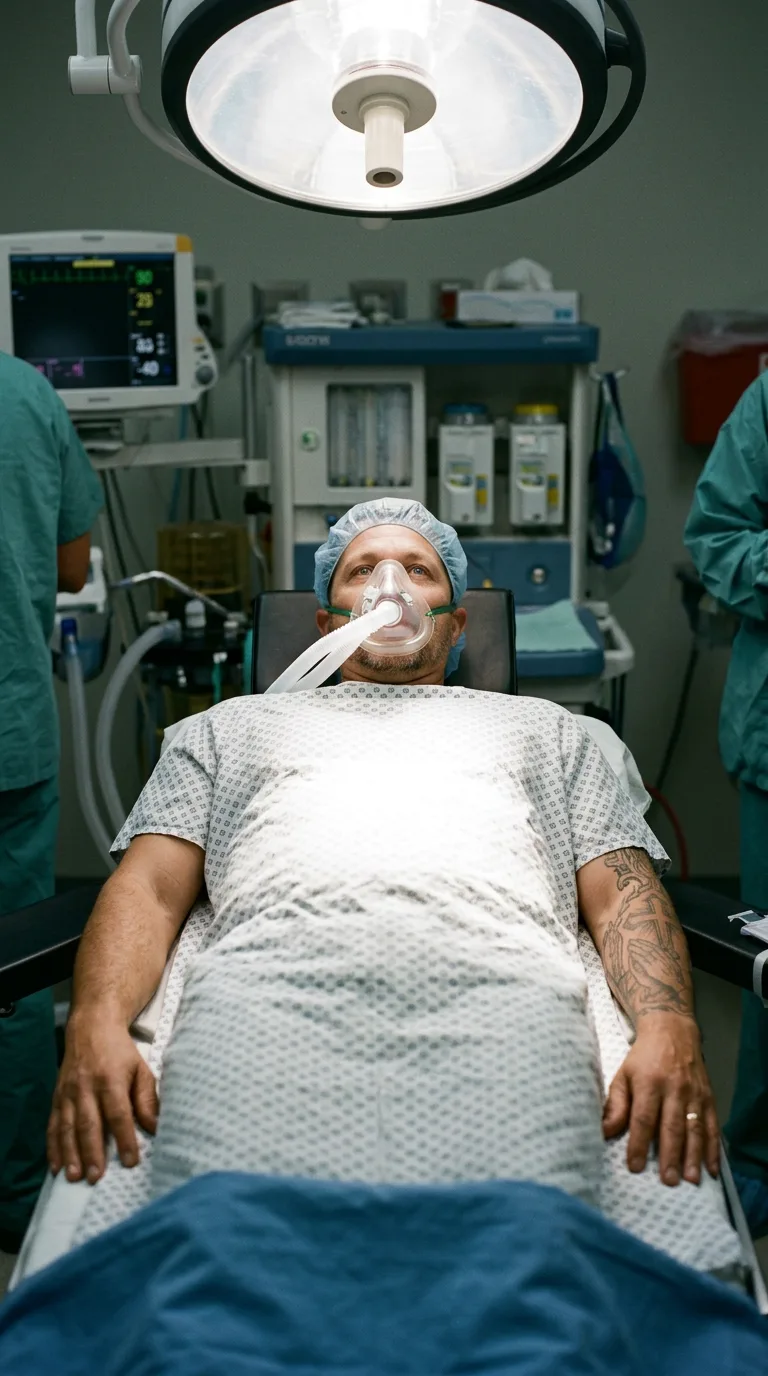
Rarest thing about him: Half sleeve — epic, 1 in 43
Season 0seed 1114487940 · engine v10
Character card
lineage 2NZHHJ
His body-swap story
@colin.hasbrook, wearing Brendan Hoyt, rolled the wheel on and woke up as Marcus Hoyt, spent 5 days in him, then spun the wheel and woke up as Warren Sikkema
You are standing in Brendan Hoyt's kitchen, in Brendan Hoyt's body, and you have been him for forty absurd seconds. The light coming through the window is the color San Francisco gets at the end of a Tuesday, going orange and then gray. Your hand — his hand, big-knuckled, a conductor's hand, calloused where the ticket punch used to sit before they went digital — is resting on the counter next to his phone, and his phone is open to a text thread with his brother that neither of you sent. You didn't come back to this body for a reason you'd say out loud. You came back because being 6'0" and muscular and thirty-one spins ago already stopped being the point, if it ever was. The point is the next one. It is always the next one. You feel the tremor before you understand it isn't yours — a small one, a flicker in the fingers resting on the counter, and you think, distantly, in Brendan's own leftover worry: that's not from anything Brendan has. And then you are not thinking about Brendan at all, because you have already opened the site on his phone, already put in the number, already spun.
The mask fogs and clears, fogs and clears, and the last thing the man underneath it hears is his own voice saying seven, and then the mask is still on your face and the fog on it is your breath now, not his, though there is no *your* yet, only the fact of lungs working themselves without being asked, the practiced animal competence of a body that has done this — been put under, come back up — before. Under the lids, eyes track once, left to right, checking a room they already know. The hand on the table, taped for the IV, opens and closes twice. Testing. It is not a big gesture. Nobody in scrubs even looks up.
It comes in through the tape on the back of the hand first — a small adhesive pull, and with it, unbidden, a hundred IVs he's started in other people, the practiced flick of a vein found in bad light, in a moving box, in the back of his own rig. Then the gown against his chest, thin cotton, and under it, discovered like a bruise you press on purpose: a body that has been fifty for a while and knows it. Lower back tight from bending into car wrecks and doorways not built for a stretcher. A knee that clicks going up a flight of rowhouse steps. And under the ribs, quieter, chemical, the particular tiredness of blood sugar doing something it shouldn't — a doctor's voice from three years ago, *type 2, we'll manage it*, and the small daily arithmetic since: the meter, the log, the wife reading the numbers off before he can lie about them.
The wedding band is on the hand that just opened and closed. It is warm, it has been warm on that finger for nineteen years, and touching it — you're not touching it, it's simply *there*, against tape and skin — gives you a kitchen in Fishtown, a woman named Teresa laughing with her head back at something that wasn't even funny, the two of you deciding early, both of you, not to have kids, and neither one ever once making the other feel like that decision cost something. It didn't. It still doesn't. It is one of the good, plain, unremarked facts of a life.
The sleeve of the gown rides up on the right arm and there — you feel it more than see it, the way you feel your own skin when you're not looking at it — is the half sleeve. Cross, praying hands, put on in his thirties after a call that went wrong in a way he still won't describe to Teresa in full. He got it not to remember the call but to remember that he walked out of that apartment on his own legs afterward and the other guy didn't. Getting inked hurt less than he expected and meant more than he let on to the guy holding the gun.
And this morning — hours ago, his morning, before all this — the memory arrives sleeve by sleeve, exactly the way the shirt against his back is handing it over: the navy uniform shirt off the hanger, the little hitch getting his right arm through because the fabric always catches on the tattoo just slightly, the shoulder mic clipped on last, the way his hands, this early, before coffee, sometimes shake enough that buttoning the cuffs takes two tries. He never mentions the tremor. Teresa's noticed. Neither of them has said the word that might explain it beyond the diabetes, and neither of them is in a hurry to.
The mask lifts. Someone says his name — his real one, not Brendan's, not yours — and it doesn't matter, because underneath it you are already assembling him: fifty years old, average build going soft at the middle the way fifty does, dark hair slicked back out of a habit from a stricter mother forty years dead, blue eyes doing what eyes do coming up from anesthesia, unfocused, then not.
You look at your hand. It is still faintly taped, still faintly trembling, the ring catching the operating light.
"Seven," you say, to no one, because it's the last true thing his mouth remembers being his.
Somewhere a monitor keeps counting something that isn't the same thing you are.