Warren Puskarich
Fictional. Generated by AI — not a real person, and no likeness of one is intended.
51, plant manager in Philadelphia · rolled by @colin.hasbrook · card — no film
History
who has worn him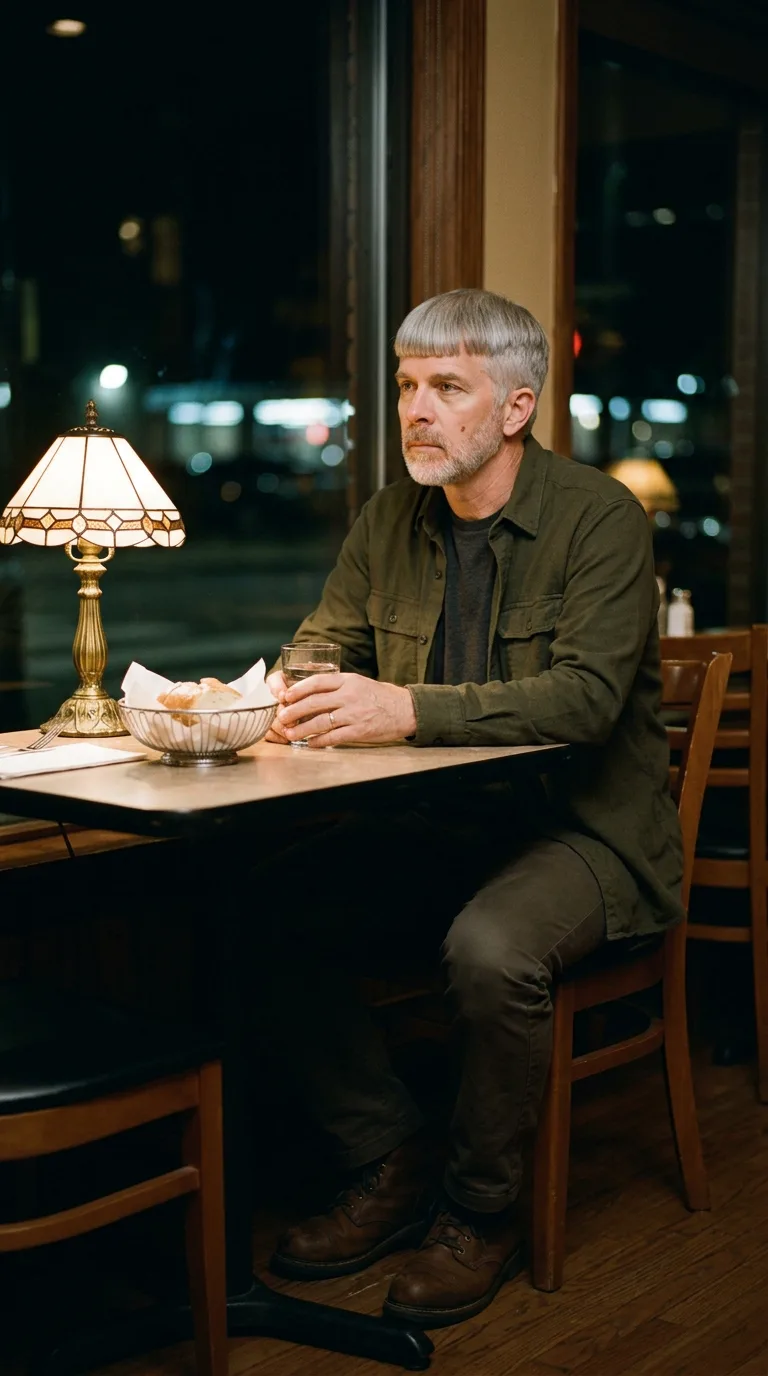
Rarest thing about him: On a first date, going badly — uncommon, 1 in 125
Season 1seed 1151808180 · engine v11
Character card
lineage 2NZHHJ
His body-swap story
@colin.hasbrook, wearing Grant Hollembeck, rolled the wheel on and woke up as Warren Puskarich, spent under a minute in him, then spun the wheel and woke up as Manuel Cabezas
Grant Hollembeck's hands smell like sawdust and they are not yours, not really, not after eight hundred and seventy-eight men, and that is the trouble with a Thursday evening in Los Angeles with the shop swept and nothing left to build until Monday: there is a stretch of hour where a carpenter's body just sits there being good at something and you are not in the mood to be good at anything. You have had him less than a minute by the clock that matters and already the quiet is unbearable. You know this feeling. It is not boredom exactly. It is the specific itch of a body that fits fine and gives you nothing to do with your hands, and you are a person, whatever else you are now, who needs the hands occupied. So you take out the phone that is his and is not his and you go to the page with the wheel on it, and you pay, and Grant Hollembeck's finger — freckled, callused at the pad — comes down on the spin without asking the rest of him.
The wheel does not care that a hundred and seventy miles east of a factory floor a man is failing at dinner.
You come up mid-sentence. "I just meant — " and the rest of it is gone, whatever it was, dropped somewhere between one mouth and another, and you feel the whole small architecture of an apology collapse and then, without your choosing it, rebuild itself in a voice that is not the one that started it, pitched a half-step louder than the room wants, so that a woman two tables over glances up from her own quiet date. The water glass is between two fingers and a thumb. It turns a quarter-turn on the tablecloth from a motion already begun before you got here and stops there, catching the lamp. Across the table a woman is watching a man's face do something she doesn't have a name for yet, and won't.
The glass is cool and a little cheap in his hand, and that is the first thing that comes through — not a memory, just a fact of temperature, five fingers that know exactly how much pressure a diner glass can take before it's rude. Then the shirt collar against a stranger's — no, his — throat, a green canvas overshirt, and with it: a Tuesday three years back, buying it because the woman he was seeing then said the olive brought out something in his eyes, and her saying that in a fitting room in a store on Passyunk that doesn't exist anymore, and the ache of her not being here now arriving whole and unearned, a woman named Colleen who is the one who got away and who he has measured every date since against without meaning to, including this one, which is why this one is going badly.
The boots. Steel-toed, worn soft at the ankle where five days a week for eleven years he has climbed the same iron stairs to the same catwalk over the same line, and his feet know the give of the grating before his mind does, know how the whole floor hums up through the soles when the extruder's running right and goes wrong-quiet when it isn't, and there's pride folded into that, plain and unglamorous, the pride of a man who keeps sixty people employed and a line running and has never once in eleven years let a shift go sideways on his watch. The mole on his cheek itches faintly, the way it always does when he's nervous, and now you know why — he was self-conscious about it as a boy, had a coach call him "spot" through two seasons of Little League on Oregon Avenue, and it never fully stopped mattering, not at fifty-one, not with a woman across the table he was hoping wouldn't notice.
His jaw works. Gum, sugar-free, spearmint, the last two pieces from a pack he bought at a Wawa this morning — his jaw does this without him, has done it since he quit dipping at twenty-six for a girl who left him anyway, and the motion is so old and so his that you feel your own jaw pick it up like a habit borrowed off a coat hook. Under the table his knee wants to bounce and doesn't, because his mother — Evangelical, Sunday-strict, dead nine years now and still governing certain rooms of him — raised him to sit still at a table even when he is dying inside it. And he is dying inside it a little, this date, a woman from the church singles group who laughs at the wrong places and whom he had wanted, walking in, to like more than he does.
The morning comes back last and clearest, because the shirt is still against his back and the shirt remembers best: buttoning it in the rowhouse bathroom with the marble sill worn soft under the window, checking the fringe of his hair in a mirror that makes everyone look a little jaundiced, deciding against the tie and then, halfway down the worn white steps outside, almost going back up for it. Deciding a haircut he's had since 1994 doesn't need updating for a stranger from church. Being, in his plain unremarked way, a man who has been solid and useful and mostly alone for a long time and has made a kind of peace with that he'd deny out loud.
You look down at his hand on the glass — the ring finger bare, the knuckles thick in the particular way of a man who still, on weekends, helps friends move furniture. You turn the hand over slow, like it might be someone else's, because for about ten more seconds it still could be.
"Sorry," you say, in his voice, to the woman across the table, and mean at least three things by it that she'll never get to ask about, "give me a second — I think I lost my train of thought."