Warren Piskorski
Fictional. Generated by AI — not a real person, and no likeness of one is intended.
61, photographer in Chicago · rolled by @colin.hasbrook · card — no film
History
who has worn him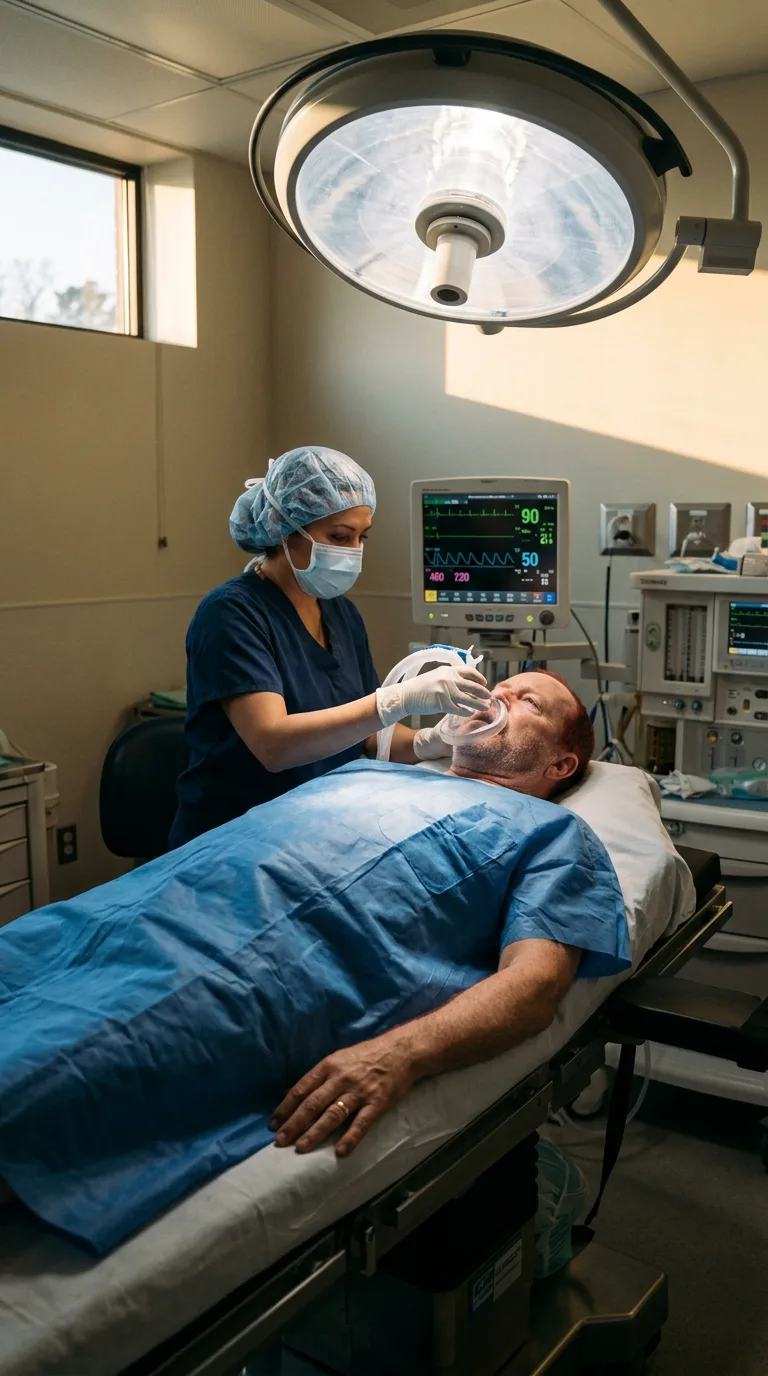
Rarest thing about him: Dyed red — uncommon, 1 in 154
Season 1seed 949876884 · engine v11
Character card
lineage 2NZHHJ
His body-swap story
@colin.hasbrook, wearing Paul Ashcombe, rolled the wheel on and woke up as Warren Piskorski, spent under a minute in him, then spun the wheel and woke up as Kevin Odum
The line crew has been standing around the bucket truck for twenty minutes because the substation coordinator hasn't cleared the outage, and Paul Ashcombe's knees ache in the cold the way they always do at the end of a shift, and you are so tired of these knees. Fifty-three years of somebody else's ordinary aches, freckles going pink in the wind, the wedding ring he doesn't wear because Coastal Maine linemen don't wear rings around a bucket truck, though this one wears his in his pocket, a habit you inherited along with everything else. You have liked him fine. That is the trouble with Paul — fine is all there is, a decent competent life with nothing left in it to want. You have been him less than a minute, technically, this last shift of it, and already the itch is back, the specific itch, the one that has nothing to do with Paul's shoulders or Paul's marriage or Paul's kids grown and gone to Bangor. You pull out the phone in the truck's cab, thumb the browser, and there's the wheel, waiting the way it always waits, patient as a slot machine that never asks why.
You spin.
The mask is rubber-and-plastic against a mouth that is not yet yours, and then it is. Air going in stale and cold and chemical, a nurse's gloved hand steadying it at the bridge of a nose you have never had. The number stops at seven, mid-syllable, and the room holds its long fluorescent quiet, lamp overhead like a second sun, and under lids that are abruptly your lids the eyes track once, left, right, checking a world that isn't there yet. The hand on the table — his hand, big-knuckled, a plain band cutting a groove into the fourth finger — opens and closes, once, twice, testing five fingers that answer like they've always answered. Six-four of him, more of him than Paul ever was, laid out flat under a paper gown, and you are inside all of it at once, the way you always are, a stranger arriving in a stranger.
The gown against his back is thin and gives you nothing — hospital cotton, unremembered, unlived-in. But the wedding band on the hand, warm from his own blood-heat, gives you a wife's face for half a second: dark hair going gray at the temple the way his own hair no longer bothers to, a kitchen with bad light, her voice saying *you don't have to do the shoot Thursday, tell them no* and him saying *I already said yes* because saying yes to work is easier than saying anything else to her some mornings. There is a grown daughter in Portland who calls on Sundays and a son in Milwaukee who doesn't call enough, and under the anaesthetic these arrive soft and sideways, not sad exactly, just there, the way a life is there whether or not you're using it.
Then, deeper — nothing to touch yet but the memory of touching: a flannel shirt, blue plaid gone soft from washing, going on this same morning sleeve by sleeve, left arm first always left arm first, some habit older than he can name. A canvas vest over it, heavy with lenses and empty film canisters he still carries though he shoots digital now, an old superstition, weight he likes on his shoulders. Cargo pants with a rip starting at the right knee he keeps meaning to mend. Boots that have been resoled twice. He'd dressed slow that morning — early evening now, but morning then, in his life, because the shoot ran to a wall under the L tracks and the client wanted the low winter light coming through the girders, wanted long shadows on brick, and he'd stood there this afternoon holding a reflector against a chain-link fence with his knee, both hands full, sun raking sideways through steel, thinking about nothing, which was the whole pleasure of the work — not thinking, just seeing, the eye doing what the eye does after forty years without asking the rest of him for permission.
Something in his gut had sent him to urgent care instead, a pain he'd been ignoring since Tuesday, and here he is instead of under the tracks, seven, the count stopping in his mouth, his wife twenty minutes away not yet worried, his hands — his hands that know how to hold a camera steady at a sixtieth of a second, that know the particular give of a shutter button, that clench without him ever asking them to, jaw tightening to match — going slack now, going still, going yours.
The eyes open. Blue, the both of us — Paul's brown ones gone, unmissed, a stranger's blue now blinking up into a lamp too bright to place. The hand on the table lifts an inch, turns, palm up, fingers spreading — a bare groove where a ring should sit, tan line from a band that isn't currently on it, the small violence of a life not yet familiar working itself into a hand not yet yours to keep. You could weep at how ordinary it is. You don't.
"Where's my ring," you say, out loud, to no one, in a voice gone gravel-deep and unfamiliar in your own borrowed throat, and the nurse above you says something soothing about recovery and personal effects, and you are not listening, you are looking at the hand, turning it, learning its weight, wondering — the way you always wonder, every single time, six hundred and ninety-two times now and never once answered — how long you get to keep it before the wheel wants you back.