Kevin Odum
Fictional. Generated by AI — not a real person, and no likeness of one is intended.
38, freight handler in Eastern Kentucky · rolled by @colin.hasbrook · card — no film
History
who has worn him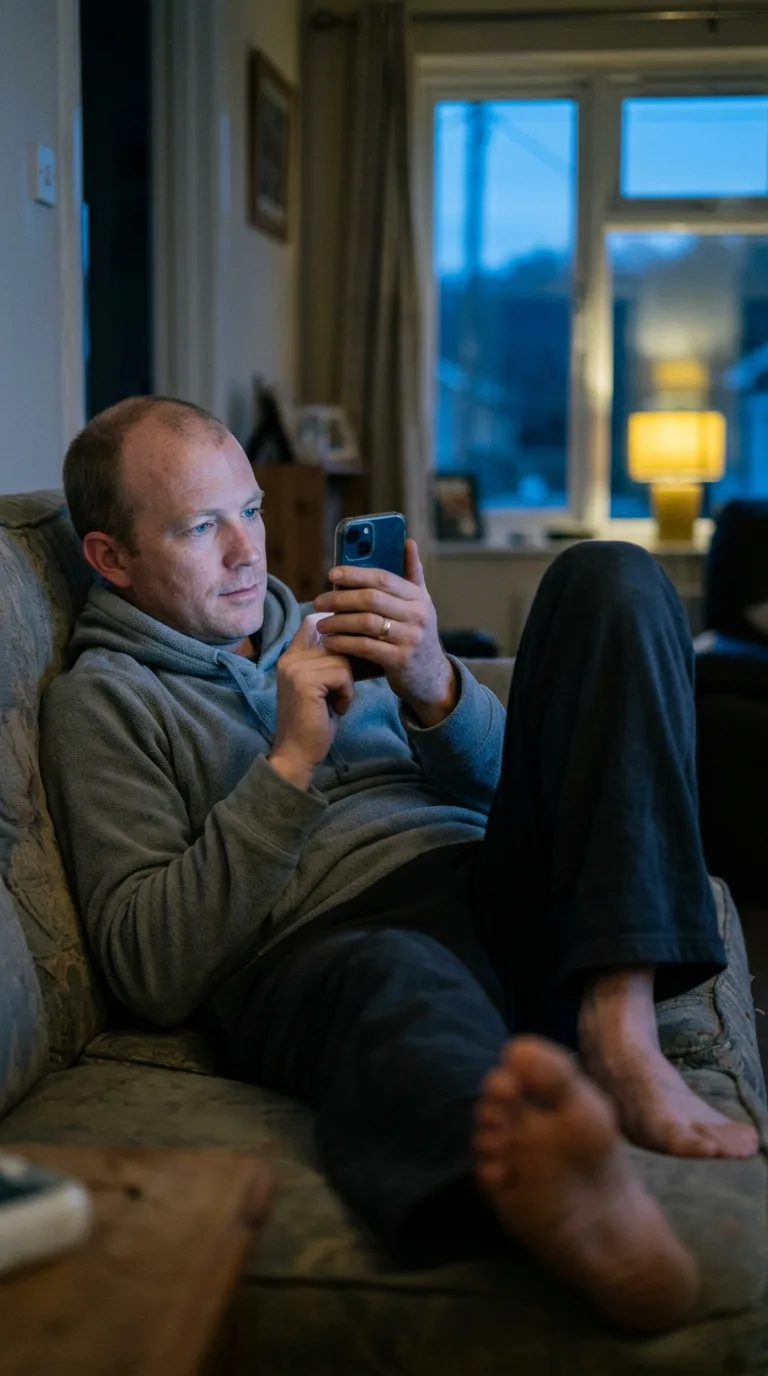
Rarest thing about him: A pack a day — common, 1 in 17
Season 1seed 436945903 · engine v11
Character card
lineage 2NZHHJ
His body-swap story
@colin.hasbrook, wearing Warren Piskorski, rolled the wheel on and woke up as Kevin Odum, spent under a minute in him, then spun the wheel and woke up as Brian Otsuka
Warren Piskorski's loft smells like fixer and cold coffee, and his hands — sixty-one years of them, spotted, steady enough — are shaking anyway, because you made them shake, because you are the one inside them doing the wanting. Chicago is going dark blue outside the big windows, the kind of blue that used to mean something to this body before you took it: golden hour, the light he chased for money. You don't chase anything for money. You chased six hundred and ninety-two men before him and you are already bored of the way he holds a camera like it's a rosary, bored of the silver stubble, bored of being tall and looked-at and asked his opinion on things. He has been you for less than a minute and you can already feel the shape of the rest of his evening — a glass of something he'll pour and not drink, a phone call to a daughter he loves in the specific, tired way of an old man — and it is not enough. It was never going to be enough. You open the laptop still logged into vessel.cards from whenever Piskorski last did this to himself, and the wheel is sitting there mid-spin in your memory, or his, you don't separate them anymore. You pay. You spin. You don't wait to see where it lands.
The thumb moves first — that's how you always know you've landed, the body keeps going a half-second before you're fully behind its eyes — flicking up a bright little rectangle of light in a dark room, faster now, steadier, past a video he'd paused on, past a text from somebody named Deb he was deciding not to answer. You're lying on your side. The mattress underneath is soft in the middle in a way that speaks of years. There's a pillow smell — fabric softener and something like woodsmoke, ancient, in the weave and not the room — and a weight on your ring finger you didn't have as Piskorski, small and dumb and insistent, a fact of the hand before it's a fact of anything else.
Then it starts coming in through what you're touching, the way it always does, sideways and in his feeling and not yours.
The phone first, because it's what's in your hand. A flash of a loading dock, fluorescent and cold even in July, a foreman named Dale hollering about a manifest, and under it — steady, boring, physical — the memory of boxes, hundreds of thousands of boxes over sixteen years, the particular way you brace a knee against a stack so your back doesn't take it all, the callus that lives on the second knuckle of this right hand from the pallet jack's handle, worn in like a coin. Freight handler. Kevin. The name arrives the way his name always does, quiet, from nowhere, correct. Kevin Odum, thirty-eight, and the ceiling of the trailer at the end of a shift low enough to touch, and the particular ten minutes at the end of every day where nobody talks to you and it's the best ten minutes there are.
The blanket under your bare feet, kicked half off — cheap fleece, gray, a wedding gift eleven years old — and that opens wider: a courthouse in Whitesburg, a woman named Carla in a dress that wasn't white because neither of them thought that mattered, and how young you both look now in the memory though you didn't feel young then, you felt like you were finally doing the thing you were supposed to do. Two kids after. A boy who plays baseball badly and happily. A girl three years old who calls the cat by the wrong name on purpose because it makes everyone laugh.
But under Carla, quieter, is the other one — Renee, from before, the one whose name still does something to this chest when it surfaces, no reason, unfair to Carla and you know it and you carry it anyway. Renee left for Lexington fourteen years ago for a job that paid better and you didn't go, and there's a whole gone life folded up in that, a house you never lived in, a version of you that finished the associate's degree instead of getting on at the warehouse. That's what the thumb had stopped scrolling on, six inches from his face in the dark — not her, nothing so obvious, just a photo somebody posted from a wedding upriver, a footbridge over Elkhorn Creek that looks enough like the one near his own house, cables and green shade and brown water, that it snagged him for four seconds before he kept moving.
The gray hoodie against your back, worn soft at the elbows — the memory of pulling it on this morning before shift, one arm and then the other, the smell of it already him before he'd put it on, cigarette and dryer sheet, and the sweatpants after, and standing at the sink brushing his teeth next to Carla who was half-asleep saying something about the girl's dentist appointment that he agreed to without hearing. The shirt underneath that, the vest at work not on him now but somewhere in the memory, orange and gray and a name patch he never bothered reading because he knows what it says. A pack of cigarettes on the nightstand, close enough that just knowing it's there brings the want for one, low and constant, the thing his hands do at the end of a day that has nothing left to lift.
This body: shorter than Piskorski's, thicker through the middle in that soft, tired way, thirty-eight going on tired-forty, hair gone thin enough at the crown that Carla teases him about it and means it kindly. Jaw smooth — shaved that morning before shift because that's a rule he keeps for no one but himself. Feet bare and a little cold on top of the blanket. Nothing wrong with him. Nothing special either. A man who quit drinking around the time the second kid came and never made a thing of it, who lights one cigarette every couple hours like punctuation.
You look at the hand holding the phone. The wedding band catches the blue light. You turn the hand over once, like it might explain something, then don't need it to.
"Wrong turn there, bud," you say to the empty dark room, to nobody, in a voice with a soft eastern-Kentucky flatten on it that isn't yours yet and already is, and you set the phone down on the blanket, screen still lit, and you look up into it instead — into the black glass, like it's watching back.