Brian Otsuka
Fictional. Generated by AI — not a real person, and no likeness of one is intended.
27, data scientist in Boston · rolled by @colin.hasbrook · card — no film
History
who has worn him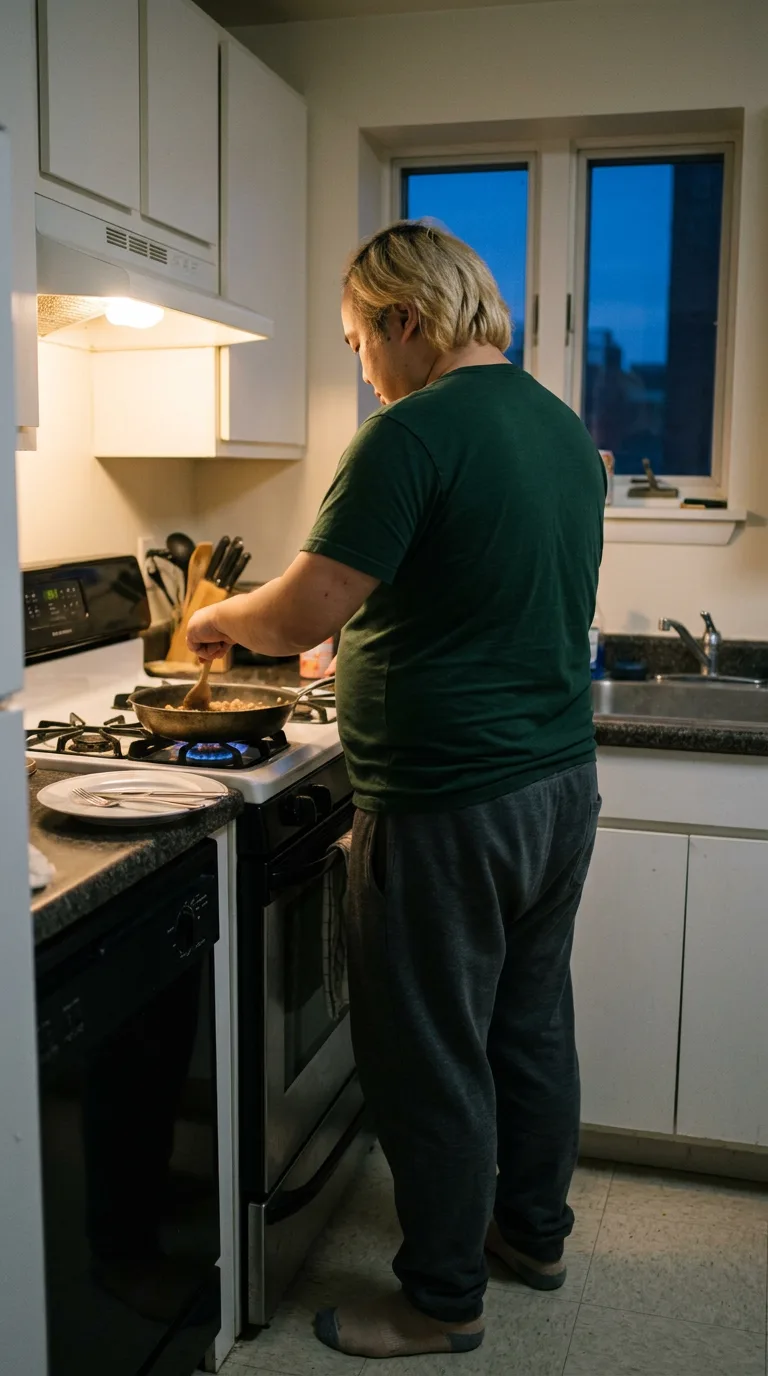
Rarest thing about him: Data scientist — common, 1 in 396
Season 1seed 521862395 · engine v11
Character card
lineage 2NZHHJ
His body-swap story
@colin.hasbrook, wearing Kevin Odum, rolled the wheel on and woke up as Brian Otsuka, spent under a minute in him, then spun the wheel and woke up as Russell Caplinger
---
Kevin Odum's hands smell like the dock even after three showers — diesel and cardboard dust ground so far into the knuckles it might as well be blood. You've had less than a minute of him. You're standing in his trailer kitchen in the last gray light of a Wednesday, and his phone is already buzzing on the counter with a shift-lead's name on it, and you know, the way you always know within seconds, that this one is going to be a small life lived carefully within a smaller radius, and you cannot spend one more evening finding out how small. Freight handler, skinny fat, thirty-eight, a body that aches in the lower back if he bends wrong. You did not come back to the wheel for him. You came back because six hundred and ninety-three men is not a number that lets you sit still in any one of them for long anymore, and because somewhere in the last one — a warehouse, a woman's name he'd never say to you, a bruise on his shin he never explained to himself — you felt the old thing again, the itch under the itch, and you knew you'd be at the laptop before the shift horn even sounded. You don't let yourself call it anything. You open vessel.cards on his phone with his thumbprint, because the thumbprint is his and the wanting is yours, and you spin.
The stirring stops mid-circle.
Then it starts again, the other way, and that is the first thing you know: your own hand, doing something without you telling it to, correcting itself like it's been doing this longer than you have. You are standing over a pan of something pale and diced, onions gone translucent at the edges, and there is a wooden spoon in your fist and steam going up past a face that is not the one you had four seconds ago. You are shorter now, and wider through the middle in a different way — not the doughy give of Odum's belly but something denser, packed, shoulders that carry weight instead of hiding it. Your back is to a room you haven't seen yet. Behind you, through a window you can feel more than see, the sky is a flat late-afternoon nothing-color, gone dark already, Boston dark, hours ahead of the Kentucky evening you just stepped out of.
You salt the pan. You don't taste it — his hand does that too, the same unthinking motion, salt then no taste, some old habit that isn't yours to explain yet — and you reach up into a cabinet and your fingers find a second plate by feel, white, chipped at one edge, and you set it down next to the first one on the counter without deciding to.
That's when the cabinet door gives you the first flash: this same hand, six years younger, reaching for two plates every night without thinking, because there were two people in this apartment then. It arrives like a smell before a memory — onions and garlic and someone else's laugh from the next room — and it's gone before you can hold it, but your chest does something on the way out of it, a small drop, like a stair that wasn't there.
The spoon in your hand is next. Wood, worn smooth at the neck where a thumb rides it, and through the handle you get him at twenty-four, first apartment, a woman named Priya standing at this same stove teaching him to keep the pan moving, don't let it sit, and him laughing because he'd burned rice for a year in grad housing and never told anyone. You get the wedding, briefly, sideways — not the vows, just the reception, a folding chair digging into the back of his knee and his mother crying in a way that embarrassed him and made him love her harder. You get four years of a marriage compressed into the weight of the spoon: her doing the crossword at this counter while he cooked, the specific quiet of a Tuesday that was good, hundreds of Tuesdays that were good, and then — through the pale band of skin on your ring finger, which the wheel didn't have to invent because it was already there, already his — you get the year it stopped being good, no single fight worth remembering, just a slow bleed of two people deciding separately and then together that this had run its course. The finger remembers the ring's weight and then its absence, months of absence, the tan line healing over so slowly he used to catch himself looking for it.
The shirt against your back — his shirt, a soft dark green tee gone a little thin at the shoulders — gives you this morning, because that's what shirts do, they remember the arms going into them. He'd pulled it on standing in a bedroom with unmade sheets on only one side of the bed, the other side made because nobody disturbs it anymore, and he'd thought, the way he thinks most mornings now without drama, just today's version of the thought: cook for one, watch something, go to bed, get up, whiteboard tomorrow, scatter plots that make sense whether or not anything else does. The sweatpants at your waist remember being pulled on after, elastic gone soft from washing. The floor under your feet — through the thin socks, cheap, from a multipack — gives you nothing but cold linoleum and the specific ache that lives permanently in a heavy man's arches by six in the evening, a tiredness that isn't from anything, just from carrying himself around all day.
The mole on your cheek you can't touch to remember, but your hand goes near it anyway, an old tic, the way his fingers sometimes drift up while he's thinking through a bad model at the office and land there instead of on a pen.
His cuticles are torn. You feel that now too, on the hand holding the spoon, little raw edges he's picked at during some meeting or some silence, and it's such a small, human, unfinished kind of hurt that it does more to make him real to you than the marriage did.
You look down at the pan. Two plates behind you on the counter, one meant for a life that isn't happening tonight, set out by a hand that used to do it for someone and forgot, for three whole seconds, that it doesn't anymore.
You look at your hand — his hand, blunt fingers, torn cuticles, the ring gone and the ghost of it staying — and you turn it over once in the stove light like you're checking it's real.
Then you look up, toward the dark window with your own reflection barely in it, and you say, quiet, to no one in the apartment and everyone on the other end of six hundred and ninety-four decisions:
"Guess I'm eating for two again."