Russell Caplinger
Fictional. Generated by AI — not a real person, and no likeness of one is intended.
48, cashier in Los Angeles · rolled by @colin.hasbrook · card — no film
History
who has worn him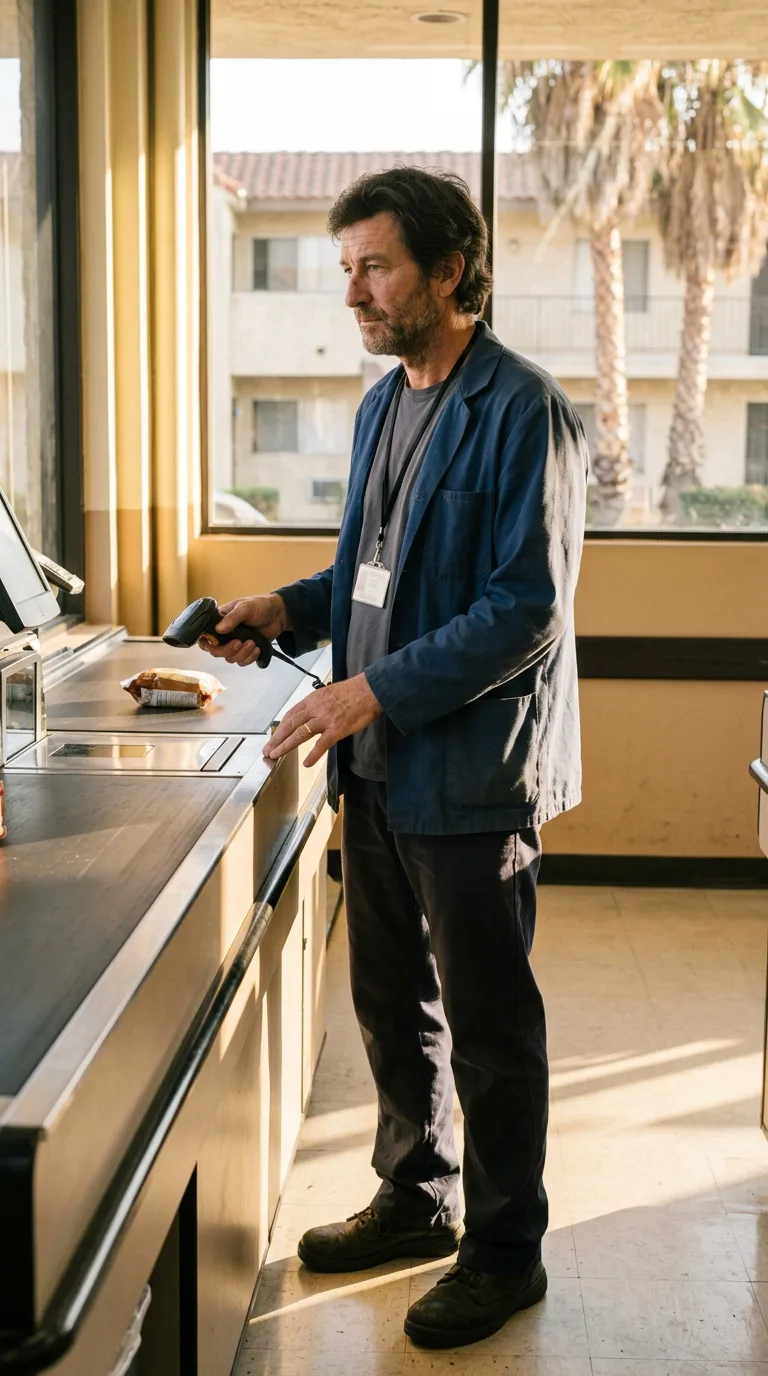
Rarest thing about him: Grown out between cuts — common, 1 in 38
Season 1seed 1468475836 · engine v11
Character card
lineage 2NZHHJ
His body-swap story
@colin.hasbrook, wearing Brian Otsuka, rolled the wheel on and woke up as Russell Caplinger, spent under a minute in him, then spun the wheel and woke up as an unnamed body
Brian Otsuka's apartment smells like takeout and unwashed sheets, and the beauty mark under his left eye is the first thing you see when you catch yourself in the dark laptop screen, because you have been sitting here for eleven hours doing a thing this body's actual mind would call unconscionable if it were still in charge. You made him refresh a spreadsheet for a project he does not believe in until his eyes burned. That was the whole use you had for him today. It is early evening in Boston, the light going that flat gray-orange through the blinds, and you are tired of the shape of his hands on the keyboard, the softness at his stomach when he leans forward, the small ache behind his sternum that you have decided is boredom and not, as his body would tell you, two energy drinks and no dinner. Six hundred and ninety-four men behind you and this one barely a minute old and already you want out of him. Not disgust, nothing so clean. Just the itch. You open the site. The wheel is already spinning before you've finished deciding, the way it always is.
The scanner is warm in your hand, the beep already halfway out of the machine's throat when the wrongness lands — a burrito, foil-wrapped, held a half-inch above the glass, and you are the one holding it, except you are not you, you are built wrong, taller, heavier through the shoulders, standing at a slant with weight on the left foot that belongs to someone who has stood at this exact angle for years. The scan comes out sideways, a stutter, a double-beep, and you draw the burrito back and do it again, slow, deliberate, watching your own crooked-nosed reflection ghost faint in the register glass like it's checking on you. Ten more items behind it and you scan each one like it might go off.
The lanyard is warm from his neck and it gives you the badge first, RUSSELL in block letters, a photo where he isn't smiling, and then the smell of the store comes in through him — rotisserie chicken and floor wax and the cold breath off the dairy case — and that alone unspools an afternoon: the drive in at eleven, windows down, a sports-talk host arguing about a trade nobody will remember by October. He works the early swing into evening because Diane, at the elementary school, does mornings, and someone has to be the one who's home when Caleb gets off the bus, and this is the shift he chose eight years ago and never gave back, and there is no bitterness in the memory at all, which surprises you, the way sincerity always does.
The shirt against your back gives you more, the way cloth always does first, closest to skin: this morning, gray in the low bathroom light, pulling it over his head one-armed because the other hand was holding his coffee, Diane already gone, a note on the counter in her handwriting that just says *pharmacy after? — love you* and he read it twice like it was new both times, fourteen years married and it still lands. The jacket next, the blue twill going on over the shirt, buttons he does by feel without looking, a jacket he's had long enough that the elbows have gone soft and pale. His wedding band catches the register light and brings back the ex — Sherry, a name with no weight to it now, a girl from a life he closed the door on so gently it never slammed, seven years before Diane, and what's left of her is just a color, not even a face, the specific blue of a car she used to drive. The kids arrive through his shoes, scuffed black, standing eleven hours a day: Caleb, fifteen, obsessed with a game Russell doesn't understand and doesn't need to, and Mara, twenty-two, out of the house now, calling on Sundays, and the feeling that comes with both of them isn't pride exactly, it's something plainer and heavier, like a hand on the back of the neck, steadying.
His body tells you what it costs to be him: the low permanent ache across the lower back from the register's angle, the left knee that clicks going down stairs, the crooked nose that still, twenty years on, throbs faintly when weather changes — broken in a parking lot argument that meant nothing, that he barely remembers the reason for. Church on Sunday mornings, the same pew, a faith worn in like the jacket, unshowy, load-bearing. A drink after close, one, sometimes two, poured the same way every night. The cigarettes he quit nine years ago and still, some evenings, misses with his whole hand.
You look down. The scanner's grip has molded itself to fingers that are not the fingers you had an hour ago in Boston — thicker, older, a white ring-mark of pale skin under gold. You turn the hand over once, slow, like checking it's real, and the fluorescent light slides across the crooked bridge of a nose that was never yours to break.
"There you are," you say, to no one, to the register, to the palm trees leaning outside the window in sun that has hours left in it — and you don't know yet if that's relief or the first taste of wanting something else.