Accountant in Boston
Fictional. Generated by AI — not a real person, and no likeness of one is intended.
25, accountant in Boston · rolled by @colin.hasbrook · card — no film
History
who has worn him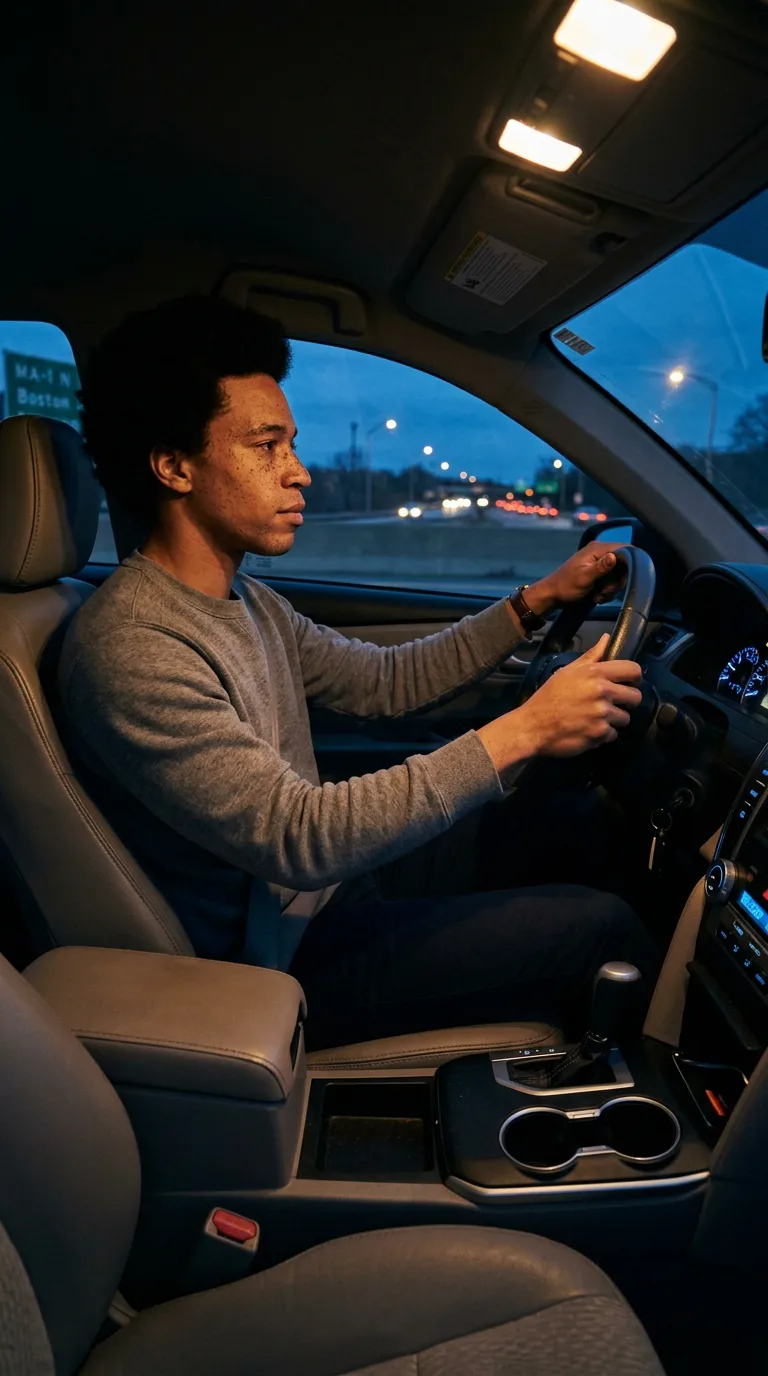
Rarest thing about him: Afro — common, 1 in 78
Season 1seed 1057636579 · engine v11
Character card
lineage 2NZHHJ
His body-swap story
@colin.hasbrook, wearing Russell Caplinger, rolled the wheel on and woke up as an unnamed body, spent under a minute in him, then spun the wheel and woke up as Gary Hutchens
You are standing behind a register in Los Angeles, and the gum you're scanning costs $1.79, and the man whose hands are doing this — cashier, forty-eight years old, nose that healed a little crooked — has been you for less than a minute. That's the thing nobody tells you about the wheel: the seams. You feel every one. You spun into him mid-shift, mid-transaction, and you can already tell this is a man who counts his tips twice and still comes up short, whose knees ache on the tile, whose whole life is the hum of a cooler and a manager named Diane. It is Wednesday, early afternoon here, bright through the windows like a headache. You did six hundred and ninety-five of these. You know within four seconds of arriving whether a body is one you'll keep past the day. This one — average, tired, blue eyes already looking for the clock — you know instantly. You ring up the gum. You hand back change. You are already gone in every way that matters, already reaching, in your head, for the little card reader on your phone that isn't a card reader at all.
You spin.
There is no in-between. There is a highway, dark, three miles from a home you have never seen, and your hands — his hands — are at ten and two, and the dash light is green on the knuckles, and you are twenty-five years old and healthy and moving at sixty-one miles an hour. The car drifts a foot toward the line, corrects itself in one motion too smooth to be a swerve, and both hands come off the wheel and land again lower, wider, more like how you hold things. The turn signal clicks on. It is for an exit that is not his.
The steering wheel is the first thing that talks to you. Faux leather, worn shiny at ten and two exactly, and under your palms there's a memory of a driving test nine years back, a mother in the passenger seat saying easy, easy, and the particular pride of parallel parking on the first try outside a Dorchester triple-decker. The memory has weight to it, has relief in it, the specific relief of a young man who was sure he'd fail. It fades and the radio dial gives you another: a Sunday, this same seat, two car seats in the back now instead of none, a woman's voice on speakerphone laughing about daycare pickup, and the feeling underneath it — not romantic exactly, worn into something steadier — is want to be home for that laugh more than he says out loud.
The clothes do the rest of it. The cardigan, buttoned over the checked shirt — you feel his hand doing the buttons this morning, standing in a bedroom with a radiator clanking, his girlfriend's voice from the bathroom asking if he'd seen her keys, and the ordinary contentment of a Wednesday that had nothing wrong with it yet. The shirt sleeve rolled once at the cuff — a habit from a desk job, from two monitors and fluorescent light and a spreadsheet of numbers that are never, ever his own numbers, because his own numbers are bad, have been bad since before the second kid, since a a used-car loan and a dental bill and a ceiling that needed replacing above a bathroom that wasn't even his to fix, the landlord slow, always slow. The debt sits in him like a low hum, embarrassment folded into love — he has never told the girlfriend the real total, tells himself he'll get ahead of it, has told himself that for three years.
Under your palm the wheel gives you an ex-girlfriend too, unbidden — not bitterness, something gentler and stranger, a college dorm room, a version of himself that didn't have children yet, that thought his life would look like something else. It comes and goes like a station losing signal.
His body is good — that's the part that surprises you every time you land in someone young. Twenty-five, athletic without trying for it, no ache anywhere you go looking. Afro grown out past what the office probably likes, and freckles across the nose that his daughter apparently likes to count — that memory arrives soft, a small hand, an evening, we got to fifty, Daddy — and it very nearly stops you.
Your nails are bitten down past where they should be. You notice that first, before you notice anything else about your own hands, because you're already doing it, some old body-habit already running without you: thumbnail against the first knuckle of your index finger, a nervous tell that belongs to a man worried, quietly, always, about money he can't fix.
You bring the hands up off the wheel and hold them in front of your face in the dash light, turning them like they might explain something.
"Whose exit is this," you say out loud, and it isn't really a question, and you don't take it — you correct the wheel, ease off the signal, keep driving toward a porch and a storm door and two kids who are his for exactly as long as the wheel says he's yours, which is to say: nobody knows, not even you, and especially not him.