Warren Nakashima
Fictional. Generated by AI — not a real person, and no likeness of one is intended.
53, accountant in Atlanta · rolled by @colin.hasbrook · card — no film
History
who has worn him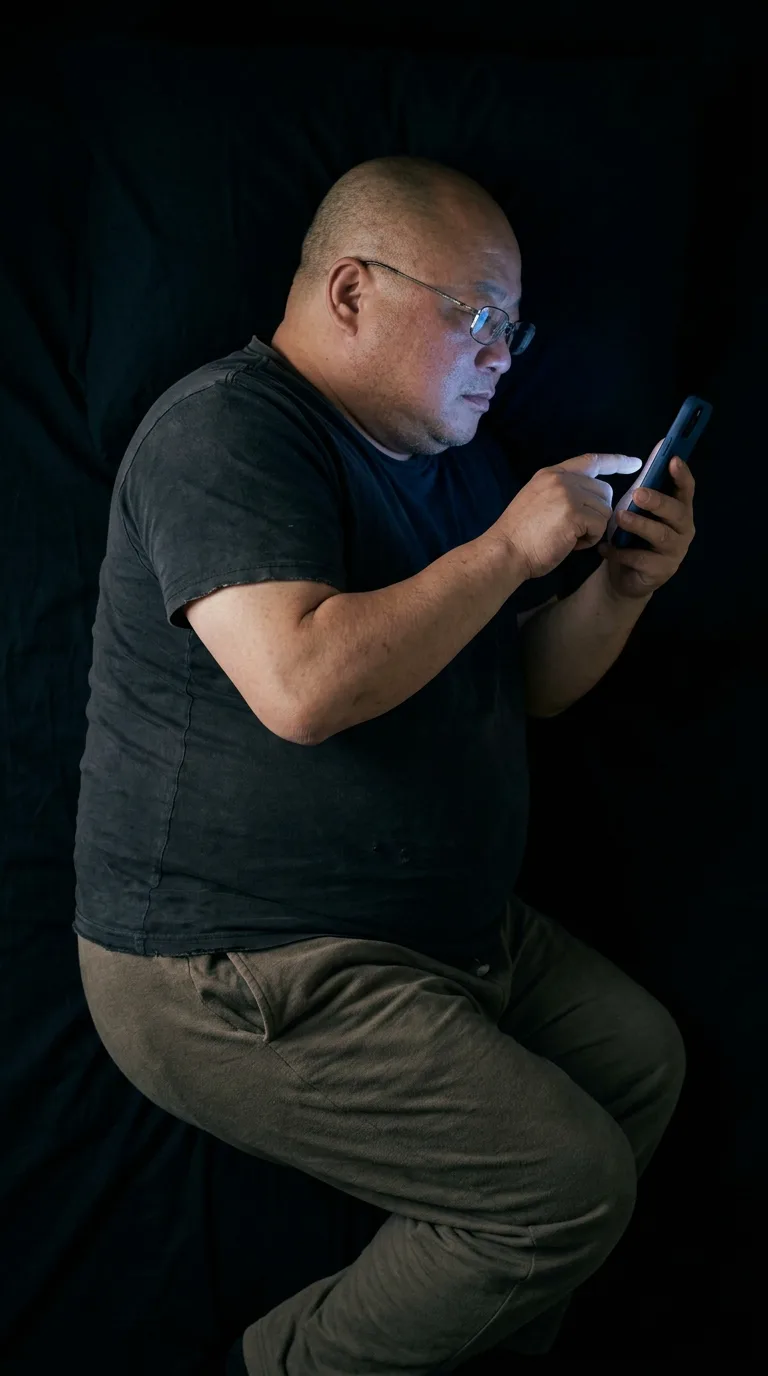
Rarest thing about him: Hookah, a few times a year — legendary, 1 in 267
Season 0seed 749429140 · engine v10
Character card
lineage 2NZHHJ
His body-swap story
@colin.hasbrook, wearing Michael Sartori, rolled the wheel on and woke up as Warren Nakashima, spent under a minute in him, then spun the wheel and woke up as Sione Taufa
Behind the counter the cleaver goes down clean through bone, the way it has four hundred and forty times tonight in his head, though his hands have only ever done it since Tuesday. Michael Sartori's hands. Forty years old, gray hair going silver at the temple, the smell of cold cases and bleach worked so far into the skin that you stopped noticing it around day two. You have liked him fine. That is the trouble, actually — you have liked him fine, and fine is the whole problem, because fine is what you said about the plumber and the dentist and the man in Tulsa who coached little league on weekends, and there have been four hundred and thirty-nine fines before this one and you are no closer to the thing you are actually looking for, which you could not name if someone put a knife to this borrowed throat. It's near midnight. The shop's closed, the register's counted, and you are standing in the walk-in with your breath going white in front of you for no reason anyone would call good, phone already out, thumb already on the site before you've decided anything, the way it goes every time now — decided being too strong a word for what is actually just hunger with paperwork. You spin.
The room you land in is dark and it takes a half-second to understand why: not your midnight, his. Middle of the night, Atlanta, a Tuesday nobody but him will remember reaching. You are on your side. There is a weight under you that was not there a second ago and is now the only weight there is — heavy through the middle, tired through the hips, a knee that complains before it's asked to do anything. A phone six inches from a face you can't see because it's your face now, screen-blue, thumb moving. It moves faster than it should. Steadier. You feel it correct itself, catch its own rhythm and outrun it, and somewhere underneath that a body that runs on a machine at night keeps breathing wrong without the machine, a small effortful catch at the top of every breath that nobody in this bed is awake enough to notice but you.
The glasses are folded on the nightstand, not on his face, and when your hand — his hand, blunt-fingered, a little swollen, the last thing his own for less than a second — brushes the phone case, something comes through that isn't yours: a golf trip two years back, a friend from the office laughing about handicaps, and underneath the laugh a flatness he never told anyone about, the particular exhaustion of being fifty-three and heavy and finding that funny had stopped costing him anything to fake. The case is scuffed at one corner. He drops this phone a lot. He drops it because his hands, when he isn't watching them, are already somewhere else — a knee bouncing under a desk that isn't here, two monitors' glow that isn't this glow, a whole life of sitting very still on top while some other part of him ran.
The shirt against your back — no, not a shirt, a plain undershirt gone soft at the collar, and through it: a Sunday morning three weeks ago, his ex-girlfriend's voice on the phone still warm even though it was over, still asking after the kids like she had a right to, and him giving her the update because some habits don't know they've ended. Two kids, a boy who calls on Thursdays and a girl who doesn't call enough, both grown enough now that his worrying about them has nowhere to go, so it sits in his chest like an appetite. The cardigan he wore in that photograph — you can almost feel the wool of it, though it's on a hanger three feet from this bed — brings back the office, the fluorescent hum, the particular ache between his shoulder blades from four decades of sitting exactly the way his father told him a professional man sits. Half a million in accounts nobody at that office would guess at, because he dresses like a man watching every dollar and has for so long it stopped being a strategy and became a face.
The mattress under you, worn soft in the shape of one man sleeping alone now, gives you the year after the breakup — him staying up too late on the wrong side of the bed out of some stubbornness he wouldn't have called grief, the leg bouncing under the sheet even in sleep, a habit going back to a childhood classroom in a school in Marietta where a teacher once told his mother he had too much energy for such a quiet boy. The apnea mask sits dark on its stand, unused tonight, and your throat already knows the coming toll of that, a wrongness building slow at the base of the skull that he has stopped noticing because thirty years is long enough to call anything normal.
None of it is dramatic. That's the shape of him — competent, provided-for, tired in a way that never got loud enough to become a story. You feel the whole plain weight of that settle into the hands, into the belly, into the leg that starts, on its own, to bounce against the sheet before you've told it to do anything at all.
You look at the hand. It's not thin and gray-haired and cold-case-smelling; it's broad, brown, the nail beds a little ridged, warm from someone else's bed. You turn it over once, like checking it's real, and it is.
"Okay," you say, to the dark, to no one awake to hear it. "Okay. Let's see what you're worth."
Somewhere back in Chicago a cleaver sits on a cutting board with nobody's hand on the handle, and here the leg keeps bouncing, waiting to find out how long it gets to be somebody new.